
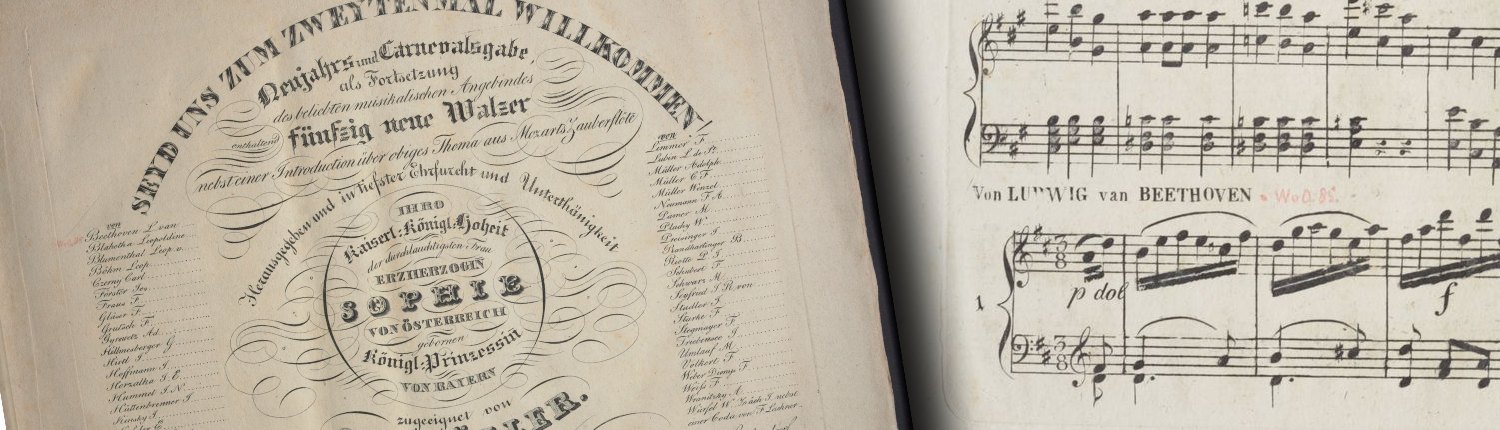
WoO 85 – Waltz in D Major for Piano
WoO 85, the Waltz in D major for piano, was composed by Beethoven on 14 November 1825 and published soon thereafter in the anthology of 50 new waltzes entitled “Seyd uns zum zweytenmall willkommen!”. This collection was conceived as a New Year and Carnival offering and explicitly designed as a continuation of the musical gift issued in 1824, which had already included Beethoven’s earlier Waltz WoO 84. The volume was brought out in Vienna by Müller in December 1825.
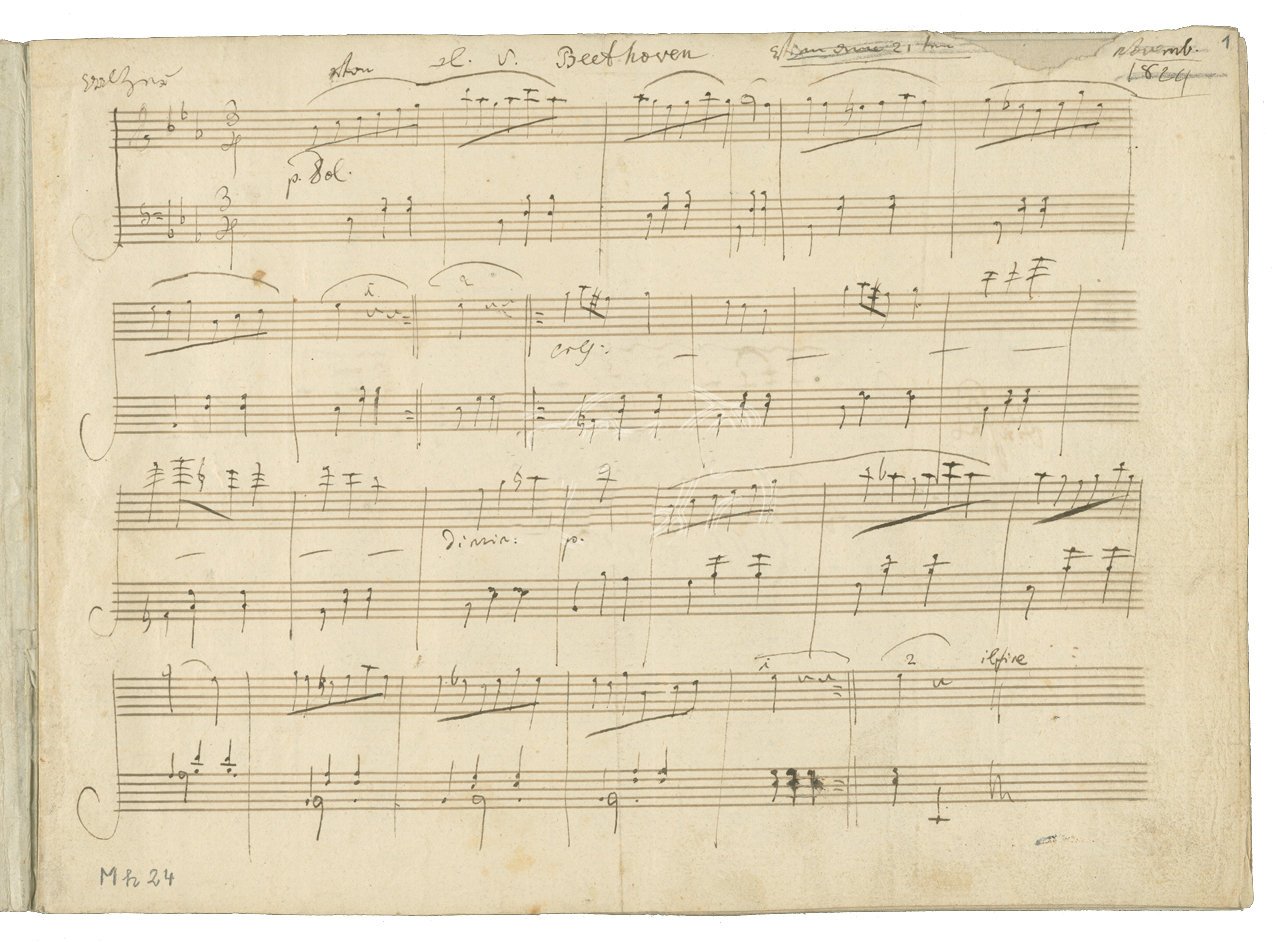
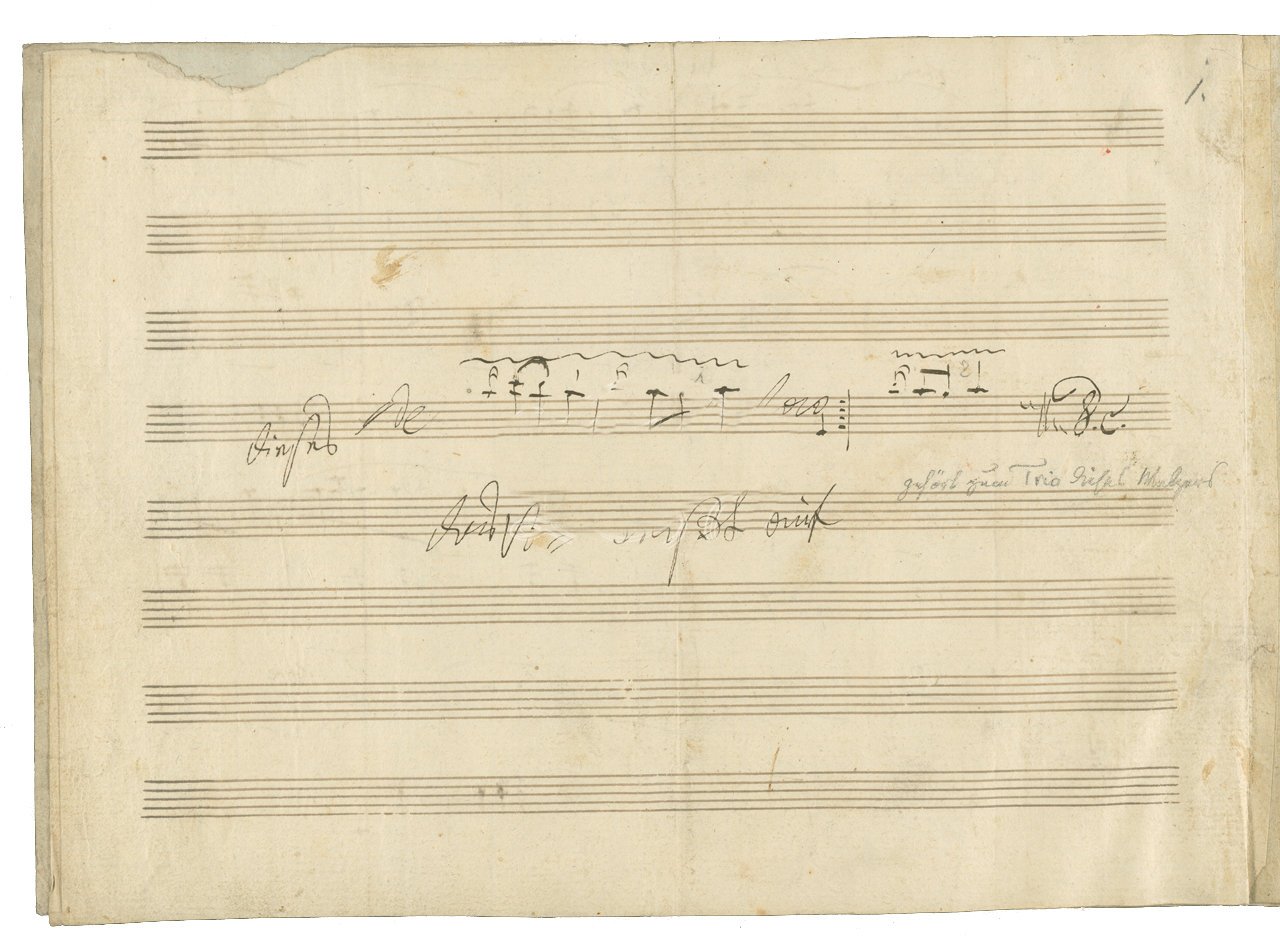
The autograph manuscript of WoO 85 has survived and is today preserved in the Bodmer Collection at the Beethoven-Haus in Bonn. The work itself is a short and unpretentious piece, closely related in style and character to WoO 84. Beethoven offered it to the Viennese Kapellmeister and actor Carl Friedrich Müller for inclusion in the new anthology. In fact, Beethoven composed WoO 85 together with WoO 84 and the Ecossaise WoO 86 expressly for Müller, who had become occupationally disabled and was therefore no longer able to pursue his profession as an actor. Faced with the loss of regular employment and in need of financial support, Müller undertook the engraving and publication of these dance collections at his own expense. The sale of the volumes was intended to provide him with a source of income at a time when disability frequently meant dependence on state assistance.
This situation is documented in one of Beethoven’s conversation books from the second half of December 1824. There, Beethoven’s nephew Karl records that Müller had the waltzes engraved at his own cost and that art and music shops subscribed to the edition, each taking twenty copies, from which Müller would receive three florins per copy. The collections were not limited to Beethoven’s contributions alone but also included works by other well-known composers of the period. The “Sammlung 40 neuer Walzer”, published by Müller in December 1824 under the title “Musikalisches Angebinde zum Neuen Jahr”, contained Beethoven’s WoO 84 alongside a piece by Franz Schubert. One year later, in December 1825, Beethoven’s WoO 85 and WoO 86 were issued in the follow-up collection entitled “Seyd uns zum zweytenmal willkommen! Neujahrs und Carnevalsgabe, als Fortsetzung des beliebten musikalischen Angebindes fünfzig neue Walzer …”.
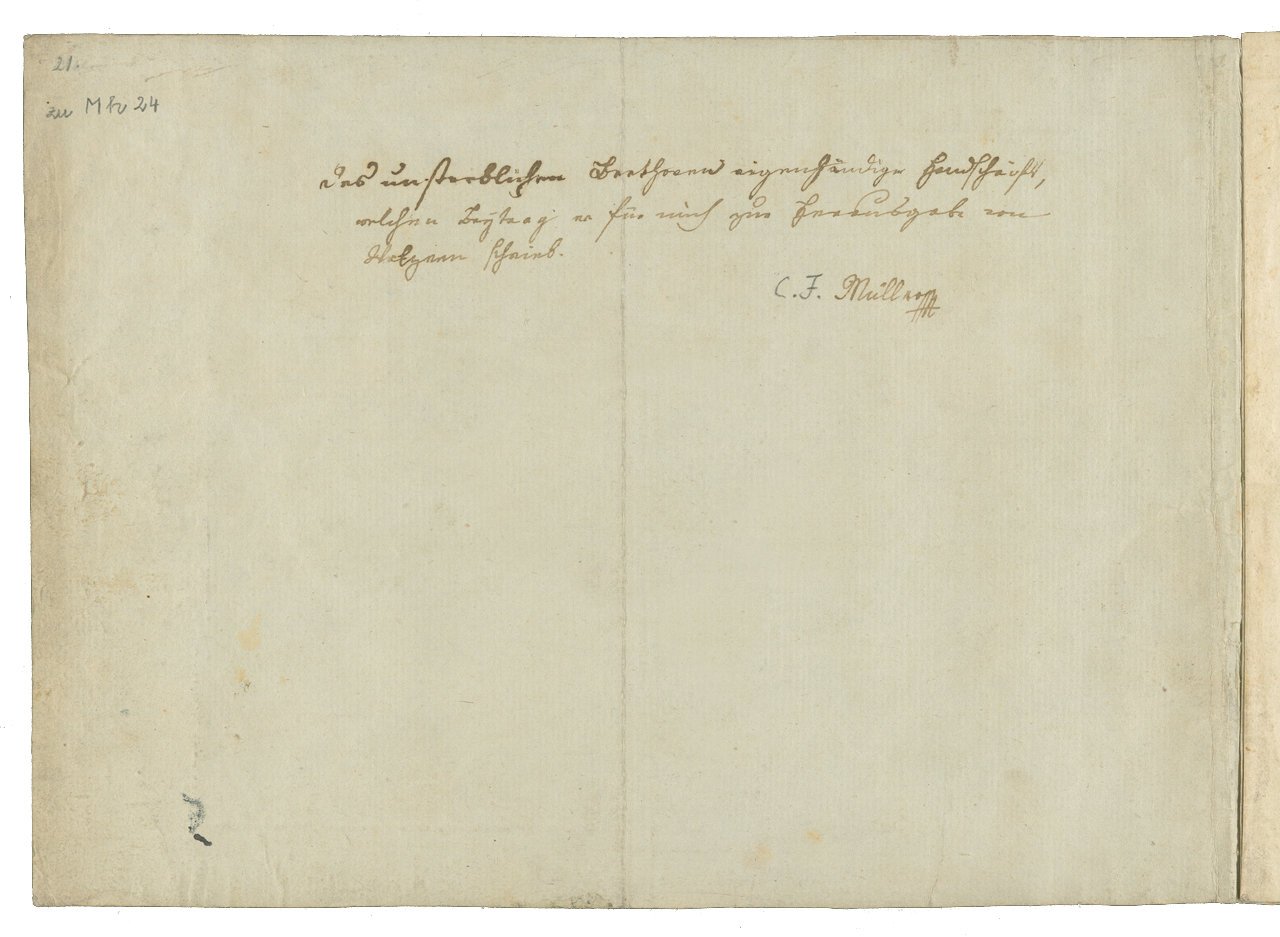
Müller retained the autograph manuscripts of the three works Beethoven had contributed to these collections, keeping them bound together in a single folder. On the inside cover he proudly inscribed the words: “Des unsterblichen Beethoven eigenhändige Handschrift, welchen Beitrag er für mich zur Herausgabe von Walzern schrieb. CF Müller.” The individual sheets are mounted and each bears a handwritten date by Beethoven, namely “21 November 1824” and “14 November 1825”.
In both the Beethoven-Werkverzeichnis by Georg Kinsky and Hans Halm and in the published editions of the conversation books, the Viennese actor Carl Friedrich Müller, the recipient of these three pieces, has mistakenly been confused with Karl Friedrich Müller, a composer and piano teacher active in Berlin. Although Beethoven did write a friendly letter in 1825/26 to the Berlin-based Müller in response to an enquiry—a letter now preserved at the Beethoven-Haus under the catalogue number NE 188—the two men were different individuals and should not be conflated.
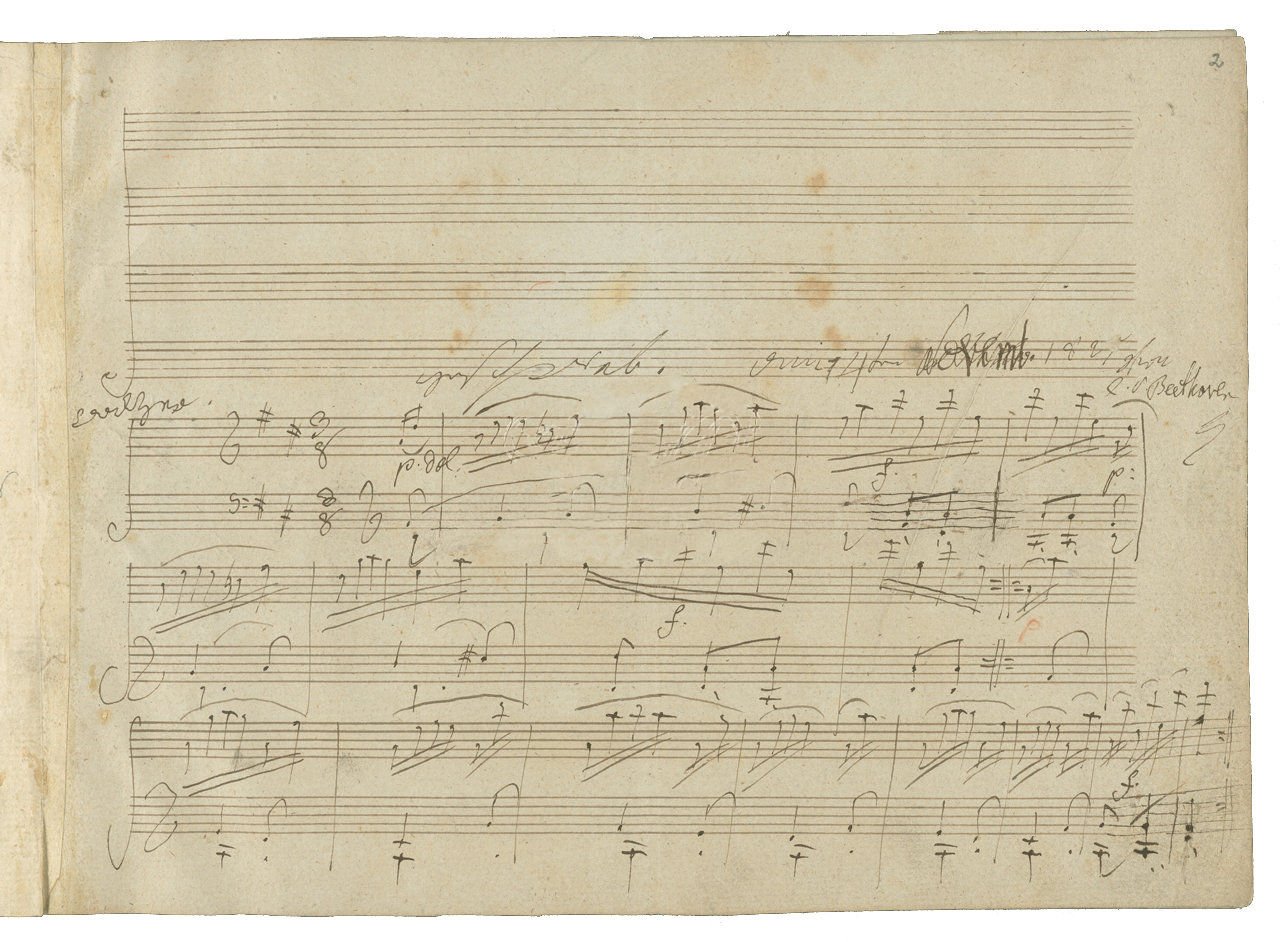
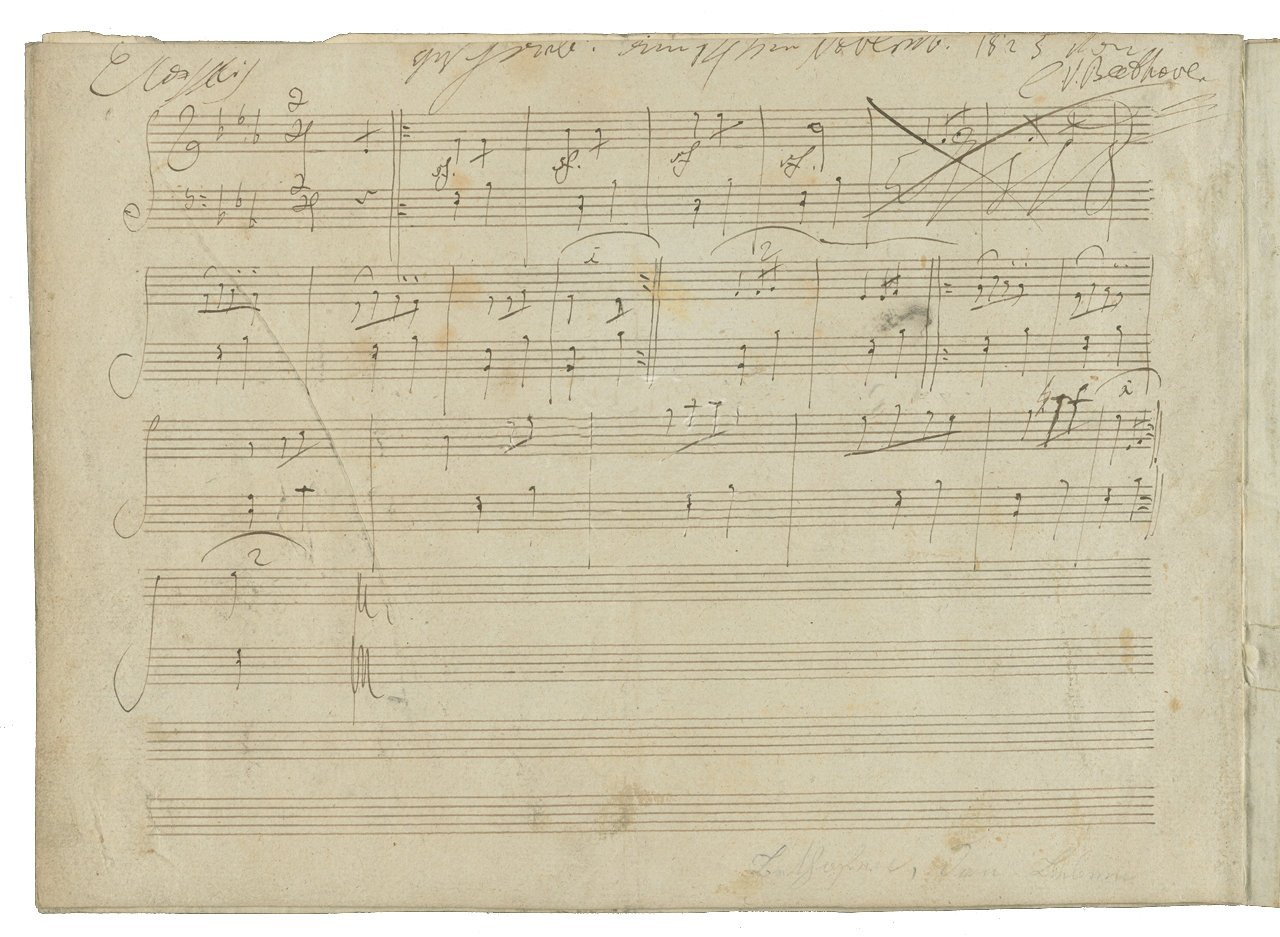
WoO 85 is part of the “Research Becomes Art” project.
A New Life for the Unknown Works of Ludwig van Beethoven: An Artistic Exploration by pianist maestro Francesco Gussago, Alessandro Lettieri (the whole collection) and the “Douze variations sur un thème de valse de Beethoven” for Piano four hands by Jean-Charles Bourquin, from the YouTube channel “Art et Nature Vidéos”.
