

WoO 086 – Ecossaise in E-flat major for piano
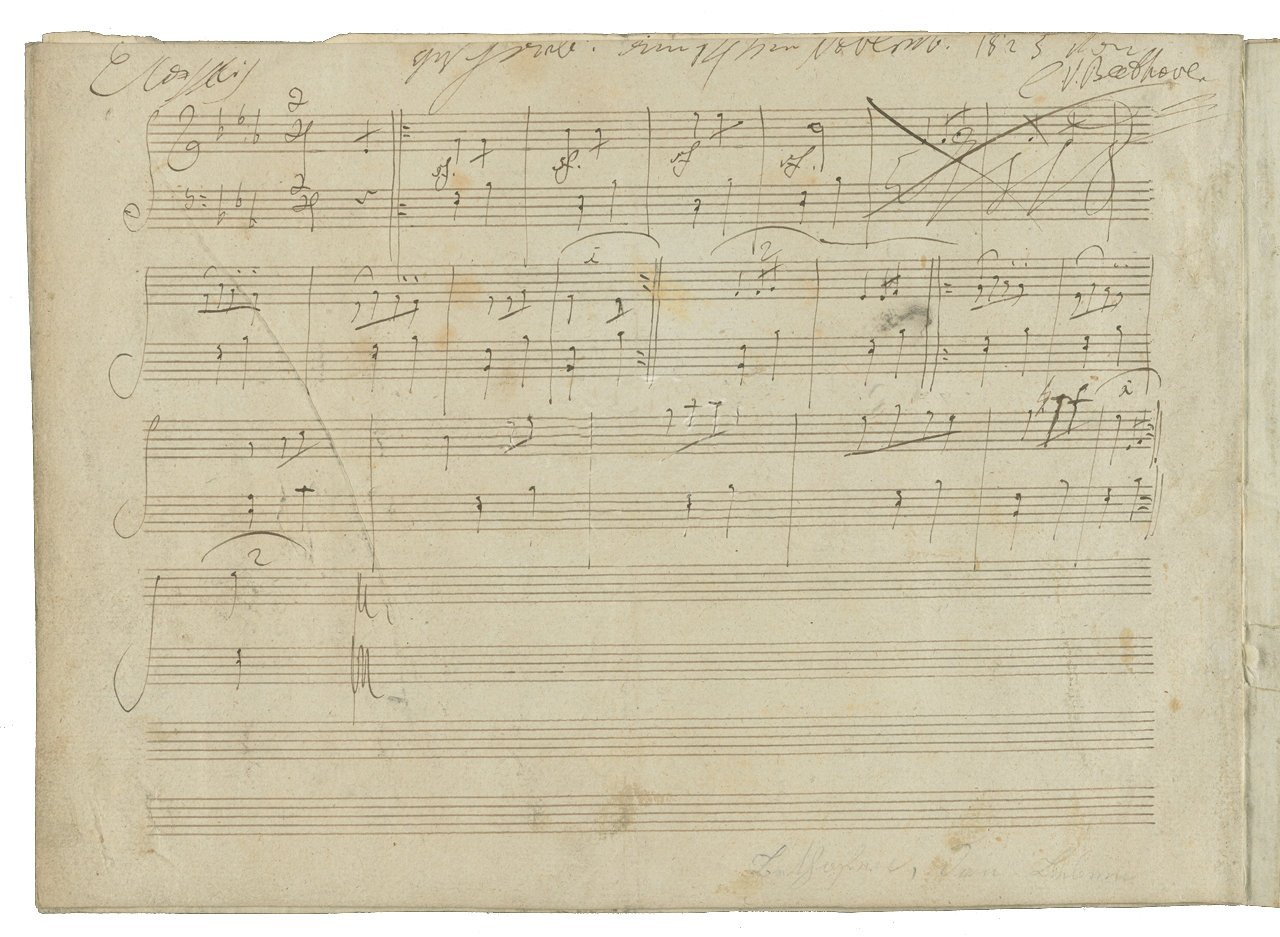
WoO 86 – Ecossaise in E-flat major for piano, 14 November 1825, published in the collection Ernst und Tandeley. Eine Sammlung verschiedener Gesellschaftstänze für den Carneval (Seriousness and amusement. A collection of various social dances for Carnival), Vienna, Müller, December 1825. GA no. 305 (Series 25/42) – B. 312 – KH (WoO) 86 – T. 259.
Beethoven composed the two waltzes WoO 84 and 85 and the Ecossaise WoO 86 for piano for the Viennese actor Carl Friedrich Müller, who had become occupationally disabled. Müller published the dance collections at his own expense, and their sales provided him with an income (at that time, disability meant that he could no longer work—in his case as an actor—and therefore had to rely on state support). A note to this effect appears in one of Beethoven’s conversation books from the second half of December 1824. Beethoven’s nephew Karl writes: “Müller had the waltzes engraved at his own expense, and all art and music shops subscribed to the publication, each for 20 copies. (Müller) will receive 3 florins for each copy.” (BKh 79, page 27v).
Other well-known composers of the time also contributed to these editions. The “Sammlung 40 neuer Walzer”, published by Müller in December 1824 under the title “Musikalisches Angebinde zum Neuen Jahr”, included Beethoven’s WoO 84 as well as a composition by Franz Schubert. WoO 85 and 86 appeared a year later, in December 1825, in the collection “Seyd uns zum zweytenmal willkommen! Neujahrs und Carnevalsgabe, als Fortsetzung des beliebten musikalischen Angebindes fünfzig neue Walzer …”.
Müller owned the autograph scores of the three works that Beethoven had given him for these collections, bound together in a folder. On the inside of the cover he proudly wrote: “Des unsterblichen Beethoven eigenhändige Handschrift, welchen Beitrag er für mich zur Herausgabe von Walzern schrieb. CF Müller”. The sheets are mounted, and each bears a handwritten date by the composer: “am 21ten novemb. 1824” and “am 14ten novemb. 1825”.
Both in the Beethoven catalogue of works (Beethoven-Werkverzeichnis) by Georg Kinsky and Hans Halm and in the published edition of his conversation books, the Viennese actor Carl Friedrich Müller, for whom Beethoven wrote the three works mentioned above, is confused with the Berlin-based composer and piano teacher Karl Friedrich Müller. Beethoven wrote a friendly letter to the latter in 1825/26 in response to an enquiry; however, the two Müllers are not the same person. The letter to the other Müller in Berlin is still preserved at the Beethoven-Haus under the archive number NE 188.
Note 1. Carl Friedrich Müller (born on 17 November 1796 in Nijmegen and deceased in 1846) was a German composer and Kapellmeister. The son of the singer and pianist Louise Müller, née Kreß (1763–1829), he spent his youth at the court of Grand Duke George in Neustrelitz.
His mother also gave him his first music lessons, and he made rapid progress in this art, to the extent that he made his debut as a pianist at the age of sixteen. He became Kapellmeister of a travelling company and, in 1813, took part as a volunteer in the War of Liberation against the French. Around 1814 he settled in Berlin, where he taught piano and singing. In 1825 Beethoven addressed Müller with the words: “bereit Ihnen, wie jedem wahren Künstler, zu dienen” (“ready to serve you, like any true artist”). Thanks to his compositions, Müller received numerous awards, including a medal of fifty ducats bearing the effigy of King Charles X of France.
In 1835 Emperor Dom Pedro II of Brazil appointed him court composer. From the years 1835 to 1837 dates his correspondence with Robert Schumann. The high point of his career was a concert he gave on 21 June 1846 in Potsdam at the New Palace of King Friedrich Wilhelm IV and his family. Under Müller’s direction, “mehrere seiner neuesten Original-Werke” (“several of his latest original works”) were performed by nearly one hundred singers and two military bands.
Around 120 compositions by Müller are known, as well as several publications, including pedagogical writings (with Augustus Frederick Christopher Kollmann) and a pamphlet concerning the journalistic attacks by Ludwig Rellstab against the then General Music Director of Berlin, Gaspare Spontini.
(1) Ludwig van Beethoven, Briefwechsel. Gesamtausgabe, vol. 6, ed. by Sieghard Brandenburg, Munich 1996, pp. 129 f.
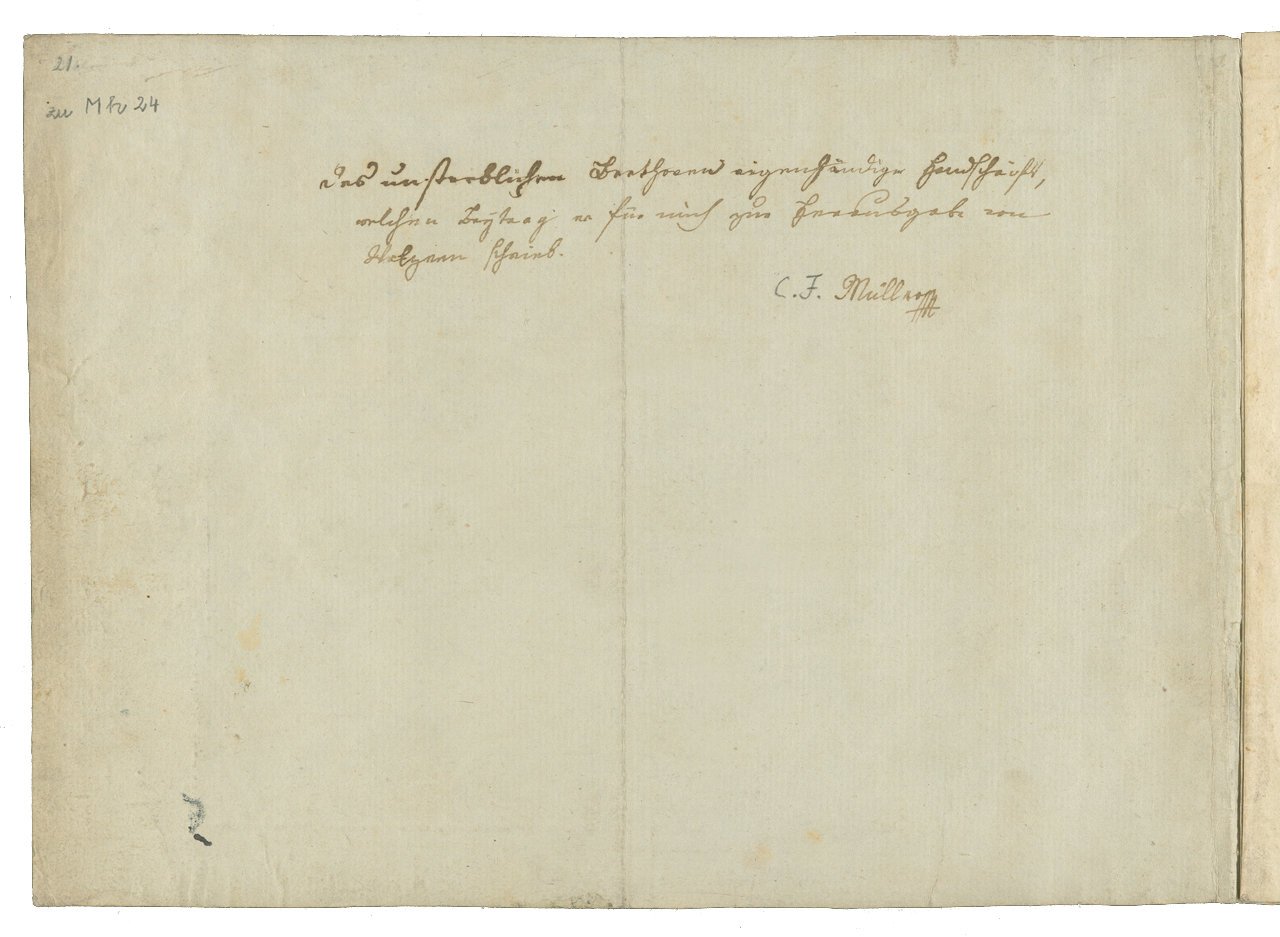
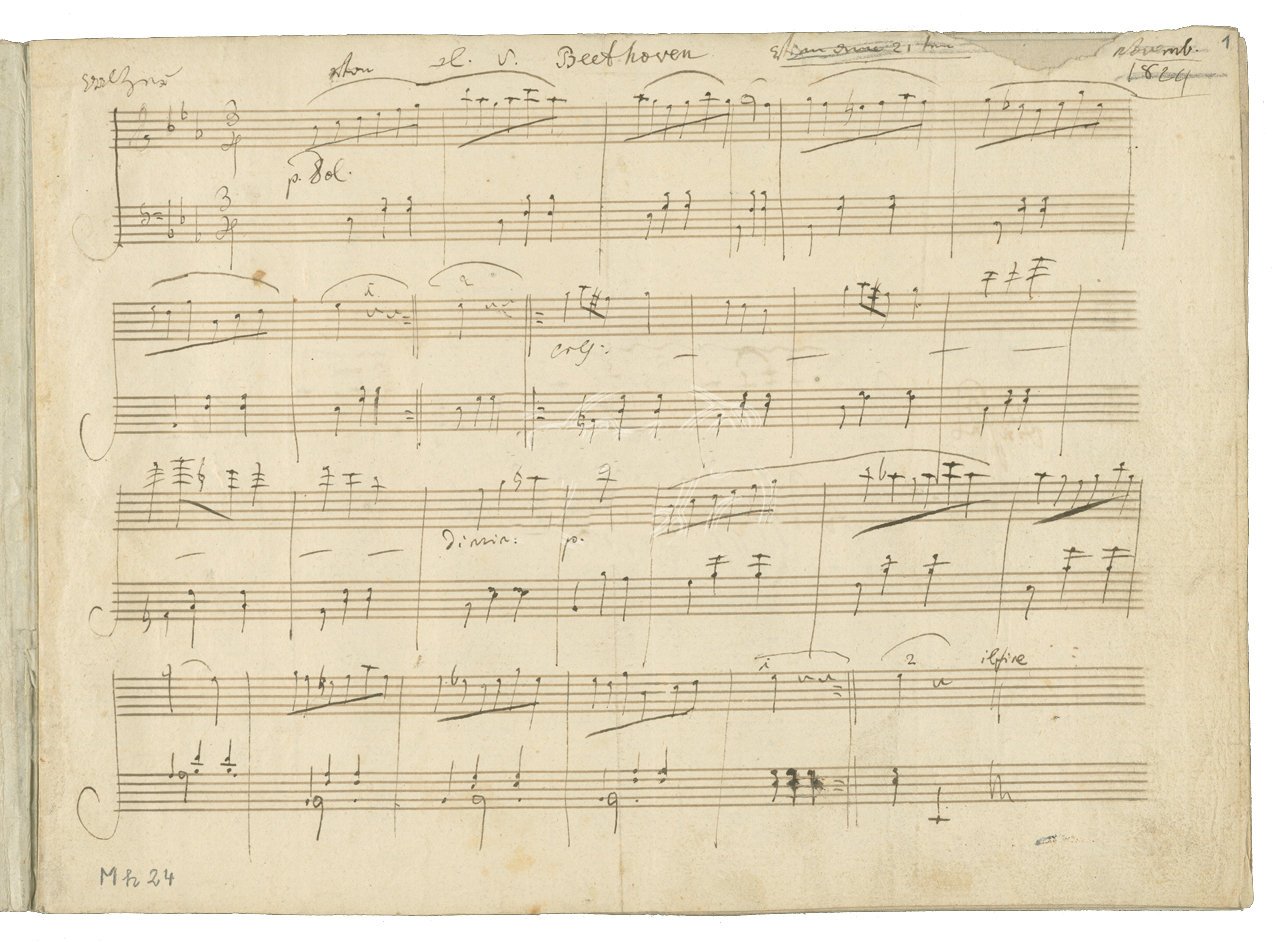
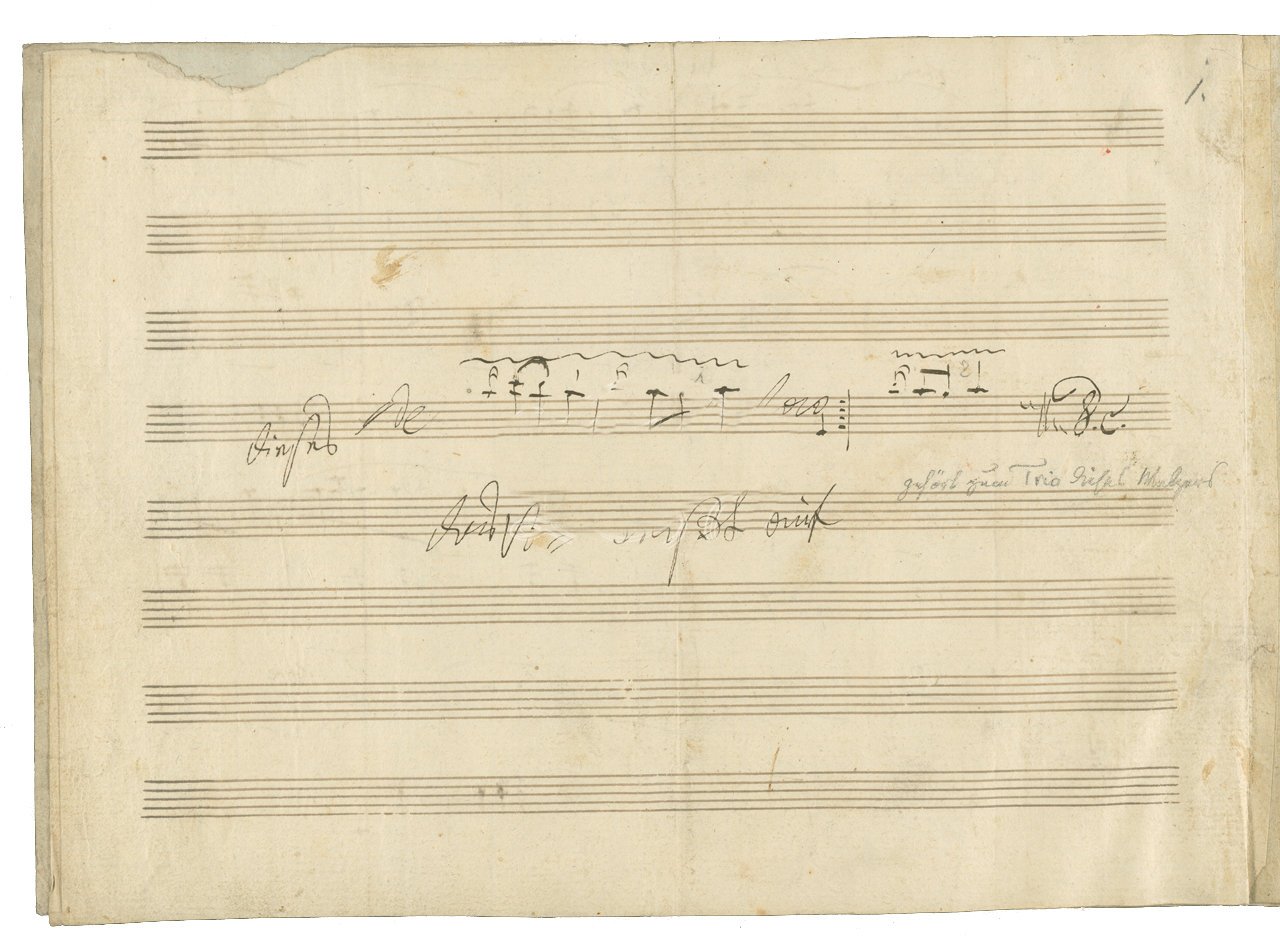
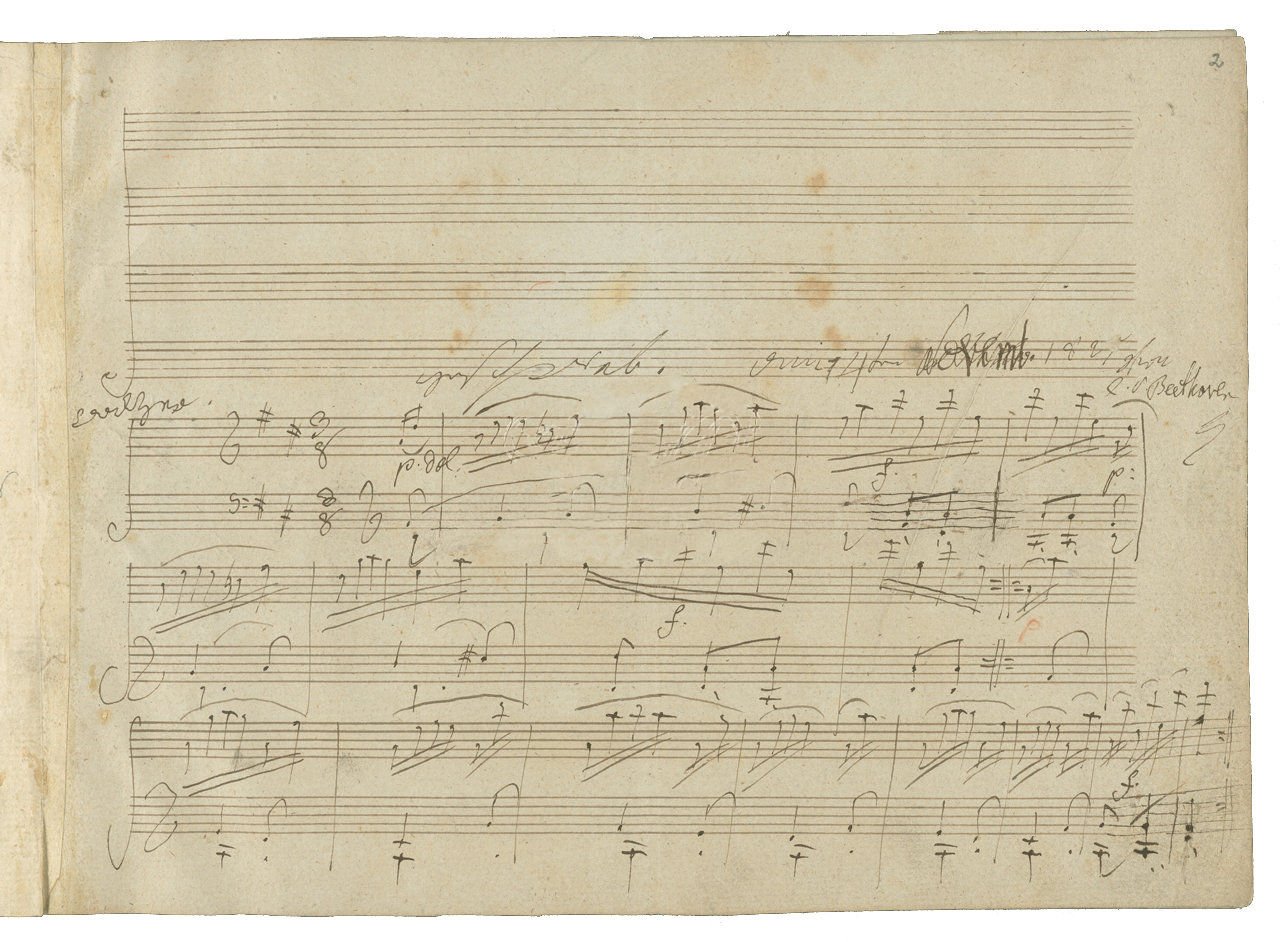


Sketch containing a pencil draft and an ink draft for the Ecossaise WoO 86 (the melodic idea and the left hand of the first three bars are very similar), followed by a sketch of the final theme of the String Quartet Op. 127 (bars 6–8), as well as unidentified sketches. – Sketches in ink and pencil. – On the title page there is an inscription in an unidentified hand: “muß dieses nicht h zeyn [?]? // zu herren Pixis der Geiger?” (?).

and commentary by Johann Kafka: “von Beethoven später taub war, so scheint // es, daß jemand hier diese 2 fragen // schriftlich an ihm reichtete.” – 20-line music paper, 5 × 276 mm per page (spacing between the lines: 8 mm); the top two lines are cut.
WoO 86 is part of the “Research Becomes Art” project
A New Life for the Unknown Works of Ludwig van Beethoven: An Artistic Exploration by pianists Maestros Alessandro Lettieri and Francesco Gussago