Hess 71 Movement for Piano in G Major “molto adagio”
Molto adagio
Hess 71 – Unknown Piano Piece in G Major (“Molto adagio”)
Manuscript Context and Formal Characteristics:
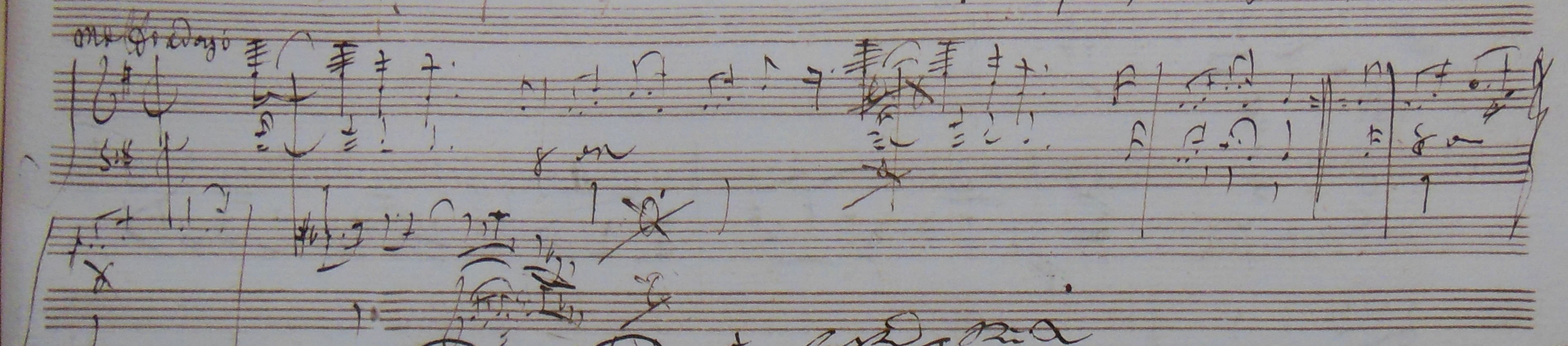
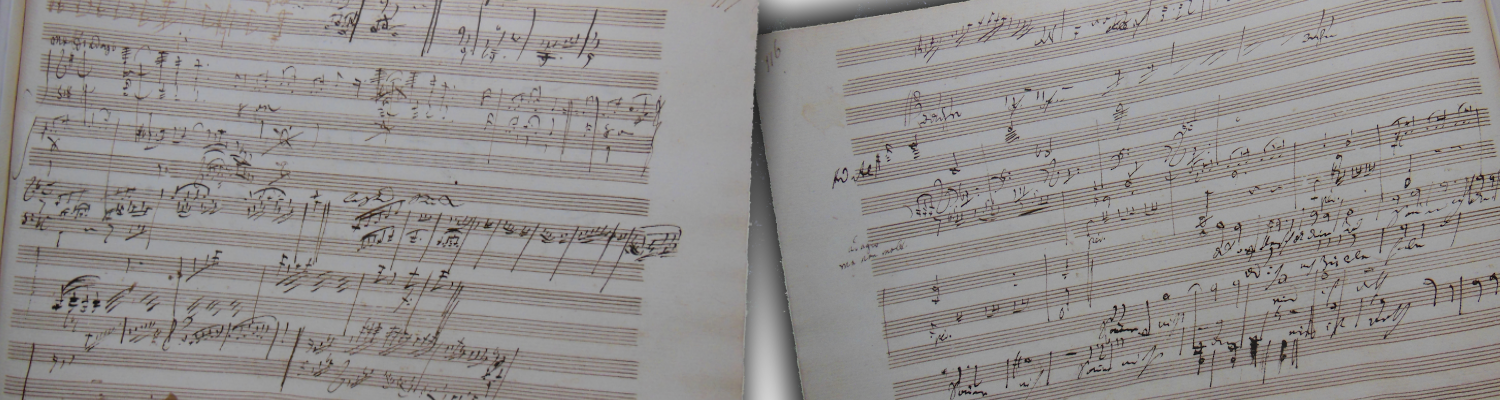
Hess 71 refers to an unidentified piano fragment located on page 117 of the Landsberg 6 sketchbook, also known as the Eroica Skizzenbuch. The fragment comprises 11 measures in G major, and bears the tempo indication Molto adagio, written in cut time (2/2).
The musical material appears to be an incipient introduction, which halts abruptly following the insertion of sixteenth notes. As with the preceding entry in the Hess catalog (Hess 70), this fragment is too incomplete to be considered a finished composition or to warrant a formal catalog number.
Structurally, the piece begins with a four-bar figure, which is then repeated, followed by three measures that commence with a repeat sign. However, the phrase is incomplete, and the musical logic is interrupted.
At the end of the fragment, Beethoven draws a circle with an “X” above it, encompassing the entire eleven-line staff. This symbol typically indicates that the sketch continues elsewhere, though no continuation has yet been discovered.
Musicological Observations:
The fragment is situated on a page that also contains sketches labeled “Sonata con violoncello” and marked Adagio. However, Hess 71 appears to have been written at a different time, distinct from the cello sonata notes.
According to the C.R.M.B. editorial note, the fragment is located on lines 4–7 of page 117 of the Landsberg 6 sketchbook. As with Hess 70, Nottebohm refers to this passage only briefly in his Ein Skizzenbuch von Beethoven aus dem Jahre 1803, describing it as: “ein kleines unbekanntes Clavierstück” (“a small unknown piano piece”)
The tempo marking Molto adagio, the key of G major, and the cut time signature are all clearly indicated by Beethoven. Musicologist Green, in his New Hess Catalogue, reiterates the fragment’s incompleteness and the presence of the circle-X symbol, which suggests continuation elsewhere—though no such continuation has yet been located.
This symbol is also correctly transcribed by Lewis Lockwood and Alan Gosman in their critical edition Beethoven’s Eroica Sketchbook. They note that the circle-X appears at the top staff, between the second and third measures, implying that the final two bars of the first section are to be repeated. This transforms the fragment into a 8-bar structure with a formal outline of:
- A–A (with repeat)
- B–A (with repeat)
Thus, the piece assumes a ternary miniature form, albeit fragmentary. Additionally, from the first measure, Beethoven inscribes the symbol “8va” to the left. This marking does not refer to a doubling of the left hand—an interpretation that would be illogical given its placement on the upbeat of the second measure—but rather to an octave doubling of the right-hand theme.
Artistic Interpretation:
Hess 71 has been interpreted and recorded as part of the project:
“Research Becomes Art – A New Life for the Unknown Works of Ludwig van Beethoven” Curated by Sebastiano Mazzoleni and Antonietta Cappelli
Recordings:
- Hess 71 – Molto adagio in G Major (Sketch from Landsberg 6) Performed by: Sebastiano Mazzoleni, piano Performed by: Antonietta Cappelli, piano
These performances aim to revive Beethoven’s lesser-known fragments, treating them as living artistic material rather than mere historical curiosities.


Circle with X on line 5 and Circle with X on line 7
From the first measure, Beethoven indicates the “8va” sign on the left hand; this sign does not refer to the doubling of the left hand—it would make no sense to indicate it from the upbeat in the second measure—but rather, of course, to the doubling of the right hand theme.
Hess 71 is part of the “Research Becomes Art” project.
A New Life for the Unknown Works of Ludwig van Beethoven: An Artistic Exploration by Sebastiano Mazzoleni and Antonietta Cappelli.