Posts

Pages

Beethoven Haus BH 117V – SV91 Minuet in D Major “Proesto”

Beethoven Haus BH 117V – SV91 Minuet for Orchestra in D major “Minuetto Proesto”

Reconstruction from sketches by Willam Denny and Joseph Kerman (1974)

In the Beethoven manuscript preserved at the Beethoven-Haus in Bonn and marked with the number BH MS117 Recto, we find this minuet “Proesto” (sic!) . Beethoven writes: “einen majestätischen Menuet mit punktirten Noten”. Here is what Kerman writes in the Preface to his beautiful reconstruction:

“The two minuets published herewith were never completed by Beethoven, so far as is known, but they have been preserved in the form of relatively complete sketches in piano score. These are found among the surviving sketch sheets from Beethoven’s years at Bonn, before his move to Vienna at the age of 21 in 1792. In Bonn, Beethoven not infrequently prepared conscientious interim sketches of works in progress, sketches which are much more complete and carefully written than characteristic later sketches of the type made familiar by the studies of Gustav Nottebohm, Paul Mies, J. S. Shedlock, and others. Such sketches seem to allow for ‘realization’ in a way that later sketches rarely or never do. The extent of our additions, modifications, and interpretations will be clear from this edition, in which the original sketches are printed in transcription directly below the full score.

It is not known whether Beethoven planned these minuets for symphonies he was contemplating, or whether perhaps they were conceived as isolated studies in the abstract. In any case, the young composer was working characteristically in a style that would count as rich and complex by the standards of the music he knew. This music would have included the minuets in Mozart’s late symphonies and in Haydn’s symphonies up through the ‘Paris’ set (the ‘London’ Symphonies were not yet written). We believe there are enough forceful and interesting ideas in these minuets to commend them to the attention of Beethoven’s admirers, and to the conductors among them. The sketches also include a number of weak places; in making the final versions, Beethoven would have been able to revise these more extensively than we have felt free to do.

The sketch of the Minuet in E minor is taken from f.123r of British Museum Additional Manuscript 29801, by permission of the Keeper of Manuscripts.1 The Minuet in D is taken from Bonn, Beethovenhaus MS H7r, by permission of the Director, Prof. Joseph Schmidt-Gorg, and Dr. Hans Schmidt. The transcription of the sketches below the full score follows the sources exactly, but does not attempt to record earlier readings of corrected notes or passages”.

William Denny – Joseph Kerman

1 A facsimile appears in Beethoven. Autograph Miscellany from ca. 1786-99 (the ‘Kafka Sketchbook’), ed. Joseph Kerman, London: The British Museum, 1970, Vol. I.

Kafka Sketchbook – Part 9: Beethoven’s Extended and Fully Defined Works (Pages 255–274)


Skizzenbuch “Kafka” (Kafka Sketchbook) Fourth section – Sketches of extended and already defined works (Pages 255 – 274)

Autograph Miscellany from circa 1786 to 1799
British Museum additional Manuscript 29801, ff 39-162. Edited by Joseph Kerman, Professor of Music, University of California at Berkley. London 1970


Sketches of works with Opus number


Sketches of works without opus numbers (WoO)


Sketches of extended and already defined works


Gustav Nottebohm – Zweite Beethoveniana – LXI: Early Compositions (Page 561)

Gustav Nottebohm – Zweite Beethoveniana – LXI – Frühe Compositionen (Seite 561)

Nachgelassene Aufsätze von Gustav Nottebohm Leipzig, Verlag von J. Rieter Biedermann 1887

Clicca qui per aggiungere il proprio testo

Kafka Sketchbook – Part 8: Beethoven’s Extended and Fully Defined Works (Pages 255–274)

Skizzenbuch “Kafka” (Kafka Sketchbook) Fourth section – Sketches of extended and already defined works (Pages 255 – 274)

Autograph Miscellany from circa 1786 to 1799
British Museum additional Manuscript 29801, ff 39-162. Edited by Joseph Kerman, Professor of Music, University of California at Berkley. London 1970

Sketches of works with Opus number

Sketches of works without opus numbers (WoO)

Sketches of extended and already defined works

Kafka Sketchbook – Part 5: Beethoven’s Extended and Fully Defined Works (Pages 165–182)

Skizzenbuch “Kafka” (Kafka Sketchbook) Third Section – Sketches of extended and already defined works (Pages 165 – 182)

Autograph Miscellany from circa 1786 to 1799
British Museum additional Manuscript 29801, ff 39-162. Edited by Joseph Kerman, Professor of Music, University of California at Berkley. London 1970

Sketches of works with Opus number

Sketches of works without opus numbers (WoO)

Sketches of extended and already defined works

Skizzenbuch “Kafka” (Kafka Sketchbook) Third Section – Sketches of extended and already defined works (Pages 165 – 182) A study on sketches – By Graziano Denini

Autograph Miscellany from circa 1786 to 1799
British Museum additional Manuscript 29801, ff 39-162. Edited by Joseph Kerman, Professor of Music, University of California at Berkley. London 1970

…. And to find out more…

Kafka Sketchbook – Part 4: Beethoven’s Extended and Fully Defined Works (Pages 133–164)

Skizzenbuch “Kafka” (Kafka Sketchbook) Third Section – Sketches of extended and already defined works ( Pages 133 – 164 )

Autograph Miscellany from circa 1786 to 1799
British Museum additional Manuscript 29801, ff 39-162. Edited by Joseph Kerman, Professor of Music, University of California at Berkley. London 1970

Sketches of works with Opus number

Sketches of works without opus numbers (WoO)

Sketches of extended and already defined works

Skizzenbuch “Kafka” (Kafka Sketchbook) Third Section – Sketches of extended and already defined works ( Pages 133 – 164 ) A Study of the Sketches (Sonata Movements) – By Graziano Denini

Autograph Miscellany from circa 1786 to 1799
British Museum additional Manuscript 29801, ff 39-162. Edited by Joseph Kerman, Professor of Music, University of California at Berkley. London 1970

Kafka Sketchbook – Part 3: Beethoven’s Extended and Fully Defined Works (1786–1799)

Skizzenbuch “Kafka” (Kafka Sketchbook) Third Section – Sketches of extended and already defined works (Pages 103 – 132)

Autograph Miscellany from circa 1786 to 1799
British Museum additional Manuscript 29801, ff 39-162. Edited by Joseph Kerman, Professor of Music, University of California at Berkley. London 1970

Sketches of works with Opus number

Sketches of works without opus numbers (WoO)

Sketches of extended and already defined works

Unv. 20 – Lamentations of the Prophet Jeremiah

Further Information

For further details on the works included in the sketchbook, please refer to the links below.

Composition (Fantasy? Sonata?) in D major/minor for piano (Allegro–Andante–Allegro) Biamonti 213 = Unv. 12 (Folio 90 recto to 95 verso – Page 110) See the dedicated page of the Beethoven Music Research Center
Concerto in F major for oboe and orchestra Hess 12 – WoO 206 (slow movement) (Folio 150 verso – Page 126) See the dedicated page of the Beethoven Music Research Center
Concerto for piano and orchestra in A major Biamonti 55: Adagio in D major (Folio 154 recto/verso – Page 127) See the dedicated page of the Beethoven Music Research Center
Fugue in C major for keyboard WoO 215 – Hess 64 (Folio 158 recto – Page 130) See the dedicated page of the Beethoven Music Research Center
Lamentations of the Prophet Jeremiah Unv. 20 (Folio 96 recto – Page 131) See the dedicated page of the Beethoven Music Research Center

Learn more

Kafka Sketchbook – Second Section: Beethoven’s Sketches Without Opus Numbers (1786–1799)

Skizzenbuch “Kafka” (Kafka Sketchbook) Second Section – Sketches without Opus number (WoO) (Pages 69 – 102)

Autograph Miscellany from circa 1786 to 1799
British Museum additional Manuscript 29801, ff 39-162. Edited by Joseph Kerman, Professor of Music, University of California at Berkley. London 1970

Sketches of works with Opus number

Sketches of works without opus numbers (WoO)

Sketches of extended and already defined works

Skizzenbuch “Kafka” (Kafka Sketchbook) Second Section – A study on sketches – By Graziano Denini

Autograph Miscellany from circa 1786 to 1799
British Museum additional Manuscript 29801, ff 39-162. Edited by Joseph Kerman, Professor of Music, University of California at Berkley. London 1970

Kafka Sketchbook – Beethoven’s Early Miscellany (1786–1799), First Section: Sketches with Opus Numbers

Skizzenbuch “Kafka” (Kafka Sketchbook) First Section – Sketches with Opus number (Pages 1 – 68)

Autograph Miscellany from circa 1786 to 1799
British Museum additional Manuscript 29801, ff 39-162. Edited by Joseph Kerman, Professor of Music, University of California at Berkley. London 1970

Sketches of works with Opus number

Sketches of works without opus numbers (WoO)

Sketches of extended and already defined works

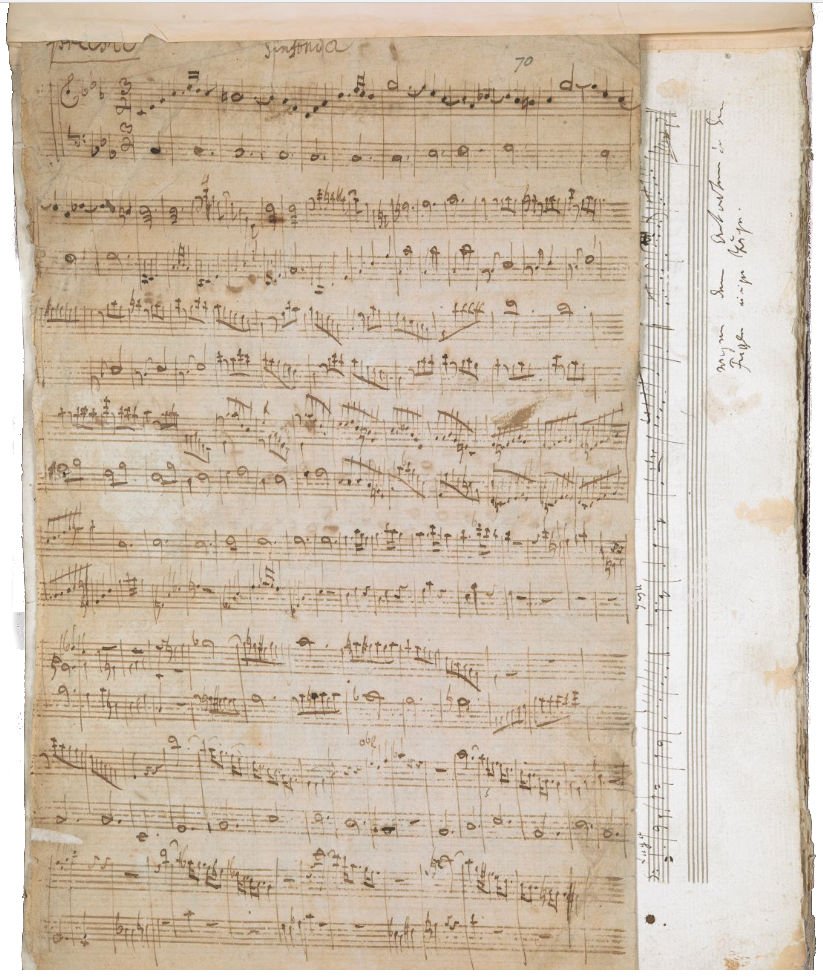
Unv. 01 – Hess 298 · Symphony in C minor · Sketch of the First Movement (1785–1786)

Unv.01- Hess 298 – Symphony in C minor – Sketch of the First Movement – 1785 / 1786. Schiedermeier page 219/46

The Unheardbeethoven website is curated by Albert Willem Holsbergen and Mark Zimmer. Our thanks go to them.

It is a sketch of 111 bars, entitled Symphony, preserved in the Kafka collection of the British Museum. Published in its entirety by Stein, (and in 1970 by Kerman Editor’s note) already mentioned by Nottebohm (Zweitebeethoveniana, page 567) and by Shedlock, MT June 1892. The dating is about the same as that of the WoO 36 piano quartets, so much so that they have more than one element in common. It is not to be confused with the sketches of another early symphony, referred to in number 73 of the Biamonti catalogue. The thematic element presents the beginning of the scherzo of the Fifth Symphony. (G.Biamonti)

Origin: probably sketched between 1786 and 1790. On the basis of the manuscript and paper finds, Douglas Johnson dated the sketches between the years 1786-1790 (Johnson/Fischhof vol. 1, pp. 221 and 242-246). Joseph Kerman narrows the period a little more narrowly to 1788/89 (Kerman / Kafka, Vol. 2, p. 291). Gustav Nottebohm’s reference to the similarity of the theme to that of the 2nd movement of the piano quartet WoO 36 No. 1 (created in 1785) cannot be used directly as an indication of the origin of the sketches for the symphony (Nottebohm/Beethoveniana ll, p. 567).

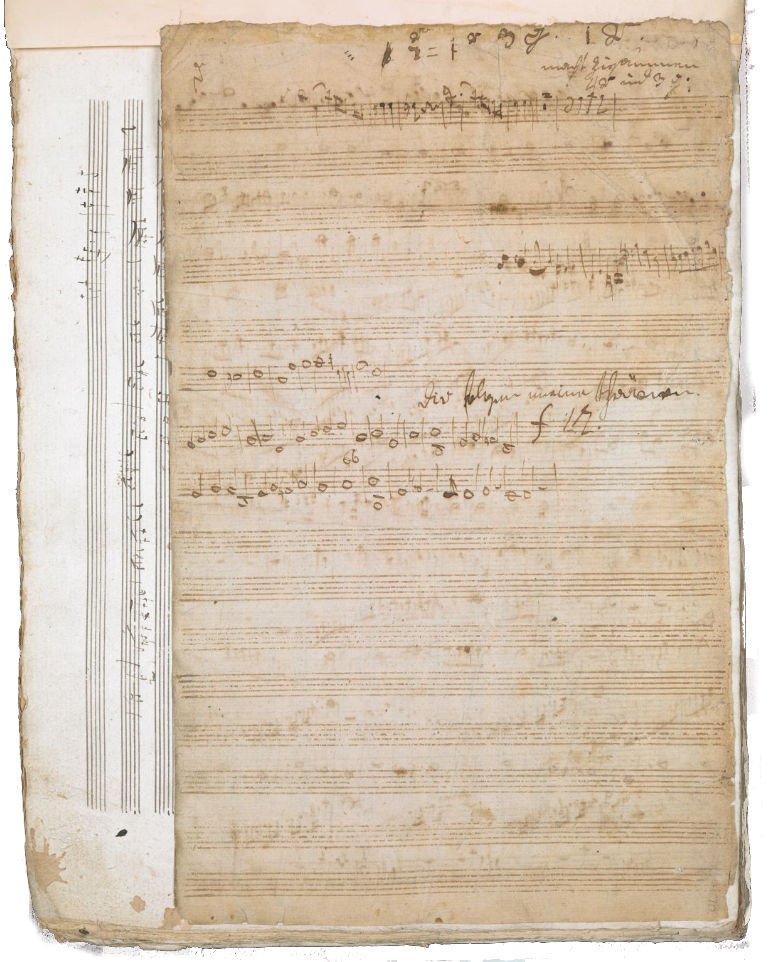
Sketches: GB-LBL, Add. Ms. 29801 (“Kafka”), Pages 70recto/versus. Opening title “Symphony”. 111 bars, in piano reduction. On bar 91 instrumental indication “Obo[e]”. Transcriptions: Stein/Jugendsymphonie S. 13lf, Facsimile and transcription: Kerman/Kafka.Literature: Hess/Green number 298. Johnson/Fischhof Vol. 1 p. 221 f, 242-246. – Kerman / Kafka, Vol. 2, p. 291. – Stein, Jugendsymphonie, pages 130-133.
It consists of 111 continuous bars that take up the theme of the Second Movement of the Quartet for piano, violin, viola and cello WoO 36 n. 1; In addition, there are 2 other fragments, one of 9 bars and the other of 5. All this can be found in the Miscellanea Kafka and, despite its sketch status, deserves to be mentioned because it constitutes a very important stage in the evolution of Beethoven’s musical thought. We don’t know why Beethoven left it unfinished – he probably didn’t feel ready to write an entire Symphony yet – but what is certain is that listening to it already foreshadows the composer who would later write symphonies such as the Eroica and the Fifth.

The piece was completed and made playable by Albert Willem Holsbergen; although we will never know how the composer would have really developed it, this operation allows us to listen to it as a true completed Symphony movement and to appreciate its beauty.

“Notes in the Dark” – suggestions and comparisons for quality Beethoven listening

With a slide of the recordings mentioned in the article – By the YouTube channel SecondAVitA