Posts

Pages

Kessler Sketchbook – Beethoven’s 1802 Drafts for Piano Pieces and Orchestral Ideas

Keßlersches Skizzenbuch

Beethoven – Skizze und Entwürfe Band 5 – Übertragung von Sieghard Brandemburg

Historical and Musical Insights on the Kessler Sketchbook

  • Used in Early 1802: The Kessler Sketchbook was actively used by Beethoven during the first half of 1802, a period marked by intense compositional activity and personal turmoil.
  • Unfinished Concertante in D Major: One of the most intriguing entries is Beethoven’s abandoned Concertante in D, a triple concerto for violin, cello, and piano. He began sketching it in this notebook, reaching a confident continuity draft by folio 41v. However, he later scratched out much of the material, suggesting dissatisfaction.
  • Connection to Artaria 183: A related orchestral score fragment, catalogued as Artaria 183, shares the same paper watermark as the Kessler Sketchbook. This confirms that Beethoven was preparing a full orchestration in parallel, though the score begins mid-piece and is missing its opening pages.
  • Insight into Beethoven’s Process: The Kessler Sketchbook reveals Beethoven’s habit of iterative refinement. He often began with raw ideas, then revised them extensively—sometimes abandoning entire sections. This sketchbook shows his transition from improvisational bursts to structured development.
  • Creative Turbulence: The sketches reflect a composer in flux—grappling with form, orchestration, and thematic development. The notebook captures both his discipline and spontaneity, offering a rare glimpse into the evolution of ideas that never reached final publication.
  • Scholarly Study: Musicologist Richard Kramer conducted a principal study of the Concertante sketches, published in Beethoven Studies 2 (1977). His work remains a key reference for understanding the materials in this notebook.

Antonio Bruers: Erudition, Mystery, and the Intellectual Crossroads of a Restless Century

Antonio Bruers: erudition and mystery

Between D’Annunzio and Beethoven, between archives and metapsychics: the portrait of a restless century

Antonio Bruers: biographical profile

Antonio Bruers (Bologna, 13 February 1887 – Rome, 30 November 1954) was a multifaceted figure of twentieth‑century Italian culture: man of letters, essayist, scholar of philosophy and religion, musicologist and, in one phase of his life, also an enthusiast of parapsychology. His intellectual trajectory reflects the tensions and contradictions of an age marked by major political and cultural transformations.

Origins and education

Born to a father of Belgian origins, Emanuele, and to a Bolognese mother, Pia Bernardi, Bruers grew up in a cultivated environment open to European influences. He studied in Bologna and Rome, where he approached literature and philosophy at an early age. His admiration for Gabriele D’Annunzio led him to devote to the poet some of his first critical studies, which reveal his aesthetic sensitivity and his inclination to grasp the links between art, politics, and spirituality.

Career and activities

Literature and philosophy: Bruers dealt with authors such as Vincenzo Gioberti and Tommaso Campanella, interpreting their thought in a modern key and seeking to make it accessible to a wider public. Music: he published essays on Beethoven and other composers, showing a constant interest in the relationship between music and philosophy. Institutional roles: he was vice‑chancellor of the Accademia d’Italia (1929–1943) and secretary of the “Vittoriale degli Italiani” Foundation, contributing to the preservation and promotion of the D’Annunzian legacy. Archival work: he curated the Gioberti Archive, later acquired by the Historical Archive of the Senate, a sign of his philological and documentary attention.

Intellectual profile

Bruers was an eclectic intellectual. In his writings one finds intertwined:

  • literary criticism (with particular attention to D’Annunzio);
  • religious and political reflection, as in Italia e cattolicismo (1929) or Gesù nel secolo ventesimo (1942);
  • interest in the supernatural and parapsychology, which led him to direct the journal Luce e Ombra and to preside over the Italian Society of Metapsychics.

This openness to disciplines considered marginal testifies to his intellectual curiosity and his willingness to explore border territories between science, faith, and philosophy.

Later years and death

After the fall of Fascism, his figure lost part of the centrality it had enjoyed in the 1930s, also because of his involvement in the institutions of the regime. Nevertheless, he continued to write and cultivate his interests until his death, which occurred in Rome on 30 November 1954.

Legacy

Antonio Bruers remains a complex and multifaceted figure:

  • custodian of tradition (through his work on archives and Italian authors);
  • interpreter of his time (through his ties with D’Annunzio and the Accademia d’Italia);
  • explorer of boundaries (through his openness to music and parapsychology).

His work, though less known today, offers a valuable cross‑section of Italian culture between the two World Wars and of the dialogue between classicism, modernity, and spiritual inquiry.

Bruers and Beethoven

Bruers’s publications on Beethoven are chiefly analytical and cataloguing in nature: the best‑known is simply titled Beethoven (printed by Dott. G. Bardi, Rome, in four editions as shown in the photographs), presented as a “reasoned catalogue” of the principal works — a short but practical book intended for musicians and enthusiasts.

Alongside the catalogues, Bruers authored more specific studies: for example, essays on the piano sonatas (Op. 26, 31, 57, 78, 111), that is, concise analyses of key pages of Beethoven’s piano repertoire, useful both for interpretive study and for stylistic framing.

Bruers’s books on Beethoven are not narrative biographies but study tools: catalogues and commentaries that organise Beethoven’s oeuvre according to chronological and thematic criteria. The aim is to provide an overview of Beethoven’s production, with references both technical (opus number, key, instrumentation) and aesthetic (character, style, evolution).

Structure of Bruers’s Beethoven catalogues

1. Introduction Bruers opens with a concise biographical‑critical introduction:

  • he outlines Beethoven as a tragic and humanistic artist, symbol of spiritual freedom;
  • he highlights the fracture between the “classical Beethoven” and the “titanic Beethoven”, that is, between the Haydn‑Mozart legacy and the Romantic impulse;
  • he considers the stylistic evolution in three periods (early, middle, late), a scheme that later became canonical in Beethoven studies.

2. Catalogue of the principal works For each work or group of works, Bruers indicates:

  • opus number (Op.);
  • key and instrumentation;
  • date and place of composition;
  • notes on first performance or publication;
  • brief critical remarks on the musical character.

Examples:

  • Symphonies – viewed as “drama in pure form”: the Third (Eroica) marks the birth of the heroic‑Romantic language; the Fifth represents “fate knocking at the door”; the Ninth culminates in the “human and cosmic synthesis” of Beethoven’s thought.
  • Piano sonatas – analysed as a “spiritual autobiography”: from the early “school” sonatas to the Appassionata and Op. 111, Bruers traces the technical and psychological evolution of the composer.
  • String quartets – defined as “intimate diaries”: the final cycle (Op. 127–135) is read as testimony of meditation and interiority.
  • Sacred music – the Missa solemnis is interpreted as “an act of faith rather than a liturgical work”.

3. Aesthetic observations Bruers alternates the catalogue with brief reflections on recurring themes:

  • genius as a moral mission, not mere talent;
  • man’s struggle against destiny, symbol of Romantic art;
  • the tension between classical form and expressive freedom, the core of Beethoven’s evolution.

His style is dry yet passionate, more that of a humanist than of an academic musicologist: a critical language accessible yet dense with moral and philosophical values.

4. Appendices The more extensive editions include:

  • chronology of the works;
  • index of genres (symphonic, chamber, piano, vocal, sacred);
  • brief bibliographical references to major scholars of the time (Thayer, Romain Rolland, Schering, etc.).

Bruers’s books on Beethoven are historical testimonies of Italian musical criticism between the two World Wars. Though lacking modern musicological rigour, they remain valuable for:

  • their clarity of exposition;
  • the moral and aesthetic intent with which Beethoven is interpreted;
  • their interest as cultural documents of how early twentieth‑century Italy read the Beethovenian myth.

One may certainly affirm that Bruers’s texts are not narrative biographies in the modern sense, but critical and bibliographical tools of their time, still appreciated and used today.


Colorized photograph from the black‑and‑white funerary photoceramic image. Courtesy of Federico M. Capo.


Tomb of Antonio Bruers at the Verano Cemetery, elevation Riq. 88, Elevation Group XIII – Portico, end section of Group XIII. Courtesy of Federico M. Capo.


Video‑interpretation from the image created with artificial intelligence.


La Metapsichica (1951) A rare little volume in which Bruers explores the boundaries between philosophy, science, and paranormal phenomena. It testifies to his interest in psychical research and metapsychics, themes that made him a prominent figure even in non‑traditional academic circles.


Rome in Gioberti’s Thought A work of political and religious philosophy in which Bruers analyses the role of Rome and of Catholicism in the thought of Vincenzo Gioberti.


Gabriele D’Annunzio (1924) A fundamental text for understanding Bruers’s relationship with the Vate, of whom he was a passionate scholar and custodian of the memory through the Vittoriale Foundation.

A Library in Dialogue

Among the Pages of Anton Bruers: Study, Friendship, Memory.
Bibliographical Resources of the C.R.M.B., edited by Luigi Domenico Bellofatto.


Autograph letter by Anton Bruers written in 1936 from the Vittoriale to a friend. Property of the Centro Ricerche Musicali Beethoveniane www.lvbeethoven.it


Beethoven’s Piano Sonatas Op. 26, 31,2, 57, 78, 111. [Rome]: [G. Bardi], 1937. – 16 pp. With author’s dedication.


First edition of the “Catalogue”: Beethoven: reasoned catalogue of the principal works. Rome: G. Bardi, 1937. – 106 pp.


Frontispiece of the first edition


Second edition: Beethoven: historical‑critical catalogue of all the works. Rome: Giovanni Bardi, 1940. – 427 pp.


Frontispiece and cover of the second edition


Frontispiece of the second edition


Dedication by Bruers to the musician Adriano Lualdi on the second edition


Third edition: Beethoven: historical‑critical catalogue of all the works. Rome: Giovanni Bardi, 1944. – 532 pp.


Frontispiece of the third edition: Beethoven: historical‑critical catalogue of all the works. Rome: Giovanni Bardi, 1944. – 532 pp.


Beethovenian image featured on the cover of the third edition


Dialogues. Debussy, or On Music / Raphael, or On Painting. Rome, Bardi, 1944. 70 pp. Published on the occasion of the wedding of his daughter Carla.


Fourth edition. Beethoven: historical‑critical catalogue of all the works. Fourth enlarged edition. Rome: Giovanni Bardi, 1951. – 679 pp.


Frontispiece. Beethoven: historical‑critical catalogue of all the works. Fourth enlarged edition. Rome: Giovanni Bardi, 1951. – 679 pp.


Dedication by Antonio Bruers to his collaborator and engraver Diego Pettinelli


Beethoven: engraving by Diego Pettinelli featured on the cover of Bruers’s editions

Treatise of Harmony and Composition – Part Three – Chapter 14 Appendix

Treaty of Harmony and Composition – Part Three

CHAPTER XIV – Andante for two Violins and Violoncello (A Torso)

Andante for two Violins and Violoncello (A Torso)

End of the work

Page taken from: Louis van Beethoven’s Studies in Thorough-Bass, Counterpoint and the Art of Scientific Composition, Collected from the autograph posthumous manuscripts of the great composer, and first published, together with biographical notices, by Ignatius von Seyfried. Translated and edited by Henry Hugh Pierson (Edgar Mannsfeldt). With Beethoven’s portrait, and other illustrative plates. Schuberth and Co. Leipzig, Hamburgh and New‑York. 1853.

Kafka Sketchbook – Part 9: Beethoven’s Extended and Fully Defined Works (Pages 255–274)


Skizzenbuch “Kafka” (Kafka Sketchbook) Fourth section – Sketches of extended and already defined works (Pages 255 – 274)

Autograph Miscellany from circa 1786 to 1799
British Museum additional Manuscript 29801, ff 39-162. Edited by Joseph Kerman, Professor of Music, University of California at Berkley. London 1970


Sketches of works with Opus number


Sketches of works without opus numbers (WoO)


Sketches of extended and already defined works


The Relationship Between Beethoven and Spontini – Cumulative Article

The Relationship Between Beethoven and Spontini

Article by the staff of the Beethoven Music Research Center – www.lvbeethoven.org

The organist Karl Gottlieb Freudenberg, principal organist of Breslau, met Beethoven in July 1825 and left a vivid and passionate recollection of the encounter.

“Soon a vigorous, medium‑sized man appeared, with a friendly gesture and a benevolent gaze… We chatted freely for about an hour. Naturally, the subject of our conversation was music and its young adepts. I thought that Rossini, then so fashionable, would be mocked by Beethoven. Instead, he acknowledged that Rossini had great talent as a composer of melodies, even though his music, like the spirit of the age, was frivolous and sensual. Spontini had many good qualities; he always achieved theatrical effects with great precision… Spohr, in his view, used too many dissonances, and his chromatic melody detracted from the pleasure his music could give. He held Sebastian Bach in the highest esteem: ‘Not Bach [brook], but ocean he should have been called, for the infinite and inexhaustible wealth of his harmonic combinations. He was the ideal of every organist.’ I too, he said, played the organ in my youth, but my nerves could not withstand the power of that gigantic instrument. I consider a master organist among the greatest of virtuosos. He then observed that true church music should be performed only by voices, and for this reason he preferred Palestrina above all other composers of sacred music. He also believed it madness to try to imitate him unless one possessed both his genius and his religious faith.”

(Freudenberg, quoted in Prod’homme)

From www.barbadillo.it

Culture (P. Isotta): Spontini and Cherubini, the great (and uncomfortable) Italians we forget today

Spontini considered Beethoven his first model. It is worth recalling that when he moved to Berlin, the Italian inventor of modern conducting was the first to conduct Bach’s Great Mass and Beethoven’s Missa Solemnis outside Vienna; he was also the first to restore the original edition of Mozart’s Don Giovanni.

From www.musicandosite.com

History of Opera: Opera in France with Spontini and Cherubini

Among Spontini’s Berlin operatic productions—he is regarded in music history as the first eminent conductor—one must remember the opera Agnese di Hohenstaufen (1829). Its score, aligned with the new course of Romantic opera, presented a historical subject no longer tied to the classical world, while the music reflected the arrival on the operatic stage of Beethoven’s Fidelio and Weber’s works.

A Personal Curiosity

It is curious to see that the busts of Beethoven and Spontini were placed on the façade of the Paris Opera, with Mozart’s bust between them.

Busts of Mozart, Beethoven and Spontini by Chabaud, façade of the Palais Garnier, Paris.

From www.treccani.it — Andrea Chegai

In Berlin, Spontini conducted works by Händel, Haydn, Beethoven, as well as Don Giovanni and even Der Freischütz, in memory of the recently deceased composer and for the benefit of his family (6 November 1826).

Beethoven and Spontini: A Historical Relationship Reconsidered

Although Beethoven and Gaspare Spontini never developed a personal friendship nor exchanged letters, their relationship occupies a meaningful place in early nineteenth‑century musical culture. What survives is a network of testimonies, artistic judgments, and documented performances that reveal a mutual, if indirect, professional respect.

Spontini as a Promoter of Beethoven in Berlin

When Spontini became Generalmusikdirektor of the Royal Opera in Berlin (1820–1840), he played a decisive role in shaping the city’s musical identity. His programming frequently included works by Beethoven, whom he regarded as a model of the new orchestral and dramatic aesthetics. One of the most significant events was the concert spirituel of 1828, in which Spontini conducted movements from Beethoven’s Missa solemnis alongside Bach’s Mass in B minor. This pairing was not accidental: it reflected Spontini’s intention to elevate Berlin’s musical life by presenting Beethoven as a central figure of the German canon.

Beethoven’s View of Spontini

Beethoven’s opinion of Spontini is preserved through the testimony of the organist Karl Gottlieb Freudenberg, who visited him in 1825. According to Freudenberg, Beethoven acknowledged that Spontini possessed “many good qualities” and praised his ability to achieve theatrical effects with precision and clarity. This is one of the very few direct assessments Beethoven ever made of Spontini, and it shows a tone of measured but genuine respect.

Spontini’s Admiration for Beethoven

Spontini, for his part, considered Beethoven a primary artistic reference. His Berlin years were marked by an effort to promote composers who embodied the ideals of seriousness, structural rigor, and expressive depth—qualities he associated with Beethoven. By conducting Beethoven’s works outside Vienna, Spontini contributed to the European reception and canonization of Beethoven’s music.

No Direct Correspondence

Despite these artistic connections, modern critical editions of Beethoven’s letters confirm that no direct correspondence between Beethoven and Spontini has survived. Their relationship was therefore professional rather than personal, mediated through performances, testimonies, and the broader cultural discourse of their time.

A Relationship of Influence, Not Intimacy

In sum, the Beethoven–Spontini relationship is best understood as a dialogue of reputations:

  • Beethoven respected Spontini’s theatrical craftsmanship.
  • Spontini championed Beethoven’s music in one of Europe’s most influential cultural capitals.

Their paths never crossed closely, yet each contributed—directly or indirectly—to the other’s historical legacy.

Notes on Letters and Conversation Books

Letters: ILTE / Anderson p. 235, letter 192 – p. 1140, letter 1172 (contextual references)

Conversation Books: p. 202, Book VI, January 1820, folio 10b p. 363, Book IX, 11–17 March 1820, folio 38b p. 1366, Book XXXV, June–early July 1823, folios 48b / 49a

Christ on the Mount of Olives: First Editions and Performances in Italy

Christus am Ölberge, Opus 85: Christ on the Mount of Olives – The First Performances and Editions in Italy

Unpublished article by Luigi Bellofatto concerning the first editions and the earliest performances in Italy of Beethoven’s oratorio Christus am Ölberge (Christ on the Mount of Olives, Opus 85), given during the composer’s lifetime and in the years immediately following his death, as well as the very first printed editions of the music and the libretto and their translations into Italian.

Christus am Ölberge (in Italian, Cristo sul Monte degli Ulivi), Op. 85, is an oratorio by Ludwig van Beethoven in which the emotional turmoil of Jesus in the Garden of Gethsemane before his crucifixion is depicted. It was begun in the autumn of 1802—as indicated in the Wielhorsky sketchbook—and completed in a very short period: in a letter to Breitkopf & Härtel written shortly after the oratorio’s completion, Beethoven stated that he had finished it in “a few weeks”, although he later claimed that the work had required no more than fourteen days to complete. The libretto was written in German by the poet Franz Xaver Huber, director of the Wiener Zeitung, with whom Beethoven worked closely. The text is freely drawn from the Gospels and concerns the moment in which Jesus prays in the Garden of Olives and his Passion.

Christ on the Mount of Olives has generally been regarded as a minor work, chiefly because of the weakness of Franz Xaver Huber’s libretto; although it is—one might say—Beethoven’s only dramatic composition, it has never been considered among his masterpieces. The composer himself, in 1811, before publication, revised the work, without however resolving its problems. As will be seen, and as Prof. Biancamaria Brumana writes, the work nevertheless enjoyed considerable success in Italy in the years that followed.


The composition of the Christus was particularly influenced by Beethoven’s frequentation of the Viennese academy, and its commission may likewise be traced back to the Masonic milieu to which both Baron van Swieten and Emanuel Schikaneder, director of the Theater an der Wien, belonged. Christus was performed for the first time on Maundy Thursday, 5 April 1803, at the Theater an der Wien; the programme of the concert, entirely devoted to Beethoven, also included performances of the Second Symphony and the Third Piano Concerto, as well as a revival of the First Symphony. The concert was a financial success, although the press expressed contrasting opinions. The Allgemeine musikalische Zeitung initially reported that it had been a great success, but several months later wrote that Beethoven’s evening had not been well received. Another journal, the Zeitung für die elegante Welt, gave a favourable judgement of the work.

As for performances, Christus was often given even during Beethoven’s lifetime. Approximately thirty‑three performances are recorded between 1803 and 1830 in German‑speaking countries, the Netherlands, Scandinavia, and Russia. Sir George Smart introduced it in London in 1814. In 1830 a bold attempt was made to overcome the shortcomings of the oratorio, with the aim of rendering the work suitable to the English context. The original libretto was replaced with an entirely new one—which is not a translation and has nothing in common with the original text—and is instead based on the Old Testament story, in the Book of Samuel, of Saul’s persecution of David. The transformed oratorio, entitled Engedi; or David in the Wilderness, was published and probably commissioned by J. Alfred Novello.


Article on the first performance of the Oratorio in Vienna, from the Allgemeine musikalische Zeitung, vol. 5 (1802/1803), no. 29, 13 April, p. 489


Announcement of the first edition of the Oratorio in full score, from the Allgemeine musikalische Zeitung, vol. 14 (1812), no. 1, 1 January, pp. 3–7; no. 2, 8 January, pp. [17]–25

The libretto of Engedi is by the Irish amateur musicologist Henry Hudson. The result is one of the few adaptations of a dramatic‑musical work in which a radically different text is superimposed upon the original music. Engedi was published, perhaps for the first time, in 1857, and there is also a later edition from 1894. A particular aspect of the publication of Engedi is that it reflects the aims of Novello Publishing during the period 1837–1890. The Preface to the 1854 edition places Engedi within the context of the efforts to establish Novello as the most innovative publisher with educational purposes in what was a highly competitive and unregulated market.

In Italy, by contrast, the first foreign edition of the oratorio appeared, and Christus was among the first works by Beethoven to be published there. The score was sent to engraving by Giovanni Ricordi in September 1824 and published in April 1825, with the Italian translation of the text by Franz Sales Kandler and the composer Nicola Vaccaj. In his 1955 catalogue, Kinsky cites this edition, but gives the wrong date, reporting it as 1828.


The title page reads:

Cristo sull’ oliveto Oratorio posto in musica da Luigi van Beethoven, prima versione italiana umiliata  a sua Maestà Federica Guglielmina Carolina Regina di Baviera da Francesco Sal Kandler, membro di varie accademie letterarie, e filarmoniche d’Italia, e di Germania.

We find the announcement in the Gazzetta di Milano of 13 April: “Dai torchi di Gio. Ricordi in Milano uscirà in breve l’oratorio di Beethoven, intitolato: Cristo sul Monte Oliveto, in piena partitura al prezzo di fr. 20 in carta comune, e fr. 30 in carta velina. Quest’opera, scritta a Vienna nell’idioma tedesco, si distingue fra le classiche di quell’egregio compositore per la grandiosità dello stile, e pel mirabile accoppiamento d’idee variate e sublimi, e co’ tratti i più luminosi di una vivace ed inesauribile fantasia. Le gradevoli cantilene, la ricchezza istromentale e l’impronta del genio che in ogni nota traluce, indussero gli intelligenti a riguardare quest’oratorio come un capo-lavoro, e determinarono l’editore Gio. Ricordi ad offrirlo alla conoscenza ed ammirazione degli amatori e professori, in questa versione ed alle cure dell’edizione istessa, dall’emerito sig. Francesco Kandler, membro di varie accademie letterarie e filarmoniche d’Italia e Germania. Quest’oratorio, tradotto in poesia italiana con tata esattezza, che ben si può dire traduzione del tutto corrispondente all’originale, vedrà la luce dedicato ad altissimo Personaggio, a cui le belle arti vanno debitrici della più efficace protezione e del favore il più distinto”.

t is interesting to note that the Paris publishers A. Ferrence and M. Schlesinger issued, a few years later, the score of this oratorio not with the original German text nor with a French one, but with the Italian translation by Kandler–Vaccaj. This French edition too is unknown to Kinsky.

The knowledge of Beethoven in Italy (or rather the first printed editions of Beethoven’s works) began with piano music and then with chamber and symphonic works. One of the earliest disseminators—if not the very first—was the publisher Giuseppe Lorenzi in Florence, who began issuing several complete piano pieces by Beethoven in 1817, although the printing of “Beethovenian pieces” in Italy had begun earlier, in 1813, in Milan, with the publication by Ricordi of the first Beethoven music in the

Raccolta di varj e migliori pezzi di musica per Forte Piano del Ballo Prometeo Inventato e portato sulle scene del R° Teatro alla Scala dal Signor Salvatore Viganò.

The searches in Modena and Parma yielded negative results. The Christus was probably performed in Florence, where Adelmo Damerini discovered a copy of the programme. For the moment, he has found no further documents, not even after consulting the Gazzetta di Firenze and Vieusseux’s Antologia.

In any case, there is another indication in favour of Florence: the protagonist. F. Ceccherini (born and died in Florence, 1792–1858) was living in Florence precisely in those years, and although he possessed, as Schmidl recounts, “a phenomenal tenor voice” and was “first tenor of the Court of Tuscany”, he did not wish to pursue a theatrical career and devoted himself instead to ecclesiastical singing and teaching. He was also a composer of considerable merit, especially of sacred music.

Given his professional prestige, his religious disposition, and his exceptional qualities as a singer, it is reasonable to suppose that it was he who took the initiative to perform Beethoven’s oratorio in Florence and, consequently, in Perugia. Unless new documents suggest another solution, the singular fact remains of a simultaneous performance of Beethoven’s oratorio in two Italian cities, twelve days after the death of the great Composer.

As regards the first documented performance of the Christus, it is Pietro Lichtenthal himself who, in the Allgemeine musikalische Zeitung of 26 June 1824, besides specifying that the text of the Christus had been translated by Franz Sales Kandler and by the composer Nicola Vaccaj, reports a performance entrusted to amateurs, among whom were Kandler himself and the pianist Costanza Casella (daughter of the host and pupil of Karl Mozart, the eldest son of W. A. Mozart), who conducted while seated at the piano. Thus the first performance took place in Milan, on Good Friday, 16 April 1824, at the house of the imperial colonel Giovanni Casella, as part of one of the weekly academies; this occurred even before Giovanni Ricordi published the score. A libretto written and signed by Lichtenthal for this performance exists, preceding Ricordi’s printed edition of the oratorio.

Subsequently, in 1826, in Bergamo, the Christus was performed again by the Unione Filarmonica di Bergamo under the direction of Johann Simon Mayr; the Bergamo Conservatory still preserves the autograph parts (13 vocal and 23 instrumental, in many cases in Mayr’s own hand, each bearing the indication “Unione Filarmonica”). Concerning this performance, an article in the Giornale d’Indizj Giudiziarj della provincia di Bergamo of 5 October 1826 notes: “Imprevedute combinazioni interrompono alcuna volta il corso prefinito delle statutarie discipline agli applauditi lavori della nostra Unione Filarmonica; ma non per questo è da temersi possa venir meno l’ardore che, tutti d’ accordo verso li stesso scopo, guida gli egregi Socj di questo esimio musicale istituto. Chè anzi le interruzioni sono sempre compensate dalle frequenti occasioni nelle quali il pubblico ammira l’ognora crescente fervore della Società, e gode o in gustare grandiose classiche composizioni (come f in quest’ anno tra le altre l’Oratorio di Beethoven) o in udire professori e dilettami anche stranieri di merito preclaro.”

For this performance a libretto was printed in Bergamo by Luigi Sonzogni, and it is the only libretto published while Beethoven was still alive.

The following year the Christus was performed in Perugia, at the house of Marchese Nicola Antinori, on 7 April 1827 (the Saturday before Palm Sunday), only twelve days after Beethoven’s death, on the occasion of a literary gathering of professors of the University of Perugia, who contributed prose or poetic writings. The programme leaflet reads: Cristo sull’Oliveto (Oratorio, Op. 85). Programme sheet (31 × 21 cm), 4 pp. Page 1: Nel dì 7 aprile 1827, in casa del Marchese Niccola Antinori, eseguendosi da alcuni dilettanti di canto e di suono, l’Oratorio intitolato Cristo sul l’Oliveto posto in musica da chiarissimo Signor Beethoven, alcuni Professori della Università di Perugia si uniscono in letteraria radunanza coll’ordine seguente. Page 2: Programma della serata (Prolusione e 10 componimenti poetici). Pages 3-4: Testo italiano dell’Oratorio. Italian text of the Oratorio. At the end: Perugia 1827 per Giulio Garbinesi e Vincenzo Santicci, Tipografia Camerali, con approvazione.


The name of Antinori appears consistently on the title pages of librettos of works performed in Perugia: he is the owner of the house to whom honour, respect, and gratitude are owed for his hospitality. What these performances have in common is that the vocal parts were entrusted to amateurs. Amateurs, however, in the nineteenth‑century sense of the term: persons belonging for the most part to the noble class who, though well trained, devoted themselves to music disinterestedly and did not tread the stages of public theatres. The instrumentalists, too, were in fact amateurs, but in this they did not differ from the usual collaborators of the operatic seasons, who simultaneously pursued other occupations. The members of the Antinori family who appear to have been involved in music are Adelaide, Alemena, Teresa, and Girolamo. Mariotto wrote the introductory prose for the two Beethovenian academies.

There exists, moreover, another programme of the Christus that raises a problem, as Bruers reports: page 1 consists of a typographical half‑title bearing the inscription “Accademia di Corte per la sera del 7 aprile 1827”. The remaining pages follow. Page 3: “Parte Prima (vocale e strumentale)”. Pages 5-16 “Parte Seconda: Cristo sull’Oliveto, oratorio posto in musica da L.V. Beethoven”. There is no indication of the city, and the text is that of the Kandler version. It is noteworthy that the performance took place on the same evening as the one in Perugia mentioned above. Is it possible that these are two different programmes for the same Perugian performance? It does not seem so. First of all, there was no Court Academy in Perugia; secondly, in the Umbrian programme the performers are described as amateurs, whereas those of the other programme were not, as is clear from the names written in pencil on the copy in the Rolandi Collection: Christ: Ferdinando Ceccherini; Serafino: Amalia Bonini; Peter: Ferdinando Grillo. If the city of the sine loco programme was not Perugia, then in which other city was the Christus performed “la sera del 7 aprile 1827”? Florence, Modena, Parma?


Announcement of the first performance of the Oratorio in Milan, from the Allgemeine musikalische Zeitung, vol. 26 (1824), no. 31, 29 July, p. 512


Announcement of the Italian Ricordi edition in Caecilia: eine Zeitschrift für die musikalische Welt, vol. 3 (1825), no. 10, p. 124

Some scholars believe that the second performance took place in Naples, where in later years (in 1842) the Christus was performed under the direction of Mercadante, as well as on many other occasions, as demonstrated by the numerous manuscript scores and librettos preserved at the Naples Conservatory. The hypothesis that the two performances were given in memory of Beethoven’s death can already be excluded, since there was not enough time between the arrival of the news and the organisation of the event. Indeed, it is interesting to note that Beethoven’s death was announced in Trieste and Venice on 3 April, in Milan on the 5th, in Turin and Florence on the 10th, in Genoa on the 14th, in Bologna on the 19th, and in Perugia only on 24 April.

Moreover, the presentation of an oratorio during Lent was in keeping with the musical customs of the genre. What is certainly striking is the choice of Beethoven’s oratorio on the same day in two different cities.

The journal Caecilia of Mainz reports that the work was performed a second time in Milan; although it does not specify the occasion, it is almost certain that it refers to the performance at the Conservatory by the students, as demonstrated by the manuscript solo, choral, and orchestral parts preserved in the Library of the Milan Conservatory. Indeed, one score bears on its title page the inscription: “D’ogni intorno onore e gloria, ridotto coll’accompagnamento di Piano Forte da Frascesco Schira, allievo pensionista nell’I.R. Conservatorio di musica in Milano” with the date 1827.

On 16 April 1829 the Gazzetta Piemontese published a review of a concert held two days earlier in Turin at the Accademia Filarmonica: “L’Oratorio, Cristo al Monte Oliveto, ammiranda fattura dell’immortale Beethoven, è stato cantato la prima volta in questa Città martedì sera più per esperimento che per saggio de’ progressi degli Allievi e delle Allieve della Scuola di musica istituita sotto gli auspici di SUA MAESTA’ dell’Accademia Filarmonica. Senza parlare della parte istrumentale che, a malgrado delle gravi difficoltà di sui ribocca, venne dagli Accademici eseguita con una precisione ed un accordo superiori ad ogni elogio, è giunto di dire ad onore resi dei Cantanti, come de’ Professori – Maestri della Scuola, che la parte vocale, in cui brillarono franca intonazione, tredici voci di soprani, contralti, tenori e bassi, non ostante una quali invincibile timidità, non ha lasciato un non nulla da desiderare.”

Another performance in 1830, proposed by Giovanni Battista Polledro (who had returned to Italy after serving as Kapellmeister at the Dresden court), also at the Accademia Filarmonica in Turin, is mentioned by Giorgio Pestelli in his 1982 essay Beethoven a Torino e in Piemonte nell’Ottocento: “the Accademia mounted what appears to have been the first Beethovenian undertaking of some significance for the Subalpines, the Oratorio op. 85 Christ on the Mount of Olives, performed in Italian, which, while attesting to the seriousness of the studies pursued by the School (which contributed 13 voices), was rightly celebrated at the time as a title of honour for the Accademia.” I believe Pestelli intended to refer to the year 1829, since I have found no reference to the Christus in the Gazzetta Piemontese of 1830. The separate manuscript parts used for this performance are preserved in the Library of the Accademia Filarmonica of Turin.

In 1830 a libretto printed in Rome by Giunchi under the title Gesù all’Oliveto demonstrates yet another performance only a few years after Beethoven’s death.

In 1834 the oratorio was again performed at the house of Marchese Antinori in Perugia, and a libretto was printed as follows: Nella sera del dì 15 marzo 1834 alcuni dilettanti di canto e di suono eseguiscono in casa del marchese Niccola Antinori l’oratorio CRISTO AL MONTE OLIVETO coll’ordine seguente, Perugia, V. Santucci, 1834. Personaggi: Cristo, Domenico Furlani; Serafini, marchese Adelaide Antinori, contessa Almena Salvatori, contessa Teresa Cesarei; Pietro, Giovanni Zannoni; coro di discepoli e coro di guerrieri. Eugenio Tancioni (direttore della musica); Rinaldo Barbi (I violino e direttore di orchestra).

In Naples too the Christus was performed many times from 1830 onwards, as demonstrated by the numerous manuscript librettos and scores preserved at the Naples Conservatory; the chorus of warriors formed part of the inaugural concert of the Philharmonic Society on 12 April 1835.

In February 1842 Christ on the Mount of Olives was performed in the Church of San Giovannino at the Scuole Pie in Florence, as confirmed by the Gazzetta di Firenze of 12 February: “Nella Chiesa di S. Giovannino de’ CC. RR. delle scuole Pie di Firenze, i giorni 6, 7 e 8 del corrente colla solita pompa ebbe luogo a forma di Quarantore l’Esposizione   dell’AUGUSTISSIMO SACRAMENTO. Questa Festa solenne è dovuta alla pia Congregazione di Maria SS. ADDOLORATA & S. GIUSEPPE CALASANZIO, la quale sotto gli auspici di S. A. I. e R. l’amatissimo nostro Sovrano Leopoldo II e presieduta dall’ accettissimo e benemerito sig. cav. Andrea de ‘ Principi Corsini, Duca di Casigliano, cerca in modo non dubbio di mostrare il suo zelo. Ed in quest’anno ha perciò procurato che nella prima e nell’ultima sera degli indicati giorni venissero eseguiti due musicali famosi lavori in stile alemanno, tanto pregiato dagli esperti negli arcani dell’armonia Il primo fu il lugubre e profondamente patetico ed ispirato Oratorio del Summo L. Van Beethoven, il Cristo all’Oliveto; l’altro una scelta de ‘ più bei pezzi del severamente religioso spartito, il S. Paolo del celebratissimo Felice Mendelssohn Bartholdy”.

The Gazzetta Musicale di Milano of 27 March 1842, in a long article by Giacinto Battaglia, reports a performance at the Milan Conservatory that had taken place a week earlier, which we present here in full and faithfully.

“Non sappiamo indurci a sottoscrivere pienamente alla sentenza del sig. Fétis, al quale la partizione di Beethoven, Il Cristo oli Oliveto sembra sparsa di una tinta fredda e monotona ch’ei dice essere effetto di una soverchia elaborazione scientifica. Certo è che noi pure non vi abbiamo trovata quella ridondanza di frasi cantabili, quella ricca vena di vocali locuzioni che noi italiani amiamo a buon dritto riscontrare in ogni componimento musicale; ma chi voglia farsi ragione della natura del soggetto intorno al quale prese Beethoven a spendere le sue fantasie, di leggeri troverà a scusarlo della povertà di periodi a ritmi melodici e quadrettati (per servirci di una parola dell’uso) che se con effetto gradevole si sporgono nel pezzi scenici destinati a colpire i sensi della moltitudine radunata ne’ teatri, troppo arrischiano di imprimere un carattere di impropria volgarità alle composizioni che denno supporsi dedicate ad uditori più raccolti e desiderosi di severe emozioni anziché di sensazioni piacevoli e di molli velicament. Trattavasi di pennelleggiare coi mirabili colori della musica il gran quadro del divino sagrificio; il figlio di Dio in atto di offrire i suoi patimenti al supremo volere che il destinava all’umano riscatto. Per una sì grande e solenne pittura era mestieri che il compositore si valesse di tutte le più ardite e vigorose risorse della sua arte. La melodia col prestigio de’ suoi vezzi, colle dolcezze de’ suoi aggraziati sviluppi poteva ben riguardarsi come uno de’ migliori mezzi di effetto, ma non come il solo, e meno poi come il principale. Un maestro dotato di vena melodica più di quanta ne possegga Beethoven, ma non forte della maschia e veramente poetica sua intelligenza, avrebbe con poca difficoltà ornate le parti cantanti di Cristo e del Serafino di cantabili soavi, di gentili sortite vocali: i cori degli angioli, trattati alla foggia usitata da molti moderni compositori da teatro, sarebbersi svolti con più rotondi e simetrici giri di frasi; i ritornelli, i passi di carattere e fors’anco le cabalette non avrebbero mancato di gettare qua e là quei cari sprazzi di melodia che tanto allettano nel centoni accademici e riescono sì belli anche ridotti per ghitarra o aggiustati sugli organi che girano per le strade; ma poi che sarebbe stato del severo carattere proprio al grandioso tema del componimento? in quale modo il più solenne fatto che ricordino le sacre carte sarebbe stato interpretato dall’artista, cui è principale obbligo di subordinare nelle sue creazioni gli slanci dell’invenzione ai dettami della filosofia se pur vuole che rimangano a monumento del suo genio e non si confondano colle opere che la moda oggi corona di entusiasmo, dimani dimentica o sprezza?

Però, sebbene Beethoven in questo suo Oratorio non isfoggi esuberanza di cantilene soavi e di ben contornati e simetrici periodi, non manca di vive, colorite ed effettive modulazioni le quali sviluppandosi con perspicua finezza, e le une alle altre succedendosi e tra esse intrecciandosi con bene mascherate soture e con peregrini inganni e transizioni armoniche, imprimono al linguaggio degli affetti quell’aria di ineffabile serenità e grandezza che sola conviensi alla divina natura de’ personaggi della breve azione drammatica. E a nostro credere è poi suprema l’arte del compositore in questo che i modi del fraseggiare applicati all’uno, all’altro e all’altro di essi personaggi, il Cristo, il Serafino, il San Pietro, recano una impronta sì speciale che facile riesce l’indovinare da essa sola quale diverso modo d’azione essi abbiano nella sacra rappresentazione. Si osservi, a cagion d’esempio, con quale gastigata e affettuosa serenità si manifesti, nell’indole grave e a un tempo patetica delle modulazioni, il carattere del divino Redentore, tutto sublime rassegnazione e mistica tristezza; e per contrapposto con quale effusione celestiale esprima il Serafino i suoi sentimenti di adorazione verso la suprema virtù del figlio di Dio; con quanta aggiustatezza e sobrietà di accenti si dipinga il contrasto degli affetti da cui è commosso il coro degli angioli nell’aspettazione dell’inenarrabile sagrifizio! Né si dica che il nostro soverchio entusiasmo pel genio pittoresco di Beethoven scuota il nostro spirito al punto di farci sentire più di quanto il compositore o volle o seppe manifestare. Noi siamo certi che non potrà non essere del nostro avviso ogni uditore dotato di non volgare animo il quale si faccia ad ascoltare il sacro componimento con una indipendenza di giudizio che escluda ogni veleità di pedantesco confronto o di approssimazione con altre musiche della giornata, e si concentri a debitamente comprenderne le ispirazioni sublimi. Per l’altra specie di uditori la musica di Beethoven è parola morta. Ma finora non abbiamo tenuto discorso che della parte melodica di questa partitura, ossia di ciò che più propriamente serve alla espressione degli affetti diversi onde sono compresi i pochi personaggi della succinta ma solenne azione. Ne rimane da osservare con quale magistero sovrano il sommo compositore, mercé il sapiente uso dell’orchestra, avvalorato dai più eletti tesori dell’armonia, ottenesse di far compiuta la svariata pittura in tutte le sue manifestazioni non psicologiche, in quelle cioè, che sono meglio destinate a colpire la fantasia anziché a toccare il cuore. – E in questa parte, per quanto culto noi italiani siam tratti a dedicare ai nostri sommi compositori, Beethoven va messo al dissopra di tutti.

Ben s’appose quell’arguto critico tedesco il quale, raffigurando a foggia di una piramide la scienza stromentale, disse esserne Haydn il piedestallo; somigliò Mozart al corpo della piramide stessa, ed il grande autore del Fidelio Beethoven, al culmine; e aggiunse che, guai a chi voglia spingersi più alto! ei corre pericolo di precipitare e fiaccarsi. E per vero, la potente dottrina di ritrarre colle risorse dell’orchestra i possibili fenomeni fisici e morali, ossia di eccitare in modo lo spirito dell’uditore che abbiano a svegliarsi in esso le emozioni poco men che medesime, ove di que’ fenomeni fosse o spettatore o partecipe, nessuno più in là di Beethoven potè vantare finora. E questo noi affermiamo non tanto fondati sul giudizio de’ più dotti scrittori di cose musicali, ma ed anche pel profondo commovimento che di fresco provammo al sentire l’Oratorio di cui teniam discorso. In esso, ogni idea di artifizio scentifico o di ingegnosa collocazione e intreccio di parti è in certo modo assorbita da un misto di impressioni, le quali le une alle altre avvicendandosi o tra esse compenetrandosi, servono a far compiuta un’illusione poco men che perfetta; e, mirabil cosa! senza sussidio di apparato o finzione teatrale. costringono quasi gli occhi della nostra mente a raffigurarci dipinta dinanzi la scena, e per poco non ci forzano a credercene reali spettatori. Acciocché non si dica che noi esageriamo, ne sia lecito ricordare, per solo esempio tra molti, il magnifico pezzo stromentale che con mirabile insieme si annesta al coro de’ guerrieri giudei accorrenti in cerca del Nazareno nei mesti silenzi del monte, e bramosi di farlo prigione e trascinarlo in catene agli insulti, ai patimenti e alla morte.

Un non so che di truce e di selvaggio ci ritrae quel breve componimento; e ad un tempo, mercè i misurati ed or lenti, ora incalzanti rintocchi dei timpani, e il reboato delle trombe e il rombar sordo degli stromenti d’arco e de’ bassi, sembravi quasi udir suonare i pesanti lor passi pei tortuosi sentieri, e distinguere il mal represso fremito della loro ferocia soldatesca; indi il coro dei discepoli di Cristo si intreccia a queste pittoresche e vibrate armonie, e i lamentosi accenti di que’ miseri, e il terrore ond’ei sono compresi alla minaccia della paventata catastrofe, emergono dal contesto stromentale con si profonda sapienza di effetto e con si giusta imitazione artistica che ogni parola vien meno all’alto soggetto. Ma la sacrilega mano dei satelliti di Caifa già si impose sulle divine membra; l’infame oltraggio è consumato. Le patetiche e a un tempo serene modulazioni colle quali il Cristo esulta, nel suo dolore, del trionfo da lui ottenuto sullo spirito del male rivelano la sovrana filosofia del compositore che seppe spargere di eletta soavità i suoi canti senza d’un punto dimenticare il carattere della sacra composizione, nè ricorrere a volgari e profane melodie. Preparata con poche battute di maestoso, nelle quali spiccano mirabilmente alcune note risentite delle trombe e dei corni, irrompe subito dopo sull’ultima stroffa, con improviso scoppio stromentale, la fuga, nella quale il coro degli angioli si effonde a manifestare il giubilo delle divine schiere per la vittoria riportata dal cielo sull’inferno. E’ stupenda in questo Osanna la ricchezza delle modulazioni e delle peregrine armonie che tutte collimano a trasportare lo spirito dell’uditore in una nuova e più pura regione di emozioni e con somma potenza di effetto chiudono il sacro poema musicale. Troppo rade volte si offrono tra noi le occasioni di udire simili capolavori perchè non sia nostro dovere il commendare a nome dei buoni cultori della musica lo zelo dei valenti professori ed allievi che nella gran sala dell’I. R. Conservatorio eseguirono la mattina della scorsa domenica questo magnifico Oratorio Beethoveniano.

Nella parte stromentale l’esecuzione fu qual poteva desiderarsi da un’orchestra poco men che perfetta e intelligente; nella vocale si distinsero i giovani alunni cui furono affidate le parti principali: di Cristo, Manzocchi Luigi; del Serafino, Cella Giuseppina; di san Pietro, Bartolommeo Gandini. – I cori non mancarono di beninsieme. Lo slancio, la giusta alternativa de’ piani e dei forti, la precisione di colorito e di accordo di tutte le voci, sono pregi che di rado ponno vantarsi dalle più provette masse corali dei grandi teatri; e nondimeno nella mattinata musicale di cui parliamo furono più volte lodati con vera compiacenza. A raffronto del grande favore che gode in Italia la musica teatrale, e della facilità colla quale alla buona, alla cattiva e alla mediocre accordasi il medesimo entusiasmo, è troppo poco l’amore che si ha per le classiche composizioni de’ grandi maestri che nel vasto campo dell’arte si innalzano come fari di luce ad additare la giusta via a chi vuol mirare alla vera gloria e non si cura degli ingannevoli clamorosi applausi della turba. Non potrà pertanto encomiarsi abbastanza il senno e il buon volere di coloro che presiedono all’insegnamento del nostro Conservatorio, se non punto allucinati dalle capricciose esigenze della moda, si propongono di ripetere più spesso che non per lo innanzi gli esempli di un culto sincero ed effettivo ai più perfetti e severi modelli. B.”

On 21 August 1842 in Florence, the Christus was performed during the “Quinta Accademia Vocale e Strumentale – Conversazioni Musicali” under the direction of Prof. Ferdinando Ceccherini, in one of the halls of the Accademia delle Belle Arti. The Gazzetta Musicale di Milano, published by Ricordi on 18 September, reports that “eseguivasi circa centoventi parti fra dilettanti e professori il rinomato Oratorio Cristo sull’Oliveto di Beethoven, il quale né cori di questa sua composizione trafuse le meraviglie della sua immaginazione e della sua dottrina. Nell’esecuzione in pieno soddisfacente si distinse il tenore sig. Olimpio Mariotti”.

Another performance took place in Verona on 16 April 1847, as announced in the Foglio di Verona of that day; a repeat performance followed on 14 May 1847 together with the “Gran Sinfonia in do minore”, again within a concert held in support of the institutions founded by Don Nicola Mazza, creator of an important educational institute in Verona.

Again in Florence, on 28 April 1850, the work was performed by the Società Filarmonica; in his review in the Gazzetta Musicale of 5 May, Casamorata emphasised “quale utilità per l’istruzione degli artisti, per la formazione del gusto dei dilettanti, nel produrre bene eseguita tanta bella musica del genere dell’Oratorio, del genere ecclesiastico, del genere da accademia, di cui, per nostra vergogna s’ignora in Italia quasi pur l’esistenza!”. The final chorus was again performed in Florence in August 1851 at the Istituto di Musica di Santa Caterina.

The Christus was then performed in Rome in 1853, where the Tipografia de’ Fratelli Pallotta published the libretto, although no information survives regarding the concert itself.

It was also heard in Turin on 11 April 1854 at the Accademia Filarmonica, in the second part of a concert conducted by Luigi Fabbrica: “un pezzo veramente sublime e degno in tutto del suo celebrato nome del suo autore”, as reported in the review in L’Italia Musicale of 19 April 1854.

Again in Rome in 1860 at the Accademia Filarmonica Romana, and subsequently in 1863, as reported by the journal Boccherini on 31 December: “E’ stato eseguito il Cristo di Beethoven. Eccellente esecuzione, gran successo. Sarà ripetuto in quaresima. Lode ai direttori M. Orsini e Viviani”.

A year earlier, in Florence, on 12 April 1862, the Christus was performed within a programme devoted entirely to Beethoven, for the benefit of the Reale Società di Mutuo Soccorso fra gli esercenti l’arte Musicale in Firenze; the concert was conducted by Geremia Sbolci, director of the Società per la Musica Classica. The three hundred attendees—mostly foreigners—also heard the Fifth Symphony. The concert was repeated a week later, on 19 April. The Gazzetta del Popolo of 11 April announced this “Grandioso Concerto” at the “Sala detta del Buonumore, gentilmente concessa della R. Accademia della Belle Arti”; although “all’ingresso della Sala sarà gratuitamente distribuito il Programma insieme colle parole dell’Oratorio”, no copies have surfaced. The same newspaper, on 15 April, reviewed the evening: “Il Cristo sull’Oliveto di Beethoven è un lavoro di tal perfezione che rapisce e spaventa, esalta ed umilia; tutto un poema, tutta una scienza; l’intelletto e l’anima umana in tutto il loro potere; l’epopea del dolore rassegnato, della mestizia calma e confidente, della sublime rassegnazione. […] una esecuzione degna dell’opera e del maestro: e un sincero tributo di lode meritano gli artisti che con tanto amore interpretarono questo sì difficile Oratorio, e in particolar modo il valente direttore signor Geremia Sbolci, uno dei pochissimi sapienti cultori in Italia della musica classica.”

In Florence again, we find evidence of a performance of the Christus on 12 March 1883, as part of a series of concerts by the Società Orchestrale, preceded by the Fourth Symphony. The journal Arte e Storia of 1 April 1883 reports the event, adding: “Cristo sull’Oliveto è, può dirsi, la sintesi di tutto il cristianesimo, e perciò è un soggetto tutto affatto spirituale che non si presta ad esser tradotto in note musicali affidate a voci umane unite agli strumenti”.**

Within the “Grandi Esecuzioni di Concerti Orchestrali” conducted by Giuseppe Martucci in the Salone della Musica at the Bologna Exhibition, the Christus was heard on 22 June 1888 in the first part of the “Primo Concerto Religioso”, together with works by Bach, Palestrina, Stradella, and Marcello.

Another performance, conducted by Vincenzo Lombardi, took place on 17 March 1890 in a concert that also included music by Massenet, Donizetti, and Haydn; a libretto was printed by the Tipografia Cardone of Naples.

On the same day (17 March 1890), the final chorus of the Christus was performed in an all‑German concert at the Evangelical Church of the Augsburg Confession in Trieste, organised by the Singverein. Beethoven was also represented by the Heller Quartet performing the Adagio from Op. 132, while other works were by Bach, Handel, Schubert, Brahms, and Ritter. It is important to note that a major promoter of this concert was Alexander Wheelock Thayer, the Swiss‑American biographer of Beethoven, who at that time lived in Trieste and served as president and tenor of the Singverein, the choral society of the Schiller‑Verein. The records state that “Con una circolare del 12 marzo 1888, i soci e gli amici della musica sono invitati alla fondazione di una propria Singverein (associazione corale). L’Associazione Schiller mette a disposizione il maestro di coro, il locale e l’illuminazione per poter curare mediate prove settimanali il coro misto e assicurare in tal modo un fattore indispensabile per grandi concerti”; the presidency of the choir was entrusted to Thayer, and “egli teneva risolutamente a che si osservassero forme parlamentari ed esigeva regolari verbali di tutte le sedute”.

Again in Florence, two librettos published by the Tipografia Calasanziana confirm further performances at the Scuole Pie, in 1897 and 1899. The first took place during the “ultime tre sere di Carnevale” together with Rossini’s Stabat Mater, while the second occurred on 12, 13, and 14 February 1899 as the first part of a concert that also featured the Stabat Mater by the Lucchese composer Carlo Angeloni.

Among the many performances of this oratorio outside Italy—its diffusion throughout numerous countries during the nineteenth century being remarkable—one deserves particular mention: the 1832 performance in London. This was an Italian‑language performance of Cristo sull’Oliveto at the King’s Theatre, given by the “United Companies of the Italian French and German Artists” and accompanied by the “Bands of the Opera, Ancient Music and Philharmonic Concerts”. Another Beethoven work frequently performed in Italian at Covent Garden by the Royal Italian Opera was Fidelio, as demonstrated by the numerous bilingual (Italian and English) librettos printed in London.

As for Italian editions, besides the first edition of 1825 already mentioned, Tito Ricordi issued another in 1857 based on the earlier one, which may be considered almost a reprint.

We conclude with the words of Johann Simon (Giovanni Simone) Mayr, the German composer active in Italy who conducted the Christus in Bergamo in 1826: “Beethoven: un uomo la cui fama per le più straordinarie creazioni nella più bella e sublime arte è giunta non solo a tutte le nazioni civilizzate dell’Europa, ma persino nelle più remote parti del mondo; il di cui nome viene pronunciato nel primo, allorquando trattarsi di voli più arditi e sublimi della fantasia, allorché si parla d’un fiume immenso di invenzione artistica, e soprattutto se guardasi alla perfezione della musica come arte autonoma.”


Piano reduction (first edition), published in the same year as the first edition of the full score (1811) by Breitkopf & Härtel; a singular copy survives with a handwritten English translation of the text, probably prepared for one of the rare performances in the English language, using a faithful rendering of the original text before it was entirely replaced.

Christ on the Mount of Olives – Title Pages and Contemporary Articles


“New” 1840 piano edition, Leipzig, Breitkopf und Härtel


Four‑hand piano edition, Leipzig, Breitkopf & Härtel, 1840


An excerpt from the Biblioteca Italiana o sia Giornale delle scienze e delle arti, vol. XXXIX, July, August and September 1825, containing the notice of the publication of Beethoven’s Christ on the Mount of Olives (first page)


An excerpt from the Biblioteca Italiana o sia Giornale delle scienze e delle arti, vol. XXXIX, July, August and September 1825, containing the notice of the publication of Beethoven’s Christ on the Mount of Olives (2de page)


German‑language libretto of the Christus, published in Stuttgart (c. 1830)


Libretto of the Christus published in Munich in 1840


Libretto of the Christus published in Vienna (c. 1840–1850)


Manuscript libretto of the Christus (c. 1840)


Christ on the Olive Tree published in Paris by Maurice Schlesinger, with text only in Italian, circa 1836


Score of Christ published in London in 1858 under the title “Engedi, or David in the Wilderness, a Sacred Drama


Handwritten score of the Final Chorus (circa 181) signed by Charles Haacke (1755-1819)


Score of Christ reduced for piano two hands by Carl Czerny, published by Breitkopf & Härtel in 1844


Oratory libretto published in Rome in 1830 with the title “Gesù all’Oliveto” rather than the usual “Cristo sull’Oliveto”


Score (first edition) of the Oratorio published in Leipzig by Breitkopf & Härtel, 1811


Reduction for ByC plan. Geissler and F. Liszt, 1857


Reduction for piano and text ByCarl Reinecke, Leipzig,Breitkopf und Härtel, 1893


Score from Series 19 of the Gesamtausgabe, Leipzig, Breitkopf & Härtel, 1863


Christ in the Olive Grove, Oratorio set to music by Louis van Beethoven, first Italian version “umiliata” to Her Majesty Frederica Wilhelmina Caroline, Queen of Bavaria, by Francesco Sal Kandler, member of various literary and philharmonic academies in Italy and Germany; Milan / Florence, Ricordi, 1825.
First Italian edition and first foreign edition of this work


Cristo all’Oliveto. Oratorio for soprano, tenor, bass, and chorus with orchestra.
Milan, Tito di Gio. Ricordi, 1858


An English edition published in Boston by P. Reed, 1853 under the title Engedi


1821 edition for piano Leipzig, Breitkopf und Härtel with signature of the tenor Joseph Tichatschek (1807-1886)


Cristo sull’ oliveto Oratorio. First French edition, but with text only in Italian. Paris, A. Farrenc, Carli, Frey, Janet, Cotelle, 1827; detail of a copy signed by A. Farrenc and his handwritten translation into French.


Cristo sull’ oliveto Oratorio. First French edition, but with text only in Italian. Paris, A. Farrenc, Carli, Frey, Janet, Cotelle, 1827; detail of a copy signed by A. Farrenc and his handwritten translation into French.


Le Christ au mont de oliviers : oratorio musique du célèbre L. v. Beethoven. Dédié à sa Majesté Fréderica Guillelmine Caroline Reine de Bavière. Op. 85. Accompagnement de piano ou orgue par M.r Tadolini. Paroles italiennes de F. S. Kandler. Traduction française de C. de Charlemagne. Paris, M.me V.ve Launer, 1841. Text in Italian and French. Giovanni Tadolini was a composer active in Bologna and Paris.


Le Christ au mont de oliviers : oratorio musique du célèbre L. v. Beethoven. Dédié à sa Majesté Fréderica Guillelmine Caroline Reine de Bavière. Op. 85. Accompagnement de piano ou orgue par M.r Tadolini. Paroles italiennes de F. S. Kandler. Traduction française de C. de Charlemagne. Paris, M.me V.ve Launer, 1841. Text in Italian and French. Giovanni Tadolini was a composer active in Bologna and Paris.


Libretto of Christ performed on 7 April 1827 at a Court Academy (presumably in Florence)


Libretto of Christ performed on 7 April 1827 at a Court Academy (presumably in Florence)


Libretto of Christ represented in Perugia at the home of the Marquis Antinori on 7 April 1827


Libretto of Christ represented in Perugia at the home of the Marquis Antinori on 7 April 1827


Libretto of Christ performed in Rome in 1853


Libretto of Christ represented in Florence at the Pier Schools in 1899


Libretto of Christ performed in Florence in 1899


Concert libretto held in Germany, February 5, 1831, for the concert year 1830 – 1831.


A performance in Brussels on 9 April 1816, note Beethoven’s name changed to a Flemish “L. Vanbeethoven”


Second edition printed by Breitkpof & Haertel in Leipzig in 1811


Jesus vid oljoberget : oratorio af Beethoven. Libretto published in Stockholm in 1814


An undated booklet with the text of Christ in the 1811 version


Den sidste time paa Oliebjerget: Oratorium til Musik af Beethoven. Libretto published in Copenhagen in 1822


Libretto of a performance of Christ in Altona in 1838


Booklet of Christ published in Sweden in 1841


Libretto published in Vienna in 1861


First libretto of Christ published in Italy in 1826 for performance in Bergamo by the Unione Filarmonica By Mayr


Text of Christ published in Florence in 1842


Libretto published in Naples in 1845


Libretto of Christ represented in Florence at the Pier Schools in 1897


Printed booklet of Christ published in Naples in 1890


Page from the 1828 Ricordi catalog with mention of Cristo sull’Oliveto. Beethoven was often written as Beethowen in Italy, and this is an example.


Libretto of “Mount of Olives” performed in London in 1815 by George Smart


1814 announcement of the Oratorio in London for its first performance By George Smart


Above: In 1827, in commemoration of Beethoven’s passing, excerpts from the oratorio were performed at the Milan Conservatory. The manuscript of the chorus is preserved in the Library of the Institute. “D’ogni intorno onore e gloria”. Si legge “Coro / Del Sig.r M.o Beethoven / Ridotto coll’accompagnamento di Piano Forte / da / Francesco Schira / Allievo Pensionista dell’ I.R. Conservatorio di musica in Milano – 1827”. The names of the performers written on the score belong to students of the Milan Conservatory who were enrolled in the year 1827.

Christ on the Mount of Olives – A Most Fascinating Discovery

This Christ on the Mount of Olives was performed in Milan on Good Friday (16 April) 1824 at the house of the imperial colonel Giovanni Casella, roughly twenty years after the Viennese premiere. Peter Lichtenthal specifies in the Allgemeine musikalische Zeitung of 26 June (vol. XXVI, p. 512) that the text had been translated by Franz Sales Kandler and by the composer Nicola Vaccaj, and that “l’esecuzione era affidata per la maggior parte a dilettanti, tra i quali la moglie del colonnello e il Kandler stesso e, dirigeva, sedendo al pianoforte, l’eccellente pianista Costanza Casella figlia dei padrone di casa e allieva di Karl Mozart, il maggiore dei figli di W.A. Mozart”. The discovery of this highly important libretto, however, while confirming the presence of some twenty amateur musicians, adds information that goes beyond what Lichtenthal reported; namely, that the cellist was a certain “Conte Burry” (perhaps a relative of the musician Bernard de Bury) and—crucially—that the conductor was the “Sr. Mozart”.

Thus it appears that this first performance of the Christus was entrusted to the direction of Carl Thomas Mozart (Vienna, 21 September 1784 – Milan, 31 October 1858), second son of the great Mozart, who arrived in Milan in 1805 with a letter of introduction from Haydn recommending him to Bonifazio Asioli (Correggio, 30 August 1769 – Correggio, 18 May 1832).

In 1810 he abandoned his musical studies to become an official in the service of the Viceroy of Naples in Milan. Having become an employee of the Austrian Imperial Archive in Milan, the excellent musical references he had received in Prague and Milan enabled him to preside over the city’s musical activities, which he regarded as his second homeland. He frequently took part in performances of his father’s operas until his death in 1858. His passing marked the end of the Mozart lineage.

Returning to the page of the libretto reproduced here, at the bottom of the page, on the right, one can observe Kandler’s autograph signature. Indeed, this translation found in the bilingual libretto was entrusted to Franz Sales Kandler and Nicola Vaccaj, and was used by Ricordi for the edition published towards the beginning of September 1824.

Fr. S. Kandler (1792–1831), an official of the Austro‑Hungarian Empire and a pioneer of historical‑musical studies, laid the foundations of European musicology. Nicola Vaccaj (1790–1848) resided in Venice, Trieste, and Vienna, and arrived in Milan in 1823 with the hope of being appointed as a teacher at the Conservatory, of which he was named censore in 1838. He probably collaborated on the rhythmic translation of Beethoven’s oratorio and subsequently on the translation of Fidelio in 1841, also in Milan.

Opus: Works with opus number (1–138).

日本語版監修:キーナン かをり

Opus

Works with opus number (1–138).

Willy Hess: The Scholar Who Rediscovered Many Lost Works by Beethoven

Willy Hess, le chercheur qui découvrit beaucoup d’œuvres de Beethoven

Par Miriam Allemand

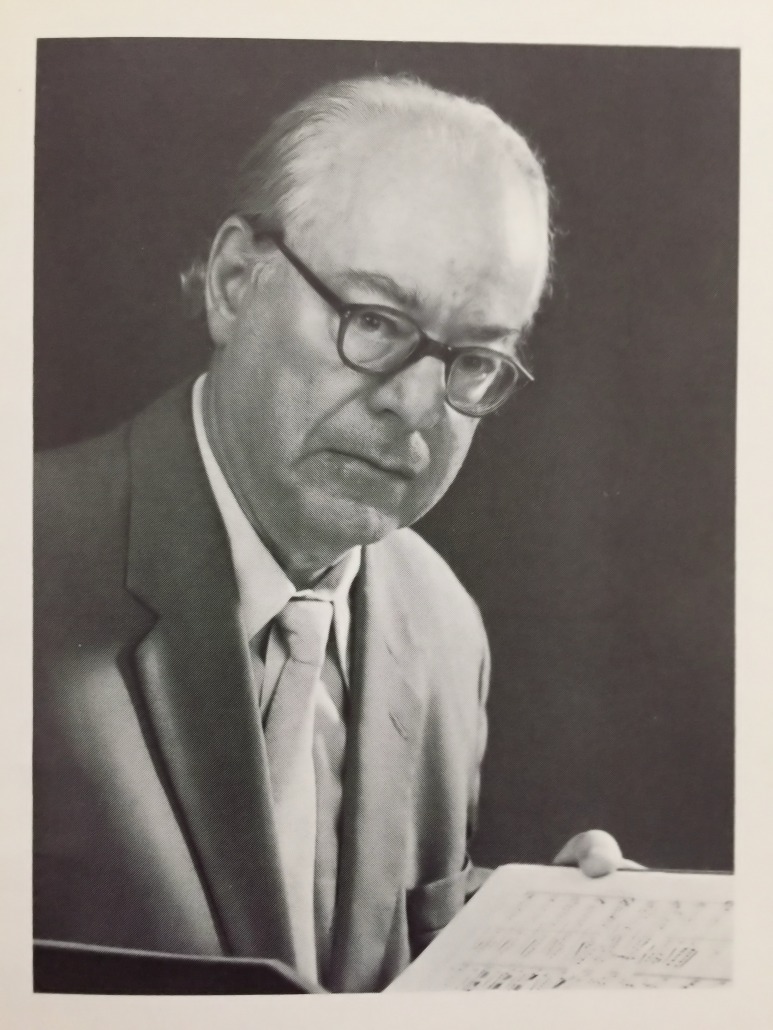
Willy Hess est un musicologue et compositeur suisse et l’un des plus importants spécialistes de Beethoven. Il est né le 12 octobre 1906 à Winterthur, dans le canton de Zürich, en Suisse.

Ses deux parents étaient doués pour les arts. Son père était propriétaire d’une marbrerie et fabrique de pierres tombales. Sa mère lui a fait donner des cours de violon quand il a eu onze ans. En ce temps-là, Willy Hess a commencé à apprendre le piano en autodidacte et à composer. Plus tard, il a retravaillé quelques-unes de ses premières œuvres et les a publiées en leur donnant le titre “Klavierstücke op. 25”.[1]

Peu après son entrée au Gymnasium (collège et lycée) de Winterthur, ses parents l’ont inscrit à l’école de musique de cette ville. Là, il a suivi des cours de violon auprès du chef d’orchestre Ernst Wolters et de piano auprès d’Otto Uhlmann. Ce dernier lui a aussi enseigné l’harmonie, la forme et le jeu avec partition.

Willy Hess aurait voulu étudier uniquement au conservatoire de musique, mais sa mère l’a poussé à étudier au Gymnasium (collège et lycée) pour passer sa Matura, un diplôme qui ouvre l’accès à l’université. S’il avait étudié uniquement au conservatoire de musique, il ne serait pas allé étudier un semestre à Berlin. Or, ce séjour a été à « la base de ce qui est devenu la tâche de ma vie et m’a apporté une reconnaissance internationale : la recherche sur Beethoven. »[2]

C’est au Gymnasium qu’il a décidé de ne jamais boire d’alcool et de ne jamais fumer. Il n’allait pas dans les locaux enfumés, même si cela l’a tenu éloigné de certains cercles qui auraient pu contribuer à son succès professionnel. De plus, il a mangé végétarien pendant de nombreuses années. Mais il haïssait toute forme de fanatisme et pouvait être ami avec des personnes qui n’étaient pas de son avis.

Son premier contact avec la musique de Beethoven a eu lieu quand il avait 16 ans, dans un foyer pour les jeunes qu’il fréquentait pendant ses vacances. Une personne qui est venue travailler dans ce foyer, Selma Heim, jouait bien du piano. Elle lui a fait connaitre les symphonies de Beethoven pour piano à quatre mains, qu’ils jouaient ensemble.

Il a étudié la théorie de la musique, la composition et le piano au Conservatoire de musique de Zürich et la musicologie aux Universités de Zürich et de Berlin. En 1927, il a obtenu son diplôme d’enseignement du piano. Depuis cette année, il a assisté à des représentations d’opéras de Wagner à Bayreuth, mises en scène par Siegfried Wagner, qu’il admirait beaucoup.

Il a passé un semestre à Berlin, où il a étudié la musicologie et a suivi des cours de basson. À la Preussische Staatsbibliothek (Bibliothèque d’État prussienne) de Berlin, il a découvert des manuscrits inédits de Beethoven, dont beaucoup d’œuvres que l’on croyait disparues. Cette activité l’a passionné, c’est pourquoi il a décidé de se mettre au service de Beethoven.

Il a choisi le métier de musicien d’orchestre parce que cela lui permettait de devenir indépendant financièrement tout en lui laissant le temps de composer et rechercher librement. Il n’aimait pas l’académisme de la musicologie telle qu’elle était pratiquée de son temps. Il trouvait qu’elle était « sans contact avec la vie vivante. »[3] C’est pourquoi il n’a pas voulu entreprendre une carrière universitaire. L’alliance du musicien d’orchestre et du théoricien s’est révélée riche de bénédictions pour son travail de compositeur et de chercheur sur les œuvres de Beethoven, d’autant plus que certaines d’entre elles étaient à compléter.

Après son séjour à Berlin, il a enseigné le piano et joué du basson dans des orchestres, composé de la musique et a écrit sur elle. De l’automne 1942 à la fin de la saison 1970-71, il était engagé dans l’orchestre de la ville de Winterthur comme deuxième basson. Avec cet orchestre, il a joué entre autres sous la direction d’Andreae, Schoeck, Ansermet et Scherchen.

Willy Hess ne s’est pas seulement intéressé à la musique. Il était très intéressé par Sven Hedin, un chercheur suédois, dont il a cité la pensée dans son autobiographie : « Je préfère un opposant sincère à un faux ami. »[4] Il s’est aussi passionné pour les régions polaires. C’est pourquoi il a appris à lire le suédois et plus tard le norvégien et le danois. Cela l’a aidé quand il a réuni les chants populaires suédois et danois mis en musique par Beethoven. Il a écrit des articles, entre autres des récits de voyage en Suède, Norvège et Groenland.

Son amour de la nature est un des points communs qu’il avait avec Beethoven. Willy Hess était persuadé que la technique mènerait l’humanité à son anéantissement. Il était préoccupé par la pollution, la « mise en esclavage et le traitement inhumain de nos animaux »[5]. Toute sa vie, il a aimé les œuvres de Johanna Spyri (qui est l’auteur du livre « Heidi »), car ils correspondaient à l’idée qu’il avait sur l’industrialisation et la nature.

Il a écrit des Lieder. Les poèmes de Mina Salm et de Dora Haller en dialecte alémanique lui ont « ouvert le chemin de la composition de chants, mais aussi celui de mon style personnel »[6]. Il a aussi mis en musique des poèmes d’Erika Stiffeler, de Manfred Kyber, Joseph von Eichendorff et Hermann Hesse. Presque tous ses cycles de Lieder ont été édités par lui, car : « Qui nage contre le courant de son temps ne peut pas compter avec de grands succès extérieurs. »[7] Toutes ses œuvres sont tonales. Il était convaincu que la tonalité était une nécessité pour la musique et l’a défendu par ses écrits. Dans une préface à un recueil de Lieder (Aus Flur und Wald, sur des poèmes en dialecte suisse alémanique de Dora Haller), il critique le jazz. Il n’aimait pas non plus la musique rock.


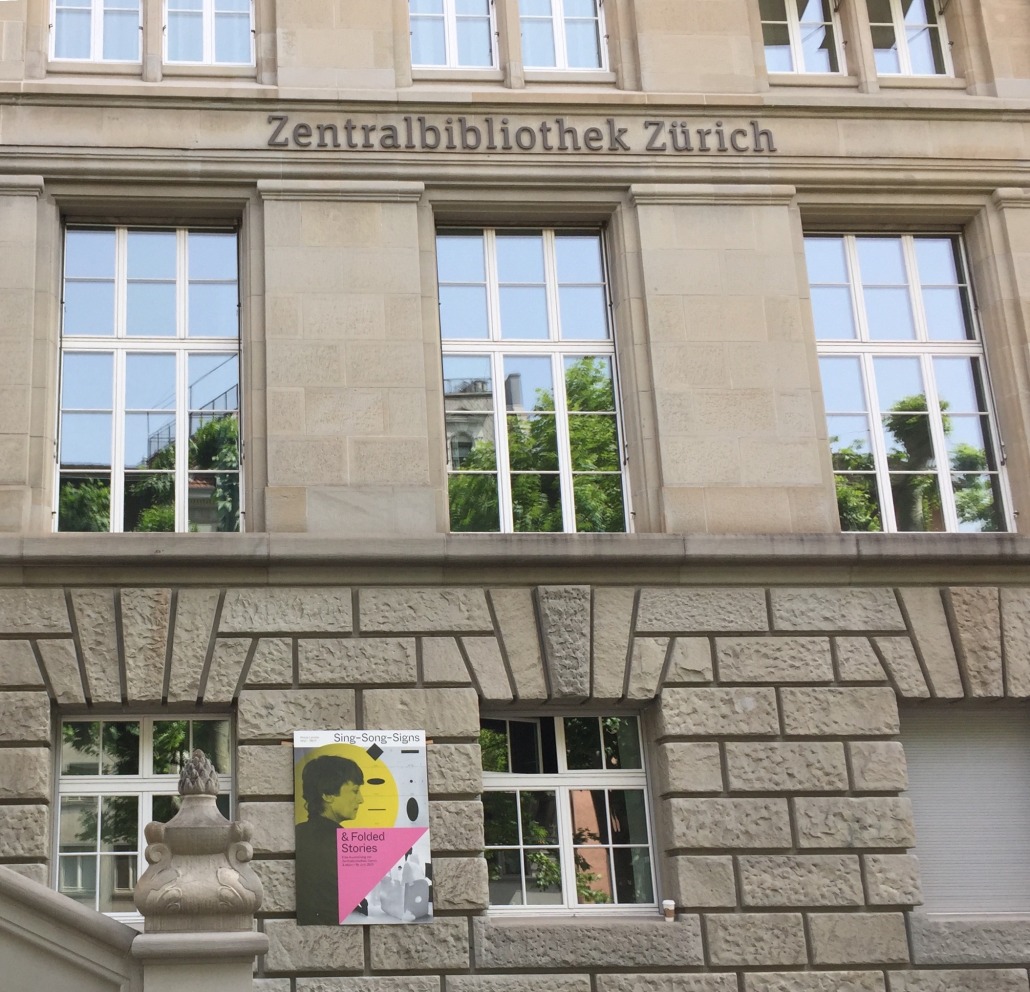
Zentral Bibliothek Zürich – Lieu où sont déposées les archives de Willy Hess

Un jour, après un concert à Uster, Bernard Päuler s’est présenté à lui. Il était le propriétaire de la maison d’édition Amadeus à Winterthur. Il lui a passé commande d’une sonate en solo pour alto. Depuis ce jour, Bernard Päuler a publié beaucoup d’œuvres de Willy Hess, ainsi que sa biographie de Beethoven et des œuvres inédites de ce dernier complétées par Willy Hess. Il lui a aussi demandé d’écrire la basse continue (la partie de la main droite pour l’instrument d’accompagnement) de certaines œuvres baroques, dont “Die kleine Kammermusik” de Telemann. De toutes les œuvres contemporaines éditées par l’éditeur Amadeus, les siennes étaient celles qui se vendaient le mieux. Le public appréciait ses œuvres, mais pas les critiques, qui préféraient les compositeurs d’avant-garde.

Voici ce qu’il pensait des carnets d’esquisses beethovéniens :

« Je voudrais également corriger une idée fausse, ou plutôt une déformation de la réalité, dont se rendent coupables les théoriciens modernes à propos des carnets de croquis de Beethoven. Les esquisses compositionnelles de Beethoven, en particulier, montrent que le maître cherchait et essayait avec le sentiment et non avec le calcul, rejetait et rejetait encore avec le sentiment jusqu’à ce qu’il trouve sa véritable idée intérieure. »[8]

En 1931, le début de son « Index des œuvres de Beethoven manquantes dans l’édition complète » (“Verzeichnis der in der Gesamtausgabe fehlenden Werke Beethovens”) a été publié dans le 5e volume de la Revue annuelle suisse de musicologie (“Schweizerischen Jahrbuches für Musikwissenschaft”). Cet index a pris la forme d’un livre édité en 1957 chez Breitkopf & Härtel.

Le 12 février 1935 a eu lieu la première exécution d’un aria de Marcelline (opéra Fidelio), qui n’avait encore jamais été imprimé. Le 10 février 1937, Margrit Vaterlaus et Erwin Tüller ont chanté la première exécution du duo “Ne’ giorni tuoi felici”. Willy Hess a mis en partition le concerto pour piano de Beethoven de 1784 et le pianiste Edwin Fischer l’a joué.

Willy Hess a publié son livre « L’opéra Fidelio de Beethoven et ses trois versions » chez l’éditeur Atlantis. Il a ensuite trouvé de nouveaux manuscrits de Beethoven à Vienne. Laissons-lui la parole pour décrire une partie de son travail au service de Beethoven :

« En 1955, la guilde du livre Gutenberg m’a chargé d’écrire une biographie de Beethoven, parue en 1956 et épuisée en quelques années. En 1959, j’ai donné cinq conférences sur les œuvres scéniques de Beethoven à la haute école des adultes de Zürich, qui ont été publiées sous forme de livre en 1962. La même année 1959, j’ai pu présenter le premier volume de mes suppléments à l’édition complète de Beethoven.[9]

Cette série de publications a sa préhistoire ! Breitkopf & Härtel avait initialement l’intention de réviser et de réimprimer leur propre édition complète. J’ai élaboré des directives à ce sujet et plusieurs réunions ont eu lieu à Wiesbaden. Mais alors l’annonce d’une nouvelle édition complète lancée par la Beethoven-Haus de Bonn a fait irruption dans nos préparatifs comme une bombe. Cela rendait nos plans illusoires, et au lieu de réviser et d’ajouter à l’ancienne édition, la société m’a chargé de publier des volumes supplémentaires censés rassembler tout ce qui manquait à l’ancienne édition. Il a été publié de 1959 à 1971 :

1er volume : Chants italiens à plusieurs voix sans accompagnement (1959).

2e volume : Chants avec orchestre (1960).

3e volume : Pour instrument soliste avec orchestre 1 (1960).

4e volume : Œuvres orchestrales (1961).

5e volume : Lieder et chants avec accompagnement de piano. Canons et plaisanteries musicales (1962).

6e volume : Musique de chambre pour cordes (1963).

7e volume : Musique de chambre pour vents, pour vents et cordes. Œuvres pour une horloge musicale (petites orgues mécaniques associés à une horloge qui jouent automatiquement toutes les heures ou demi-heures[10]) (1963).

8e volume : Arrangements originaux pour piano de ses propres œuvres (1964).

9e volume : Œuvres pour piano, œuvres de musique de chambre avec piano (1965).

10e volume : Pour instrument soliste avec orchestre 2 (1969).

11e et 12e volume : Œuvres dramatiques 1, 2 (Opéra Fidelio dans la version originale avec toutes les variantes) (1967).

13e volume : Œuvres dramatiques 3 (Fidelio 1806, plus petites œuvres) (1970).

14e volume : Arrangements de chants populaires, suppléments et rectifications (1971). »[11]

Durant ces années de recherches et de publications, Willy Hess arrêta peu à peu d’enseigner et composa peu, car il n’avait pas beaucoup de temps. En effet, il était principalement à ce moment-là musicien dans l’Orchestre de la Ville de Winterthur.

Pendant cette période, il a travaillé aux Archives de Bonn, où le Prof. Joseph Schmidt-Görg, son fils le Dr Hans Schmidt et la Dr Dagmar von Busch-Weise l’ont aidé. Parmi ses relations, citons aussi son ami le Prof. Giovanni Biamonti (Rome), un autre important spécialiste de Beethoven.

Le volume des chants populaires que Beethoven a arrangé lui a demandé un énorme travail. Par chance, Willy Hess a reçu de l’aide de Copenhague, Stockholm, Moscou (Prof. Nathaniel Fischmann), Varsovie (Dr Zofia Lissa), Budapest (Dr Benjamin Rajecky) et Londres (Dr J. A. Parkinson).

Après avoir publié le dernier volume des œuvres inédites de Beethoven, Willy Hess a continué à consacrer du temps à l’œuvre du Maître : il a notamment prêté beaucoup d’attention au respect absolu de la volonté de Beethoven. Il l’a aussi défendu énergiquement « contre tout dénigrement puéril du Génie par une certaine sorte d’avant-gardistes. »[12] Un de ses articles, qui a paru en 1970 dans la Revue musicale suisse à ce sujet lui a valu des lettres enthousiastes. Dans ses “Beethoven-Studien” (études sur Beethoven), Willy Hess a donné en 32 articles un aperçu de son travail au service de Beethoven.

Willy Hess a écrit plusieurs ouvrages sur la musique. “Die Dynamik der musikalischen Formbildung” (La dynamique de la forme musicale) en deux volumes (Vienne 1960, 1964) est le résultat d’une synthèse du praticien créateur et du théoricien avisé qu’il était. Il a aussi publié de nombreux articles, entre autres dans les Annales suisses de musicologie.

À propos de la forme musicale, il était d’accord avec « la phrase merveilleuse d’Hindemith : « La musique est parente avec la mathématique, mais elle n’est pas une mathématique. » »[13] Selon Willy Hess, « Ce que chaque vrai maître ressentait et savait (…) : Le processus de création artistique est un mélange mystérieux de forces mesurables et non mesurables, de réflexion et d’intuition. »[14]

Willy Hess a défendu par ses écrits le droit de composer de la musique tonale, même au 20e siècle, contre l’Avant-garde qui voulait imposer son style à tous. À ce sujet, il a écrit entre autres “Parteilose Kunst, parteilose Wissenschaft. Eine Auseinandersetzung mit dem Zeitgeist in der Musik” (Art sans partis, science sans partis. Une explication avec l’esprit du temps dans la musique) éditions Hans Schneider, Tutzing, 1967, et “Vom Doppelantlitz des Bösen in der Kunst, dargestellt am Beispiel der Musik” (le double visage du mal dans l’art, illustré par l’exemple de la musique) éditions F. J. Lehmanns, Munich, 1963.

Ses archives se trouvent à la Zentralbibliothek (bibliothèque centrale) de Zürich.

Willy Hess a toujours composé des œuvres tonales. Ses compositions comprennent environ 150 Lieder avec piano, plusieurs cycles de chants avec orchestre, deux opéras, une symphonie, des concertos pour soliste, un double concerto pour violon, alto et orchestre ainsi que de nombreuses œuvres de musique de chambre. Il a écrit des sonates, entre autres pour basson et petit orchestre, alto et piano, alto et basson, alto solo, flûte et violoncelle ainsi que flûte et piano.

L’année de son 70e anniversaire, à 69 ans, il a écrit son autobiographie “Aus meinem Leben” (De ma vie). Dans la conclusion de celle-ci, il a écrit qu’il regrette de ne pas avoir pu entendre beaucoup de ses œuvres, mais qu’il est reconnaissant et content d’avoir vécu beaucoup de belles choses positives et qu’il est heureux d’avoir été choisi par le destin pour accomplir son travail.

En conclusion, voici un conseil de Willy Hess: «Mes chers amis, si jamais le découragement ou le pessimisme vous envahit, cherchez alors des tâches, qui requièrent tout votre dévouement. »[15]


Photo de Willy Hess


Photo de Willy Hess dans sa biographie de Beethoven « Aus meinem Leben ».


Photo de Willy Hess dans sa biographie de Beethoven


Villa Rychenberg siège du Musikkollegium Winterthur Nord


Villa Rychenberg siège du Musikkollegium Winterthur Ouest


Villa Rychenberg siège du Musikkollegium Winterthur Sud 1


Villa Rychenberg siège du Musikkollegium Winterthur Sud 2

Quelques publications de Willy Hess sur la musique et sur l’art (en allemand)


  • Verzeichnis der nicht in der Gesamtausgabe veröffentlichten Werke Ludwig van Beethovens. Zusammengestellt für die Ergänzung der Beethoven-Gesamtausgabe, Wiesbaden, Breitkopf & Härtel, 1957.
  • Parteilose Kunst – Parteilose Wissenschaft. Eine Auseinandersetzung mit dem Zeitgeist in der Musik, Tutzing, Schneider, 1967.
  • Beethoven-Studien, Bonn, Beethoven-Haus, 1972 (Schriften zur Beethoven-Forschung, Reihe IV, Band 7).
  • Studien zu seinem Werk, Winterthur, Amadeus-Verlag, 1981
  • Das Fidelio-Buch, Winterthur, Amadeus-Verlag, 1986.
  • Hinter den Kulissen. Momentbilder und Anekdoten aus dem Leben eines Orchestermusikers, Winterthur, Ed. Swiss Music, 1992
  • Vom Doppelantlitz des Bösen in der Kunst, J. F. Lehmann, München, 1963

Sources


Willy Hess, Aus meinem Leben, éditions Werner Classen, Zürich 1976

Willy Hess : Beethoven, éditions Amadeus, Winterthur 1976

Zur Erinnerung an Willy Hess 12. Oktober 1906 bis 9. Mai 1997

Willy Hess (Komponist) – Wikipedia

Œuvres pour orgue de Beethoven — Wikipédia (wikipedia.org)

Cet article a été écrit par Miriam Allemand pour lvbeethoven.org.

[1] Chris Walton “Laudatio auf Willy Hess” in “Zur Erinnerung an Willy Hess 12. Oktober 1906 bis 9. Mai 1997” (“Discours à la louange de Willy Hess” dans “En souvenir de Willy Hess 12 octobre 1906 au 9 mai 1997”) p. 18.

[2] Willy Hess, Aus meinem Leben (De ma vie) éditions Werner Classen, Zürich 1976, p. 20.

[3] Willy Hess, Aus meinem Leben, p. 57.

[4] Willy Hess, Aus meinem Leben, p. 78.

[5] Willy Hess, Aus meinem Leben, p. 140.

[6] Willy Hess, Aus meinem Leben, p. 116.

[7] Willy Hess, Aus meinem Lelben, p. 122.

[8] Willy Hess, Aus meinem Leben, p. 117.

[9] Willy Hess, Aus meinem Leben, p. 128.

[10] https://fr.wikipedia.org/wiki/Œuvres_pour_orgue_de_Beethoven#Œuvres_pour_orgue_mécanique

[11] Willy Hess, Aus meinem Leben, p. 128 et 129.

[12] Willy Hess, Aus meinem Leben, p. 130-131.

[13] Willy Hess, Aus meinem Leben, p. 133.

[14] Willy Hess, Aus meinem Leben, p. 133.

[15] Willy Hess “Mein Abschiedsgruss” in “Zur Erinnerung an Willy Hess 12. Oktober 1906 bis 9. Mai 1997” (“Mes salutations d’adieu” dans “En souvenir de Willy Hess 12 octobre 1906 au 9 mai 1997”) p. 13.

Alcune risorse su Willy Hess: autografi, composizioni, prime edizioni

Di proprietà del Centro Ricerche Musicali www.lvbeethoven.org (estratti)

The Beethoven Music Research Center at the Beethoven-Haus in Bonn – September–October 2021

The Beethoven Music Research Center at the Beethoven-Haus in Bonn

Universität Bonn – – September 28 –October 1, 2021

The Beethoven Music Research Center lvbeethoven.org travelled to Bonn, where Luigi Bellofatto, within the framework of the conference “Musicology after Beethoven. XVII International Congress of the German Musicological Society (GfM)”, presented his research “Beethoven’s Reception in Italy through the Editions of his Music Printed in Italy in the 19th Century.” He also presented two studies by James F. Green, who was not present at the symposium.

The entire staff attended the event: Armando Orlandi, Fiorella Romenzi, Graziano Denini, and Marinella Bianco.

The Beethoven Music Research Center was invited to the Beethoven-Haus Birthplace Museum by its director, Dr. Nicole Kämpken.

Graziano Denini and Luigi Domenico Bellofatto had the pleasure of presenting the Beethoven-Archiv with two publications curated by the Beethoven Music Research Center:

  • The Revision of the Trio Anhang 3 by Graziano Denini, published by Da Vinci Publishing
  • The Piano Variations Unv. 14, with pianistic notes by Emanuele Stracchi

Beethoven’s Reception in Italy through the Editions of his Music Printed in Italy in the 19th Century

The years between the 1810s and 1830s mark the true beginning of the history of Beethoven’s reception in Italy: Milan was, along with Florence, one of the most active Italian centers, where Giovanni Ricordi and Giuseppe Lorenzi played an important role in publishing Beethoven’s works. In 1813, La Scala presented Salvatore Vigano’s ballet Prometeo, which included excerpts of Beethoven’s op. 43, some of which Ricordi published in a piano arrangement later that year, making it the first known Italian edition of Beethoven’s music. Many other Beethoven excerpts were included in ballets of Vigano and Gaetano Gioja, such as La vestaie, Didone, Gli ussiti, La vendetta di Venere, and II conte Essex, all performed at the Teatro alia Scala; most of them were then published in piano arrangements by Ricordi during the years 1815-1819, although the composer was not always acknowledged. Several early editions of Beethoven music were published in Italy, including an arrangement of op. 101 for piano and violin published by Ricordi in 1820 as well as other small, easy compositions. During the years 1817-1820, Lorenzi in Florence published almost 20 works by Beethoven, including piano and violin sonatas, and trios. Ricordi published Beethoven’s op. 85, Christ on the Mount of Olives in 1825. This became the first foreign edition of this work; several published librettos confirm that it was widely performed.


Luigi Bellofatto Born in Milan (Italy), studied piano and cello. He graduated in Physics-Electronic Engineering, has been organist making several recordings and performed several recitals. A lifelong devotee of Beethoven, Bellofatto has an extensive personal library on the subject and has given lectures on Beethoven and his music. He has written a book and contributed several articles on Alexander W. Thayer, the biographer of Beethoven, for the Beethoven-Haus in Bonn, the American Beethoven Society, the Harvard Magazine, the Association Beethoven France and other journals. He is co-author of the Italian website dedicated to Beethoven: www.lvbeethoven.org for which he wrote many articles.

James Green (Monument Records and Vance Brook Publishing, Alexandria, US)

Beethoven’s Only Uncle: Johann Peter Keverich.  New research will be presented on the life of Beethoven’s only surviving uncle. An examination of the name will be made. Because two his of brothers, his father and several other relatives including his only brother-in-law were named Johann, he probably was known in the family as “Peter”. If his sister called him Peter then his nephew, the young Beethoven, would have probably called him “Uncle Peter”. After becoming a Carmelite priest he took the name of Hubertus and was known as Father Hubertus from then on. He became the last prior of the Carmelite Monastery in Koblenz before his forced retirement to Ehrenbreitstein, the place of his birth. His activities will be described and examined in detail including his fateful encounter with the invading French army forced his retirement. An examination will be made of surviving municipal documents and contemporary newspapers of the last decade of Beethoven’s uncle’s life. There are no surviving records of any contact between Beethoven and his uncle during this period. Nor do either of Beethoven’s brothers, Carl and Johann, seem to have been in contact with him either. He died in 1807, well past the time when his nephew had become an internationally famous composer.

Beethoven Forgeries: A Recent Discovery and Its Connection to Ludwig Johann van Beethoven.  One of the more interesting aspects of the study of Beethoven’s history is the way in which things associated with him are valued, even coveted. After his death everything associated with Beethoven had value, not just his musical manuscripts and sketches, but everything from a lock of hair to letter. This demand for relics of the composer spawned an industry, that of the Beethoven forgery. Recently a letter was stolen from a public institution in the United States that had owned it for nearly a century. After its recovery an examination of the letter revealed that it was a 19lh century forgery probably done by Beethoven’s grand-nephew, Ludwig Johan van Beethoven who was living in the United States at the time. The presentation will provide detailed information on the letter’s history, its theft, recovery and the infamous career of Beethoven’s grand-nephew as a forger. A closer look will also be done of his activities as an entrepreneur, inventor, engineer and traveLer during his 19 years in America.


James F. Green was born in Michigan, where he studied fine art and history. He has a post graduate degree in Interior Design from the New York School of Interior Design. Mr. Green has been active in Beethoven research for nearly 50 years. Founder of the Michigan Beethoven Society, he presently serves on the Executive Board of the Ira F. Brilliant Center for Beethoven Studies in California. He is the author of the New Hess Catalog of Beethoven’s Works, which was awarded the Adele Mellen Prize. He has written several articles for European scholarly journals. Besides his Beethoven activities, Mr. Green is an International Award winning Interior Designer and President of Monument Records.

Il Centro Ricerche Musicali www.lvbeethoven.org a Bonn, Beethoven Haus.

Bonngasse – 28 settembre – 1 ottobre 2021

In Memoriam: 1827 – Alexander W. Thayer and the Schwarzspanierhaus, Beethoven’s Last Residence

In memoriam: 1827 – Alexander W. Thayer and the Schwarzspanierhaus, the house where Beethoven died.

Article by Luigi Bellofatto appeared in “Neue Bonner Beethoven Studien” volume 6

As is well known, Beethoven’s last accommodation in Vienna was located on the second floor of a building outside the city walls called “Altes Schwarzspanierhaus”. Beethoven moved there in mid-October 1825, and died there on March 26, 1827. Many friends and fans of Beethoven visited this house to remember the great German composer. One of these was the great biographer Alexander Wheelock Thayer, who first visited the house in 1852, describing its details and location later published in the June 26, 1852 issue of Dwight’s Journal of Music:

“When you pass through the Schotten Thor (Scottish Gate) on the west side of the city proper, the Glacis stretches close to the suburb of Waehring for at least a quarter of a mile. Opposite, the Waehringer Gasse, or rather the boulevard, leads through to the village of Waehring about two miles away. As you cross the Glacis, on the left of this avenue, overlooking the pleasant open space with its paths and trees, and the city, a huge block of buildings rises. First there was an arms factory, then a series of buildings, seventeen windows in length, occupied by a brewery and shops below and apartments for rent above; and at the end of the building, evidently once there was a church, but now a sort of military office. The central part of this block is known as the Schwarzspanier house; and here on the third floor, on the evening of March 26, 1827, in the midst of a storm of hail and rain, and thunder and lightning, Beethoven breathed his last! A lot of air and sunlight was needed for the musician, and he had lived there for some time before his death, when he was not in the country. In front of this house on the day of his funeral an immense multitude of people gathered, and when the pressure of the crowd became so great, the companies of soldiers and rows of sentries did their best to keep a passage open for the funeral procession. This anecdote that I have reported shows how universally known the great deceased was.”

Eight years later, in 1860, Thayer, after visiting Berlin in February, returned to Vienna for about two months, from March to May 1860, and on March 29, 1860, he visited the Schwartzspanierhaus for the second time, when the anniversary of Beethoven’s death.

On this visit, Thayer was accompanied by four other Beethoven admirers and reported the account of this visit in an article for Dwight’s Journal under the title “The Diarist in Vienna”; Thayer also recounted some of Breuning’s memories of Beethoven’s death, which the musicologist recounted with great reverence.

FROM 5 TO 7 P. M., 29 MARCH – A group of five Beethoven enthusiasts – Madame L., owner of that beautiful poetic bust of the composer, modeled by Prof. Schaller for the late Carl Holz; Prof. L., Dr. Gerhard von Breuning, the secretary of the Hof Walther and myself. We drove through the city, out to the Schotten Thor, through the Glacis and up to Schwarzspanier’s house. We climbed the two wide flights of stone stairs, dedicated to the dignitaries of the church and the heads of the old convent. The servant opened the door to a series of apartments, now empty for a few weeks, and we passed through two antechambers in the large main room, while one has a very beautiful view of the Glacis, town and suburb.

Exactly thirty-three years ago, Hofkretair, then a young man, and Dr. Breuning, then a thirteen-year-old boy, were here for the last time: it was the day of Beethoven’s funeral.

In that corner was the bed on which he had died.

“There,” said the doctor, “I have piled up the forty volumes of Handel’s works on the bed of the dying man. Here were the two grand pianos, Graf’s and the one that arrived as a gift from London. There was the bookshop; In that smaller room were his desk and the table on which he composed. I saw him only once intent on composing. At this point my father and Schindler were standing when urging him to make a will.”

And this strong man, overcome with emotion, turned to the window – and we remained silent. We passed through the eight rooms, large and small, that belong to the series of apartments that the composer had rented. Our conversation, in a low voice, could only be about one topic. The empty rooms, resounding at our feet, again became the dwelling place of the sick. We saw him lying there patient and composed, we heard him answer the written questions of the doctor, brother or friend, we saw the old governess or the servant come at the sound of her bell – in short they relived with Breuning those last months during the winter of 1826-7. We stayed for a long time and then, with a moved heart, left the house and went to the church courtyard in Waehring, but a couple of kilometers away. Spring had not yet arrived and the place seemed sad and desolate.


Schwarzspanierhaus (left side)


Schwarzspanierhaus (RH side)

The people who accompanied Thayer on his visit were Gerhard von Breuning, Mrs. Fanny Linzbauer, Dr. Franz Linzbauer and Paul Friedrich Walther.

Gerhard von Breuning was the son of Stephan, a close friend of Beethoven, and author of “Aus dem Schwarzspanierhause”, which he published in Vienna in 1874. The book is a fascinating reminder of Beethoven’s life. The author relates in his book this visit with his friends, adding Walther’s wife not mentioned by Thayer. Breuning visited the apartment a few days later with his family.

Frau Linzbauer was a fervent admirer of Beethoven and a devoted stodious of his works, wife of Franz Linzbauer, professor at the University of Pesth. As mentioned by Thayer in his article, Frau Linzbauer had a plaster bust of Ludwig van Beethoven that was made (at the request of his friend Carl Holz), by a famous sculptor, Professor F. Schaller, and which he purchased after Holz’s death. In 1871 he donated the bust to the Philharmonic Society of London to present it at the Centenary Festival held on 17 December 1870.

Paul Friedrich Walther was a close friend of Beethoven and was present at his funeral; he wrote an interesting memoir which he gave to Frau Linzbauer together with a laurel leaf to which Mr. Walther refers, a relic he had received from him. In this essay the author describes Beethoven’s funeral with some not very well-known additions.

MEMORANDUM by PAUL FRIEDRICH WALTHER.

I was one of those people who on March 29, 1827, followed the coffin of that powerful and unsurpassed Poet of sound, Ludwig van Beethoven. Perhaps one imagined that that moment, full of emotion and pain, was reserved for all those who had known or even seen him, and especially for those who, as orchestral musicians, so often participated in the performance of his famous compositions; but the greater part of the population of Vienna poured out in greater numbers than I have ever seen, to pay the last tribute of respect to Beethoven. The open space in front of the Schwarzspanier house, where he had lived during the years of the letter and in which he had died, was crowded with thousands of people.

The procession moved with infinite difficulty, from the house of the departure to the parish church of Alse-vorstadt; and before the procession reached the halfway point, it became necessary to bring soldiers from the barracks of the neighborhood, to preside over the route and keep it clear. On the street music composed for the great deceased was performed, (Seyfried’s Miserere) sung by a vocal quartet and sixteen singers, with the accompaniment of trombones. The supporters of the funeral cloth were all artistic notables who were active in Vienna at the time. The immense crowd finally reached Herr D’s Church, and from there to the grave in the cemetery. Everyone seemed to realize the pain that hovered.

At the entrance to the cemetery, actor Heinrich Anschütz recited a funeral oration written by Franz Grillparzer. Then I was with Johann Nepomuk Hummel, the Kapellmeister of Weimar, with August Artaria, the music publisher, with Karl M. Gross-Athanasius (formerly famous in the Vienna musical world for his critical essays, but who had retired to country life), and with many others. To keep the pressure of the crowd at bay, we stood in a circle around the tomb, into which, soon after, Beethoven’s mortal remains were lowered. Hummel threw three laurel wreaths into the grave—one on the head, one on the feet, and one in the center of the body—and then, with tears in our eyes, we left this memorable place. We, who had formed the aforementioned circle, and Beethoven’s relatives were fortunate enough to obtain a bay leaf from those garlands.

After the funeral we gathered together in the hall of the Musical Society, to rehearse for the next concert of sacred music some parts of the Great Mass, the finale of the Ode to Joy of the Ninth Symphony. Before the funeral, in the morning, most of us rehearsed the Symphony in D badly for a concert of the Amateur Society; But it is impossible to describe how inspired we were by this second test, which seemed to us a sort of evening epilogue. I couldn’t help but show my bay leaf to all those who sympathized with me deeply. I was the envy of everyone, and in the end I could not resist the pleas of Frau Betty Bogner-Fröhlich, the excellent contralto singer, for the gift of half of my leaf (she was then the wife of Ferdinand Bognor, the famous flutist, and after his death she taught drawing in the school for soldiers’ daughters in Hernals). He still keeps this half leaf in his possession. The remaining half of the laurel leaf I gave on March 21, 1860, as a token of my deep esteem to Fran Fanny Linzbauer, wife of Dr. Franz Linzbauer, professor at the University of Pesth; she is a fervent admirer of Beethoven and a devoted student of his works. I thought I could never part with this half-leaf, but now I feel I couldn’t have put it in more worthy hands. He dedicated his life to the study of the great deceased artists; and it seems to have been a happy dispensation of Providence, which should also have become the possessor of the best original plaster of Ludwig van Beethoven, which had been prepared for Carl Holz, who is now also dead and reunited with his immortal friend, who, in his great Symphony in A, had already given a taste of paradise.

This bust is an excellent work by the late F. Schaller, a distinguished professor of sculpture at the Academy here. It reminds me vividly, faithfully, unmistakably fine of Beethoven’s appearance during his later years, when I so often met him while taking his favorite walk between Döbling and Nussdorf, and I consider myself fortunate to now be able to place the little laurel half-leaf, which I received on the tomb of the immortal Beethoven, with this bust, which records for us those beloved features,  about which I lied many times while he was alive.

 PAUL FRIEDRICH WALTHER,

Secretary of the Department of Imperial Finance.


Walther handed over his Frau Linzbauer memorabilia a few days before their visit with Thayer to the Schwarzspanierhaus. An accurate description of this apartment was made by Breuning, but the only known map is the one reproduced by Stephan Ley, i.e. a sketch based on the reminiscences of Costanze and Gerhard v. Breuning. During my long research on A.W. Thayer, I found a posthumous document by Thayer with another plan of the apartment at the Schwarzspanierhaus carefully drawn by Thayer himself and extensively annotated by Gerhard von Breuning; on the back of this drawing Thayer writes “Beethoven’s last lodging in the Schwarzspanierhaus, measured and designed by me. The pencil notes are by Dr. Gerhard Breuning.” This design measures: 24 x 39 cm. This is an important document that is very similar to the plant that was reproduced in Ley’s book, but with some more interesting details, unknown until today.


Schwarzspaniehaus – original floor plan with the location of the wardrobe in the following description.


Schwarzspaniehaus – plan transcribed with notes by Luigi Bellofatto

Description of use of individual rooms:

  1. Staircase corridor.
  2. Antechamber 12 1/2 x 12 1/2 (3.8 x 3.8 m)

III. Entrance 12 3/4 x 21 1/2 (3.9 x 6.5 m)

  1. Music Room 10 x 13 (3.3 x 4 mt)
  2. Bedroom with piano 21 1/2 x 23 1/2 (6.5 x 7.1 mt)
  3. Composition room 15 x 21 1/2 (4.5 x 6.5 m)

VII Servants’ Room 12 1/2 x 15 (3.8 x 4.5 m)

VIII. Storage room 10 3/4 x 12 1/2 (3.2 x 3.8 mt)

  1. Kitchen 10 x 12 1/2 (3.3 x 3.8 mt)

Description of individual room contents:

  1. Without furniture; Nothing more than manuscripts of sheet music piled up on the floor.
  2. I believe that Leyer’s portrait of Beethoven hung here. [note by Luigi Bellofatto: maybe he meant Lyser??)
  3. Here, I think, hung the portrait of Beethoven’s grandfather
  4. Often glasses of wine on this window.
  5. Bookshop, a place where there were the two Amati violins and the “hearing aids” to hear better.
  6. Broadwood grand piano. 6a. armchair
  7. Piano Graf 7th. armchair
  8. I think the wardrobe was here
  9. Stove
  10. Bathtub
  11. Bed 11a. Header of the same
  12. Table 12a. [drawn chair] sheet music by Haslinger Diabelli Doleschalek 12b. [chair] io [Breuning], etc
  13. bedside table; on the same a glass and a black box
  14. Yellow wooden desk placed between the bedside table and the table.
  15. Larger table on which wine glasses have been placed.
  16. Table where he made up 16a. [drawn chair] chair
  17. I think it was another desk
  18. I think these were wardrobes too

The story of this interesting drawing has never been reproduced before. The plan was inside a library that belonged to A.W. Thayer and before him to Beethoven; this bookcase or cupboard was located in the second room of the Schwarzspanierhaus. (point 18 of the plan). The library, whose dimensions are 80 cm x 180 cm x 41 cm, is now preserved at the University of Pennsylvania together with a note by Thayer dated August 21, 1878 which reports:

“This library belonged to Ludwig van Beethoven. At auction of his personal belongings he was purchased by Piringer [Ferdinand], Director of the Vienna Spiritual Concerts. After his death it was bought by Franz Glöggl, a music publisher, who, after the death of his only son, for whom it was intended, sold it (about 1860) to Alexander W. Thayer. “

Gerhard von Breuning wrote that Thayer had received it from the bequest of Fräulen Anacker. After Thayer’s death, this bookshop was inherited by his niece, Mrs. Susan Thayer Fox, who sold it to Thomas Whitner Surette; in 1935 he thought of bequeathing the property to Henry S. Drinker. In fact, he wrote in a letter on June 7, 1935:

“Do you remember my Beethoven library? It belonged to Alexander Thayer, Beethoven’s biographer, and came by testamentary bequest to his niece, Mrs. Jabez Fox of Cambridge, from whom I bought it. It contains a letter from Thayer explaining its history, and there is also a map enclosed in glass on either side showing Beethoven’s house. […] There is no doubt about its authenticity, and it is therefore an extremely interesting piece of furniture. It’s made of walnut, very simple: the doors instead of having hinges have pins: there are half a dozen shelves “.

The library then passed to Henry S. Drinker who left the library to his daughter Cecilia Drinker Saltonstall, keeping it until 1983. The last act was the donation to the University of Pennsylvania, where it is still located today.

The bookcase is one of the few surviving objects from the Schwarzspanierhaus. After Beethoven’s death, on November 5, 1827, an auction was held and all the composer’s possessions were sold to various people. A list of the items sold is published in TDR vol. 5, pp. 579-583. Some were purchased by Stephan with Breuning, such as the writing desk (later purchased by Hans.C. Bodmer) and now in the Beethoven Haus. Others, such as the bedside tables that belonged to Josef Böck-Gnadenau (secretary of the Wiener Beethoven-Gesellschaft and a friend of Thayer), came to the Wiener Musem (Inv.no. 116.420).

As for the Scharzspanierhaus apartment, one of the last descriptions of Beethoven’s last lodgings before its destruction in 1903-1904 is by Maria Komorn, whose words are very touching and emotional:

One day, very young, I entered the house, which had already been evacuated by the tenants and was on the eve of the demolition. From the dark entrance a wide and worn staircase climbed. No one was to be seen, nor was any sound to be heard. In the corridor there were many low doors and it was not easy to find the right one. Eventually I ran into a cleaning lady and asked her to show me Beethoven’s final resting place. He accompanied me to the second floor and we entered. Several bare, squalid, and neglected rooms, which in their untenanted state made a doubly sad impression, had apparently not been carefully maintained by their last occupants. An infinite melancholy pervaded this empty mansion where, less than eighty years earlier, one of the masters of all time had lived. What had been surprising was the relatively large number of rooms available to such a solitary individual. In the current shortage of apartments, a large family, with two or more children, would certainly find it comfortable to live in such a spacious suite. As I passed through these empty rooms, lost in reflection, my guide, whose presence I had completely forgotten, suddenly said, “That’s where he died.” Was it true that this house, containing the room I was in now, Beethoven’s death chamber, would vanish forever within a few weeks and that no one cared about it? I couldn’t understand it. After a while I found myself back on the stairs and stepped on the battered steps on the railing of which Beethoven’s hand had often rested, my mind full of thoughts. A few weeks later the house collapsed to dust, after opportune photo shoots and numerous articles; Beethoven’s final resting place was gone.

THE PARQUET OF THE ROOM WHERE BEETHOVEN DIED

Private collection of the Centro Ricerche Musicali Beethoveniane www.lvbeethoven.it


Parquet CRMB Collection – LUIGI BELLOFATTO (Top side)


Parquet CRM Collection – LUIGI BELLOFATTO (Lower side)

Father Johannes Nepomuk Swoboda (* 12 March 1850 Moravia; † 5 April 1940 in Vienna) was a priest, choir director and librarian at the Stift Heiligenkreuz Abbey. Nepomuk Swoboda was born in Moravia, now the Czech Republic, and entered Heiligenkreuz Abbey in Lower Austria on August 14, 1869. He studied at the Theological Institute and was ordained on July 25, 1874. From 1874 to 1876 he was a Sunday preacher and from 1874 to 1886 he was a teacher at the juvenile prison; he was choir director for nine years (1877-1886) and librarian at Heiligenkreuz Abbey for seven years (1880-1887). He took on pastoral duties near the monastery. From 1887 he worked as a master and later served as court master in Vienna for decades.

Swoboda was a member of the Stift Heiligenkreuz abbey (in the Wienerwald, not far from Vienna) which owned the Schwarzspanierhaus until 1904, when it was demolished. On November 15, 1903, a final farewell party was held in this house and the demolition began on November 17. The confiscated remains of Beethoven’s apartment (door frames, doors, parquet) were handed over to the city of Vienna on December 11, 1903.

On October 20, the 22nd Magistrate’s Department informed Father J. N. Swoboda, master of the abbey, of the request whether the abbey was inclined to “hand over the original parts to the City of Vienna for the purpose of creating a Beethoven room.” (AW MA 122-M 5-2612 / 1903, fol. 5,6) [Peter Pötschner: “Das Schwarzspanierhaus”, p. 64]

On October 20, Father Swoboda replied that he could not decide because of the prelate’s current absence, but he believed that the prelate “Everything that, after an examination by experts, from that moment on will be handed over to the City of Vienna as a gift.” (AW MA 122-M 5-2612 / 1903, fol.7.8) [Pötschner, p. 64].

On December 11, 1903, these parts were taken to the Historical Museum of the City of Vienna where they are still preserved. As expressly stated in the acquisition protocol: “Three parquet panels from the first single-window room and one parquet panel from the dying room were retained by the Abbey for special gifts” (quoted by Pötschner, p. 71).

After cataloguing all the pieces on January 20, 1904, the Department of Magistrate XXII informs the Heiligenkreuz Abbey, following the mayor’s decision of January 14, the abbey was granted the right to freely dispose of all unused components. (M 77/1904) [Pötschner, page 76].

A piece similar to ours (from the parquet in the living room) is preserved in the Beethoven-Haus and mentioned in the “Drei Begräbnisse und ein Todesfall”, Bonn 2002, Kat.-Nr. 15.

This original piece, signed for authenticity by Swoboda, is part of the single parquet panel in the room where Beethoven died, which was donated with dedication.

It is part of the Collection of the CRMB www.lvbeethoven.it

Some tips to learn more about the topic

Some tips to learn more about the topic

EExhibition companions: Vol. 11 Von der Bonngasse ins Schwarzspanierhaus
Bonner und Wiener Beethoven-Häuser in alten Ansichten Silke Bettermann, Walther Brauneis und Michael Ladenburger, 3. Auflage, 2012
ISBN 978-3-88188-066-4 10.00 €

Some tips to learn more about the topic

Some tips to learn more about the topic

A digital reconstruction of the apartment can be found on this CD-ROM: CDs Beethoven-HausBeethovens last lodging in Vienna - a digital reconstruction 285 0852 00010.CD rather old, but interesting in many respects.

Some tips to learn more about the topic

Some tips to learn more about the topic

Das Schwarzspanierhaus, Beethovens letzte Wohnstätte (Wiener Geschichtsbücher, Band 2) Gebundene Ausgabe – 1. Januar 1970 di Peter Pötschner

Some tips to learn more about the topic

Some tips to learn more about the topic

Obviously, Gerhard von Breuning’s (1813–1892) book Aus dem Schwarzspanierhause, Erinnerungen an Ludwig van Beethoven Mit Ergänzungen und Erläuterungen von Alfred Christlieb Kalischer cannot be missing.

Some tips to learn more about the topic

Some tips to learn more about the topic

... And in our language? The book by Buscaroli Pietro, LE CASE DI BEETHOVEN ed altri saggi beethoveniani - Mario Lapucci, Edizioni del Girasole – Ravenna 1982 19×15 – Pages: 92 and appendix. (you can only find antiques).