
Posts

Pages

The Enigma of Minona von Stackelberg: Was She the Illegitimate Daughter of Ludwig van Beethoven?

The Enigma of Minona von Stackelberg: Was She the Illegitimate Daughter of Ludwig van Beethoven?

ew version of the article that originally appeared in French in the A.B.F. journal, and earlier on the website www.lvbeethoven.com

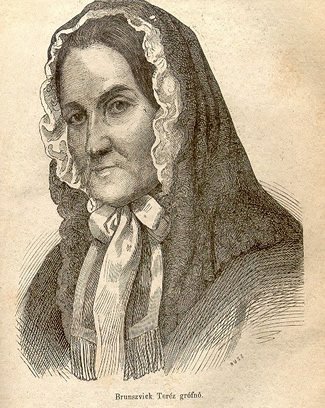
Therese Brunsvik de Korompa (1775–1861)

A life shaped by music, pedagogy, and silent devotion

The eldest daughter of Count Anton Brunsvik and Anna von Seeberg, Therese was born in 1775 into one of Hungary’s most influential noble families. Raised between the estates of Martonvásár and Korompa, she received a refined education and soon distinguished herself for intelligence, sensitivity, and a strong reformist spirit.

In 1799, together with her mother and her sister Josephine, she entered the Viennese salons where she met Ludwig van Beethoven. A deep friendship grew between them, nourished by mutual esteem and a shared educational ideal. Therese was briefly his pupil, and in 1810 Beethoven dedicated to her the Sonata in F‑sharp major, Op. 78.

Her correspondence and diaries — invaluable historical sources — reveal not only her bond with Beethoven but also the central role she played in protecting and supporting her sister Josephine, especially during the most difficult years of her life.

A passionate advocate of Pestalozzi’s educational principles, Therese devoted herself to early childhood education and to the promotion of women’s rights. She founded the first kindergartens in Hungary and fought for social equality in Budapest. She never married, but became a spiritual mother to many children, including the mysterious Minona, Josephine’s daughter, whom she raised with love and discretion.

Therese died in 1861, leaving behind a legacy of pedagogical innovation and a unique testimony to the inner world of Beethoven and his circle.

Josephine Brunsvik de Korompa (1779–1821)

The countess who loved Beethoven — and paid the price of her nobility

Born in 1779, the second daughter of Count Anton Brunsvik and Anna von Seeberg, Josephine grew up amid the splendor of Hungarian aristocracy and the constraints of a strict upbringing. Gifted with grace, intelligence, and deep musical sensitivity, she entered the Viennese salons in 1799 with her mother and sister Therese, where she met Ludwig van Beethoven.

Between them arose a bond that was profound, passionate, and tormented. Josephine was his pupil, muse, and confidante. After her marriage in 1800 to Count Joseph Deym — a union of convenience rather than affection — the correspondence with Beethoven ceased, only to resume intensely after Deym’s death in 1804. Their letters, filled with longing and sorrow, reveal a relationship that challenged social conventions and the rigid boundaries of class.

Widowed and mother of four, Josephine found herself torn between her love for Beethoven and the legal and familial pressures that prevented her from marrying a man of non‑noble birth. Her life was marked by imposed choices, including a second, unhappy marriage to Baron Christoph von Stackelberg, with whom she had additional children.

In 1813, Minona was born — a mysterious child never officially acknowledged. Therese, ever devoted, took her in and raised her. The circumstances of Minona’s birth — and even her name, an anagram of “Anonim” — have long fueled the belief that Beethoven was the father.

Josephine died in 1821, worn down by illness and a life of renunciation. Today she emerges as a woman divided between duty and passion, nobility and freedom, motherhood and an impossible love.

Adam (Ádám) von Stackelberg (1787–1841)

The Baltic baron who became Josephine’s second husband

Adam von Stackelberg, born in 1787 into a Baltic noble family, belonged to the cosmopolitan world of the imperial aristocracy that moved between Vienna, Livonia, and the courts of Central Europe. Young, polished, and ambitious, he quickly entered diplomatic and military circles, where he distinguished himself for elegant manners and a taste for social life.

In 1810 he met Josephine Brunsvik, already widowed from Count Deym and mother of four. Their marriage, celebrated the same year, was welcomed by both families: a “suitable” union that promised Josephine renewed social stability and offered Stackelberg a stronger position in Viennese and Hungarian society. Reality, however, proved very different.

Often absent due to travels and appointments, Stackelberg soon revealed an unsettled character and little inclination toward family responsibilities. His relationship with Josephine’s children was strained, and the couple’s financial situation deteriorated rapidly. Letters and diaries by Therese Brunsvik describe growing tensions, misunderstandings, and an emotional estrangement that became irreversible.

In 1813, Minona was born — the most enigmatic child of the Brunsvik family. Stackelberg never recognized her as his own, and shortly thereafter abandoned Josephine entirely, relinquishing any role in the household. The separation left Josephine in a state of material and emotional fragility, while Therese assumed responsibility for the children.

After leaving the family, Stackelberg continued his career through various administrative posts and travels in Eastern Europe. He died in 1841, far from the Brunsvik circle — an elegant yet elusive figure, more spectator than protagonist, but nonetheless decisive in shaping Josephine’s fate and the still‑debated story of Minona’s birth.

Therese Brunsvik and the Birth of Minona

In her memoir Mein halbes Jahrhundert, Therese von Brunsvik declared not only that she was the “godmother” of the child, but wrote quite literally: “Das Kind wurde mir förmlich geschenkt” (“the child was literally given to me”). The reason for this statement is clear: since Josephine was not yet legally divorced, Therese wished to prevent Count Christoph von Stackelberg from claiming any rights over this child of love. She also wanted to protect the newborn from the constant conflicts between Josephine and her husband, quarrels that had already deeply affected the other children.

Josephine never kept the secret from her sister. Therese was informed of the pregnancy from the very beginning. In her diary entry of 22 September 1812, she wrote:

“Josephines Kind will ich nicht als das meinige ansehen, sondern es für seine Eltern mit der größten Verleugnung und wie es Pflicht ist, erziehen…” (“Josephine’s child will not be as if it were my own, but I shall raise her for her parents, with the greatest self-denial, as duty requires…”)

As for von Stackelberg, he respected a tacit agreement to stay away from his wife. Therese later noted in her diary: “Wir sahen ihn sechs Monate nicht” (“We did not see him for six months”).

Yet on 4 December 1812, without warning, the count returned briefly to Vienna. His attitude toward Josephine remained unchanged: cold, distant, and devoid of any marital relationship.
Josephine’s Flight and the Birth of Her Child

Josephine, pregnant during this turbulent period, made a drastic decision: as Therese recounts, she “packed clothes and linen and decided to leave the house.” It is unclear whether von Stackelberg remained in Vienna in the following months; however, on 20 March 1813 — shortly before the birth — he drafted a new marital contract. Its final sentence was stark:

“Du bist frey – wie Du selbst mit Dir rechnen willst.” (“You are free — but you must rely solely on yourself.”)

A few days later, Stackelberg apparently left Vienna for good. No one in the Brunsvik household knew where he had gone. He considered himself so far removed from his family obligations that he no longer fulfilled even his duties toward his two elder children, nor did he assist his wife, who was close to giving birth.

On 9 April 1813, Josephine’s presumed natural daughter by Beethoven was born. She was given the name Maria Theresia Minona Selma Arria Cornelia. The name “Minona,” taken from Goethe’s Werther, is unusual; even more striking is its anagram, “Anonim,” suggesting a deliberately concealed identity.

Mystery Within Mystery

Anyone who speculates about Beethoven’s possible paternity can only add mystery to mystery. It must be remembered that the child was born in absolute secrecy, and that only Therese von Brunsvik stood by Josephine during those sorrowful hours.

At the beginning of 1814, Christoph von Stackelberg suddenly returned to Vienna and immediately went to the police to denounce his wife, alleging a “danger to the morality of their children.” His likely intention was to force Josephine to follow him to Estonia. She refused, choosing to remain in Vienna. The authorities, believing his accusations, entrusted the couple’s three daughters to Stackelberg.

Josephine’s Collapse

It is undeniable that the severe nervous breakdown that struck Josephine was directly linked to these painful events. With a broken and powerless heart, she watched as Stackelberg took away her three young daughters. She might have wished to fight for them, but she no longer had the physical or emotional strength to resist.

While Therese cared for the children from Josephine’s first marriage to Count Joseph Deym at the Deym castle in Hacking Zinzendorf, Josephine remained in the Deym residence in Vienna, ill and devastated. In this state of profound sorrow and isolation, she refused to see anyone — not even Beethoven, one of the dearest presences in her life.

Josephine’s Death and Minona’s Fate

This tragedy shattered Josephine completely. Her suffering was indescribable, and already weakened by grief for her daughters, she died on 31 March 1821 at the age of forty‑two, officially of “exhaustion.” At that very time Beethoven was suffering from a severe attack of jaundice that brought him close to death; all work on the symphony that would become the Ninth was halted. While little Minona found refuge with her aunt Therese at the Hacking‑Hütteldorf estate, the composer entered a period marked by worsening health and the painful legal struggle over his nephew Karl — a conflict that began in 1817 and culminated in the boy’s suicide attempt in 1826.

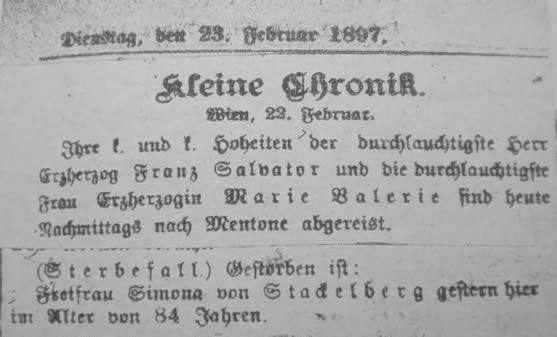
Taken to Estonia at eighteen months, Minona saw her mother again only years later, when she was brought to Josephine’s bedside as her condition deteriorated rapidly. She was six years old when Stackelberg returned her and her siblings, Theophile and Maria Laura, to Vienna. They had barely fulfilled their filial duties before their father forced them all back to Estonia.

When Therese saw Minona again — now six years old — she immediately noticed how unlike she was to the other children Josephine had had with Stackelberg. She could not fail to see it: Minona was, after all, her “secret.” Therese wrote in her diary:

“Merkwürdig hatte sich das Kind entwickelt. Ohne schön zu sein, war sie stark und imponierte dermaßen ihren älteren Schwestern, daß wir sie immer die Gouvernante nannten. Es zeigte sich auch später, daß sie das meiste Genie unter den Schwestern hatte.” (“The child had developed in a remarkable way. Though not beautiful, she was strong and impressed her older sisters so much that we always called her the Governess. It later became clear that she had the greatest talent among the sisters.”)
Minona, Music, and the Unspoken Secret

Minona lived for some time in Tallinn, where she studied music. She became an excellent pianist and also studied composition; many of her works were published during her lifetime.

It is said that Therese von Brunsvik eventually confided the truth of the story to a nephew — long after Beethoven’s death. The nephew later reported that in 1870 Minona appealed in vain to a distant relative of her mother’s family, asking him to hand over the correspondence between Josephine and Beethoven.
Author’s Note

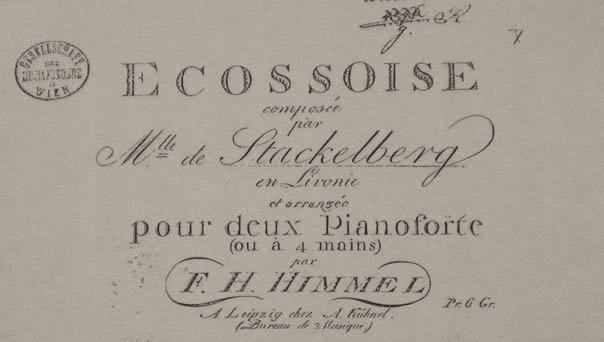
I have been able to locate only two works attributed to a “Mlle. Stackelberg.” A more thorough investigation is needed to determine the true extent of Minona von Stackelberg’s musical output.

The two surviving Ecossaises are conventional pieces. The first, for solo piano in E‑flat major, is a lively, typical example of the genre. The second, in the unusual key of B‑flat minor, also bears the title Ecossaise and was published by Kühnel in Leipzig. It appears, however, to have been arranged by Friedrich Heinrich Himmel (1765–1814).

Thus, although attributed to a “Mlle. Stackelberg,” this work cannot be by Minona, born in 1813 — unless one assumes an extraordinarily precocious genius.

The Lost Letters and Minona’s Legacy

The letters Minona sought throughout her life remain untraceable. They seem to lie buried in a vast family archive, only recently made partially accessible to scholars. Lacking direct documents, Minona had to rely on vague recollections and on her aunt Therese’s diary when trying to uncover her origins.

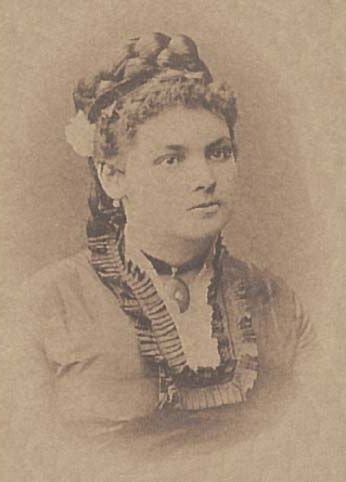
From the few portraits and rare photographs that survive, Minona appears as a strong‑willed woman, bearing — especially in old age — a striking resemblance to the master from Bonn. Like her presumed father, she lived her entire life alone. The same fate befell her Deym half‑sisters Victoire and Sophie, and her Stackelberg half‑siblings Theophile and Laura Marie.

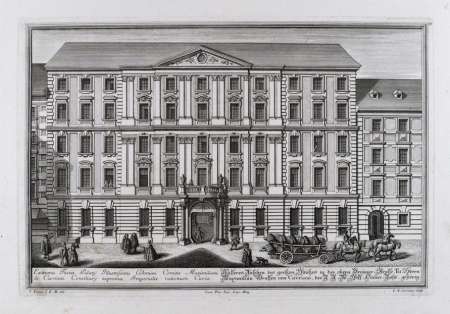
After the death of her stepfather in 1841, Minona returned to Vienna, settling in the still‑standing Palais Cavriani in the former Oberen Bräunergasse, now Habsburgergasse No. 5. She formed a close friendship with the owner, Count Luigi Cavriani (1758–1839), and his wife, both passionate music lovers, as were the Count and Countess de Bánffy, their intimate friends.

Minona’s proud temperament — perhaps inherited from her illustrious parent — manifested itself throughout her life. When the family’s financial situation later became precarious, she would often say:

“Das bin ich meiner Herkunft schuldig!” (“My only fault is what I have inherited.”)
The protagonists of this story, reinterpreted with the help of AI

The protagonists of this story, reinterpreted with the help of artificial intelligence, are not meant to replace history, but simply to bring these figures closer to us.


Stackelberg Minona von (1813-1897)


Brunswick Thérèse (1775-1861)


Brunswick Josephine e Charlotte (1782-1843)


Brunswick Josephine (1779-1821)


Stackelberg Adam Christoph Freiherr von (1777-1841)

Further information

Bibliography

  • Beahrs, Virginia (1986): “The Immortal Beloved Revisited.” The Beethoven Newsletter 1/2 (Summer), pp. 22–24.
  • Beahrs, Virginia Oakley (1988): “The Immortal Beloved Riddle Reconsidered.” Musical Times, Vol. 129, No. 1740 (Feb.), pp. 64–70.
  • Beahrs, Virginia (1993): “Beethoven’s Only Beloved? New Perspectives on the Love Story of the Great Composer.” Music Review 54, no. 3/4, pp. 183–197.
  • Brandenburg, Sieghard (1996, ed.): Ludwig van Beethoven: Briefwechsel. Gesamtausgabe. 8 vols. Munich: Henle.
  • Czeke, Marianne (1938): Brunszvik Teréz grófnő naplói és feljegyzései, vol. 1. [Countess Therese Brunsvik’s Diaries and Notes.] Budapest.
  • Dahlhaus, Carl (1991): Ludwig van Beethoven: Approaches to his Music. Oxford: Oxford University Press.
  • Goldschmidt, Harry (1977): Um die Unsterbliche Geliebte. Ein Beethoven-Buch. Leipzig: Deutscher Verlag für Musik.
  • Kaznelson, Siegmund (1954): Beethovens Ferne und Unsterbliche Geliebte. Zürich: Standard.
  • La Mara (Ida Marie Lipsius) (1909): Beethovens Unsterbliche Geliebte. Das Geheimnis der Gräfin Brunsvik und ihre Memoiren. Leipzig: Breitkopf & Härtel.
  • La Mara (1920): Beethoven und die Brunsviks. Nach Familienpapieren aus Therese Brunsviks Nachlaß. Leipzig: Siegel.
  • Massin, Jean & Brigitte (1970): Recherche de Beethoven. Paris: Fayard.
  • Schmidt-Görg, Joseph (1957, ed.): Beethoven: Dreizehn unbekannte Briefe an Josephine Gräfin Deym geb. v. Brunsvik. Bonn: Beethoven-Haus.
  • Skwara, Dagmar / Steblin, Rita (2007): “Ein Brief Christoph Freiherr von Stackelbergs an Josephine Brunsvik-Deym-Stackelberg.” Bonner Beethoven-Studien, vol. 6, pp. 181–187.
  • Solomon, Maynard (2005, ed.): Beethovens Tagebuch 1812–1818. Bonn: Beethoven-Haus.
  • Steblin, Rita (2002): “Josephine Gräfin Brunswick-Deyms Geheimnis enthüllt: Neue Ergebnisse zu ihrer Beziehung zu Beethoven.” Österreichische Musikzeitschrift 57/6 (June), pp. 23–31.
  • Steblin, Rita (2002): A History of Key Characteristics in the 18th and Early 19th Centuries. 2nd ed. University of Rochester Press.
  • Steblin, Rita (2007): “‘Auf diese Art mit A geht alles zugrunde.’” Bonner Beethoven-Studien, vol. 6, pp. 147–180.
  • Steblin, Rita (2009): “Beethovens ‘Unsterbliche Geliebte’: des Rätsels Lösung.” Österreichische Musikzeitschrift 64/2, pp. 4–17.
  • Tellenbach, Marie-Elisabeth (1983): Beethoven und seine ‘Unsterbliche Geliebte’ Josephine Brunswick. Ihr Schicksal und der Einfluß auf Beethovens Werk. Zürich: Atlantis.
  • Tellenbach, Marie-Elisabeth (1987): “Beethoven and the Countess Josephine Brunswick.” The Beethoven Newsletter 2/3, pp. 41–51.
  • Tellenbach, Marie-Elisabeth (1988): “Künstler und Ständegesellschaft um 1800: die Rolle der Vormundschaftsgesetze in Beethovens Beziehung zu Josephine Gräfin Deym.” Vierteljahrschrift für Sozial- und Wirtschaftsgeschichte 2/2, pp. 253–263.
  • Tellenbach, Marie-Elisabeth (1992): “Beethovens Schülerin Josephine Brunswick, oder warum seine ‘Unsterbliche Geliebte’ ihn nicht geheiratet hat.” In: Hoffmann, Freia & Rieger, Eva (eds.): Von der Spielfrau zur Performance-Künstlerin: Auf der Suche nach einer Musikgeschichte der Frauen. Kassel: Furore, pp. 61–75.
  • Tellenbach, Marie-Elisabeth (1993/1994): “Psychoanalysis and the Historiocritical Method: On Maynard Solomon’s Image of Beethoven.” The Beethoven Newsletter 8/3, pp. 84–92; 9/3, pp. 119–127.
  • Tellenbach, Marie-Elisabeth (1996): “Noch eine Geliebte Beethovens gefunden – oder erfunden?” Musica Germany 50/2, pp. 78–83.
  • Tellenbach, Marie-Elisabeth (1998): “Psychoanalyse und historisch-philologische Methode. Zu Maynard Solomons Beethoven- und Schubert-Deutungen.” Analecta Musicologica 30/II, pp. 661–719.
  • Tellenbach, Marie-Elisabeth (1999): “Die Bedeutung des Adler-Gleichnisses in Beethovens Brief an Therese Gräfin Brunswick.” Die Musikforschung.

Luigi Domenico Bellofatto – Memorabilia of the C.R.M.B.: Rare Objects and Historical Mementos from Beethoven’s Birthplace

Luigi Domenico Bellofatto – Memorabilia of the C.R.M.B.

Objects, mementos, and antiques owned by the Beethoven Music Research Center www.lvbeethoven.org

Today, December 16, 2023, the birthday of Ludwig van Beethoven, we present two rarities and memorabilia owned by the CRM related to the house in Bonn where the composer was born 253 years ago. They are:

– A brick from the house with the Beethoven-Haus seal and its certificate of authenticity.

It was donated to us as a token of gratitude for a long-standing collaboration between the CRM and the BH in Bonn.

– A piece of wood from the beam in the room where the musician was born, with the two seals Beethoven used. Behind it is the BH stamp; these pieces were likely produced between 1937 and 1939 by the then owner of the house, Heinrich Hasselbach, following a restoration.

– A plate from page 106 of a first edition of a Beethoven piano sonata.

– The original note announcing the composer’s funeral, on March 29, 1827, at 3 p.m.

The Beethoven Music Research Center is enriched by a great rarity: the ORIGINAL portrait of Beethoven composing at the piano by Hermann Junker (September 18, 1838 Frankfurt a.M. – February 10, 1899).
This famous portrait has been reproduced in numerous black and white magazines, and we show it in the original colors. A sheet of paper behind the painting bears an interesting inscription:
Dem Verfasser des poeticischen Beethoven-Album Herrn Hermann Landau zur f.[reundlichen] E.[rinnerung] an Herrmann Junker Frankfurt a[m]/m[ain] 1877 Aus d. Sammlung Lanna
The painting was donated by the artist to the scholar Hermann Joseph Landau (Prague, June 19, 1815; Prague, February 2, 1889); Landau wrote a collection of essays on Beethoven entitled “Erstes poetisches Beethoven-Album. Zur Erinnerung an den grossen Tondichter und an dessen Sacularfeier, begangen den 17. Dezember 1870” published in Prague in 1872 (second edition 1877). Exclusively for the C.R.M.B.

The Relationship Between Beethoven and Spontini – Cumulative Article

The Relationship Between Beethoven and Spontini

Article by the staff of the Beethoven Music Research Center – www.lvbeethoven.org

The organist Karl Gottlieb Freudenberg, principal organist of Breslau, met Beethoven in July 1825 and left a vivid and passionate recollection of the encounter.

“Soon a vigorous, medium‑sized man appeared, with a friendly gesture and a benevolent gaze… We chatted freely for about an hour. Naturally, the subject of our conversation was music and its young adepts. I thought that Rossini, then so fashionable, would be mocked by Beethoven. Instead, he acknowledged that Rossini had great talent as a composer of melodies, even though his music, like the spirit of the age, was frivolous and sensual. Spontini had many good qualities; he always achieved theatrical effects with great precision… Spohr, in his view, used too many dissonances, and his chromatic melody detracted from the pleasure his music could give. He held Sebastian Bach in the highest esteem: ‘Not Bach [brook], but ocean he should have been called, for the infinite and inexhaustible wealth of his harmonic combinations. He was the ideal of every organist.’ I too, he said, played the organ in my youth, but my nerves could not withstand the power of that gigantic instrument. I consider a master organist among the greatest of virtuosos. He then observed that true church music should be performed only by voices, and for this reason he preferred Palestrina above all other composers of sacred music. He also believed it madness to try to imitate him unless one possessed both his genius and his religious faith.”

(Freudenberg, quoted in Prod’homme)

From www.barbadillo.it

Culture (P. Isotta): Spontini and Cherubini, the great (and uncomfortable) Italians we forget today

Spontini considered Beethoven his first model. It is worth recalling that when he moved to Berlin, the Italian inventor of modern conducting was the first to conduct Bach’s Great Mass and Beethoven’s Missa Solemnis outside Vienna; he was also the first to restore the original edition of Mozart’s Don Giovanni.

From www.musicandosite.com

History of Opera: Opera in France with Spontini and Cherubini

Among Spontini’s Berlin operatic productions—he is regarded in music history as the first eminent conductor—one must remember the opera Agnese di Hohenstaufen (1829). Its score, aligned with the new course of Romantic opera, presented a historical subject no longer tied to the classical world, while the music reflected the arrival on the operatic stage of Beethoven’s Fidelio and Weber’s works.

A Personal Curiosity

It is curious to see that the busts of Beethoven and Spontini were placed on the façade of the Paris Opera, with Mozart’s bust between them.

Busts of Mozart, Beethoven and Spontini by Chabaud, façade of the Palais Garnier, Paris.

From www.treccani.it — Andrea Chegai

In Berlin, Spontini conducted works by Händel, Haydn, Beethoven, as well as Don Giovanni and even Der Freischütz, in memory of the recently deceased composer and for the benefit of his family (6 November 1826).

Beethoven and Spontini: A Historical Relationship Reconsidered

Although Beethoven and Gaspare Spontini never developed a personal friendship nor exchanged letters, their relationship occupies a meaningful place in early nineteenth‑century musical culture. What survives is a network of testimonies, artistic judgments, and documented performances that reveal a mutual, if indirect, professional respect.

Spontini as a Promoter of Beethoven in Berlin

When Spontini became Generalmusikdirektor of the Royal Opera in Berlin (1820–1840), he played a decisive role in shaping the city’s musical identity. His programming frequently included works by Beethoven, whom he regarded as a model of the new orchestral and dramatic aesthetics. One of the most significant events was the concert spirituel of 1828, in which Spontini conducted movements from Beethoven’s Missa solemnis alongside Bach’s Mass in B minor. This pairing was not accidental: it reflected Spontini’s intention to elevate Berlin’s musical life by presenting Beethoven as a central figure of the German canon.

Beethoven’s View of Spontini

Beethoven’s opinion of Spontini is preserved through the testimony of the organist Karl Gottlieb Freudenberg, who visited him in 1825. According to Freudenberg, Beethoven acknowledged that Spontini possessed “many good qualities” and praised his ability to achieve theatrical effects with precision and clarity. This is one of the very few direct assessments Beethoven ever made of Spontini, and it shows a tone of measured but genuine respect.

Spontini’s Admiration for Beethoven

Spontini, for his part, considered Beethoven a primary artistic reference. His Berlin years were marked by an effort to promote composers who embodied the ideals of seriousness, structural rigor, and expressive depth—qualities he associated with Beethoven. By conducting Beethoven’s works outside Vienna, Spontini contributed to the European reception and canonization of Beethoven’s music.

No Direct Correspondence

Despite these artistic connections, modern critical editions of Beethoven’s letters confirm that no direct correspondence between Beethoven and Spontini has survived. Their relationship was therefore professional rather than personal, mediated through performances, testimonies, and the broader cultural discourse of their time.

A Relationship of Influence, Not Intimacy

In sum, the Beethoven–Spontini relationship is best understood as a dialogue of reputations:

  • Beethoven respected Spontini’s theatrical craftsmanship.
  • Spontini championed Beethoven’s music in one of Europe’s most influential cultural capitals.

Their paths never crossed closely, yet each contributed—directly or indirectly—to the other’s historical legacy.

Notes on Letters and Conversation Books

Letters: ILTE / Anderson p. 235, letter 192 – p. 1140, letter 1172 (contextual references)

Conversation Books: p. 202, Book VI, January 1820, folio 10b p. 363, Book IX, 11–17 March 1820, folio 38b p. 1366, Book XXXV, June–early July 1823, folios 48b / 49a

Articles – Collection of Period Newspapers Concerning Beethoven-Related News

Collection of period newspapers concerning Beethoven-related news

Article dedicated to a collection of period newspapers that refer to Beethoven or to his works, events of his time, and contemporary historical facts. Photographic article in continuous update, available since February 2016. Documents owned by the Site.

Journal de Paris

Journal de Paris

number 146 of 26 May 1789

Demain 27, Concerte au Bénefice de M. Georges Bridgetower...... agé de neuf ans.....

Journal de Paris

Journal de Paris

number 146 of 26 May 1789

Demain 27, Concerte au Bénefice de M. Georges Bridgetower...... agé de neuf ans.....

Staats und Gelehrte Zeitung

Staats und Gelehrte Zeitung

number 194 of 6 December 1809

with the supplement

Staats und Gelehrte Zeitung

Staats und Gelehrte Zeitung

1809, 6 December

… announcing the forthcoming publication of the transcription for piano and violin (flute) of the Pastoral Symphony Op. 68 (New catalogue, page 379, VN/PN 751)

Correspondenten

Correspondenten

1811, 13 February

… advertising the “neue Musikalien”; by Beethoven are published Opus 74, 75, 76, 77, 78, 79 and the Concerto Opus 73.

Correspondenten

Correspondenten

1811, 27 april

… advertising the “neue Musikalien”; by Beethoven are published Opus 80, 81… again 81, 82, and the oratorio Opus 85.

Allgemeines Intelligenzblatt,

Allgemeines Intelligenzblatt,

1815 – 15 march:

Public performance of the Wellington’s Victory, Opus 91

Allgemeines Intelligenzblatt,

Allgemeines Intelligenzblatt,

1815 – 15 march:

… and the detail of the same newspaper, with the small column dedicated to the event … “Zwei neue grosse Symphonien”…

Wiener Zeitung,

Wiener Zeitung,

6 March 1816

… two new great symphonies… (Opp. 91 and 92)… (The Wellington’s Victory was indicated as a “Symphony”)

Wiener Zeitung,

Wiener Zeitung,

6 mach 1816

… and the detail of the article: Wiener Zeitung, 6 March 1816… two new great symphonies… (Opp. 91 and 92)… (Wellington’s Victory was indicated as a “Symphony”)

Leipziger Zeitung

Leipziger Zeitung

1821, 15 January

“the celebrated composer Ludwig van Beethoven at work on new, unpublished compositions…”

Allegemeine Zeitung,

Allegemeine Zeitung,

1821, 20 July

News of the death of the former Emperor of France Napoleon Bonaparte

Preussische Staats Zeitung numero 98 del

Preussische Staats Zeitung numero 98 del

1824, 26 april.

“the celebrated composer Ludwig von (!) Beethoven awarded the gold medal by the King of France…”

Münchener Politische Zeitung,

Münchener Politische Zeitung,

1827, 2 april

News of the illness of the celebrated composer Ludwig van Beethoven (in reality the death had already occurred on the 26th of the same month)

Staats un Celehrte Zeitung,

Staats un Celehrte Zeitung,

1827, 31 March

News of the illness of the celebrated composer Ludwig van Beethoven (in reality the death had already occurred on the 26th of the same month)

Staats un Celehrte Zeitung,

Staats un Celehrte Zeitung,

1827, 2 April

News of the increasingly alarming reports concerning the progression of the illness of the celebrated composer Ludwig van Beethoven (in reality the death had already occurred on 26 March)

Staats un Celehrte Zeitung,

Staats un Celehrte Zeitung,

1827, 3 April

News of the death of the celebrated composer Ludwig van Beethoven

Stralsundische Zeitung,

Stralsundische Zeitung,

1827, 10 April

News of the death of the celebrated composer Ludwig van Beethoven

Allegemeine Musikalische Zeitung

Allegemeine Musikalische Zeitung

1827, 23 May, number 21

… something about Ludwig van Beethoven…

Allegemeine Musikalische Zeitung

Allegemeine Musikalische Zeitung

1827, 30 May, number 22

“Beethoven.” 30 May 1827. Poem by Mr J. G. Seidl, recited on the occasion of the erection of the Master’s funerary monument in Vienna.

Allegemeine Musikalische Zeitung

Allegemeine Musikalische Zeitung

1827, November, number 47

Beethoven und Weissbach.....

Allegemeine Musikalische Zeitung

Allegemeine Musikalische Zeitung

1828, 8 January, number 1

Ode "An die Musik"....

Berlinische Nachrichten –

Berlinische Nachrichten –

1828 26 March:

“one year after the passing of the celebrated Ludwig van Beethoven, a concert in his memory…”

The New-York Mirror

The New-York Mirror

October 15, 1831

….. Beethoven’s celebrated Grand Wlatz, for the piano-forte. First U.S. edition

The New-York Mirror

The New-York Mirror

October 15, 1831

….. Beethoven’s celebrated Grand Wlatz, for the piano-forte. Prima edizione U.S.A.

Burgblatt,

Burgblatt,

1832

… concerning the character of the late musician Ludwig van Beethoven

Weimarische Zeitung

Weimarische Zeitung

27 July 1833

… anecdotes about the life of Ludwig van Beethoven…

Der Humorist

Der Humorist

23 april 1844

… the overture from the opera “Leonore” …

Der Humorist

Der Humorist

23 april 1844

… the overture from the opera “Leonore”, detail of the article

Bohemia n° 42

Bohemia n° 42

14 march 1848

Beethoven and his brother Nikolaus Johann, whose death is reported

Bohemia n° 42

Bohemia n° 42

14 march 1848

Beethoven and his brother Nikolaus Johann, whose death is reported

The Albion,

The Albion,

Saturday, 16 June 1851

And the article concerning the reception of “Fidelio” in the United Kingdom

The Albion,

The Albion,

Saturday, 16 June 1851

And the article concerning the reception of “Fidelio” in the United Kingdom

Leipziger Zeitung

Leipziger Zeitung

1891, 17 December

Front‑page article on Beethoven’s letters to the “Immortal Beloved” (Unsterbliche Geliebte)

Leipziger Zeitung

Leipziger Zeitung

1891, 17 December

… and the end of the article, with the tables of that year’s meteorological precipitation

Beethoven’s Only Uncle: Johann Peter Keverich (1734–1807) in a Study by James F. Green

Johann Peter Keverich (1734-1807) Beethoven’s Only Uncle

Presented at “Musicology after Beethoven. XVII International Congress of the German Musicological Society (GfM)” by James F. Green

We know very little about some of Beethoven’s relatives, records are scant and while Beethoven himself was a busy letter writer it seems none of his relatives were. Beethoven had only one Uncle, his mother’s brother who, because he became a celibate priest, had no children. Beethoven never had a single first cousin. Johann Peter Kewerich was born in Ehrenbreitstein on 31 May 1734. The third child and second son of Johann Heinrich Kewerich and his wife Anna Klara Westorff. Beethoven’s mother, Maria Magdalena, born in 1746, would be their sixth and last child. The house in which they grew up still stands in Ehrenbreitstein.

I should like to mention something about Johann Peter Kewerich’s name. His father was named Johann and he had two brothers who were also named Johan, that is: Johann Jakob and Johann Balthasar. His paternal grandfather was also named Johann and he had an uncle named Johann Moritz Westorff and many cousins named Johann..  After his sister married, he got a brother-in-law named Johann, first it was Johann Leym and after his death a second brother-in-law named Johann van Beethoven. Essentially the name Johann was treated like as a prefix like Mister. It seems very probable to me that to avoid confusion and keep everyone straight within the family, he must have been called by his middle name, Peter. His sister and parents would have called him Peter and Beethoven would have called him Uncle Peter.

After settling in Bonn when she married Johann van Beethoven, Maria Magdalena made multiple visits to her relatives in Ehrenbreitstein and Koblenz, trips on which her son Ludwig often accompanied her. By then her mother and father were dead and her brother Peter would have been her closest relative there. Unfortunately, written records are missing for the connection between the nephew Ludwig and his uncle Peter.


Sappiamo molto poco sui parenti di Beethoven; i documenti sono scarsi e mentre Beethoven fu un assiduo scrittore di lettere, sembra che nessuno dei suoi parenti lo fosse. Beethoven ebbe un solo zio, il fratello di sua madre che, essendo diventato sacerdote e quindi celibe, non ebbe figli. Beethoven non ebbe mai un cugino di primo grado. Johann Peter Kewerich nacque a Ehrenbreitstein il 31 maggio 1734. Terzo figlio e secondogenito di Johann Heinrich Kewerich e di sua moglie Anna Klara Westorff. La madre di Beethoven, Maria Magdalena, nata nel 1746, sarebbe stata la loro sesta e ultima figlia. La casa in cui sono cresciuti esiste ancora e si trova a Ehrenbreitstein.

Vorrei fare una precisazione sul nome di Johann Peter Kewerich. Suo padre si chiamava Johann e aveva due fratelli che si chiamavano anch’ essi Johan, ovvero Johann Jakob e Johann Balthasar. Anche il nonno paterno si chiamava Johann che aveva uno zio di nome Johann Moritz Westorff, nonché  molti cugini di nome…. Johann!. Dopo che la sorella si sposò, acquisì un cognato di nome Johann, prima Johann Leym e dopo la morte un secondo cognato di nome Johann van Beethoven. A farla breve, il nome Johann era usato  comunemente come un nomignolo, come dire “Mister” (Signor). Sembrerebbe molto probabile che, per evitare confusione e riuscire a fare ordine all’interno della famiglia sia stato semplicemente chiamato con il suo secondo nome, Peter. Sua sorella e i genitori lo avrebbero chiamato Peter e Beethoven lo avrebbero chiamato “zio Peter”.

Maria Magdalena, quando sposò Johann van Beethoven si stabilì a Bonn e  fece molte visite ai suoi parenti a Ehrenbreitstein e Coblenza. Durante questi viaggi fu spesso accompagnata dai figli, Ludwig compreso. A quell’ epoca la madre e il padre erano già morti e suo fratello Peter sarebbe stato il parente più stretto. Sfortunatamente, mancano documenti scritti per connettere il nipote Ludwig e lo zio Peter.


This house which you see here is now a house-museum and contains an interesting display of things relating to its occupancy by the Kewerich family and their famous grandson.


La casa natale dei Kewerich è adesso una casa-museo e contiene un’interessante esposizione di oggetti relativi alla sua occupazione da parte della famiglia Kewerich e del loro famoso pronipote.


This illustration shows the typical garments of a Carmelite priest in the 1790s. They wore a heavy coarse brown tunics while indoors and over that when they ventured out they wore natural colored or off-white linen hooded cloaks over the tunics.


Questa illustrazione mostra gli abiti tipici di un sacerdote carmelitano attorno al 1790. Indossavano una pesante e ruvida tunica marrone mentre erano all’interno del convento. Quando si avventuravano fuori indossavano mantelli con cappuccio di lino color naturale o bianco sporco sopra le tuniche.

Nothing is known about why Johann Peter would have chosen to the religious life for himself. It has been reported that his mother was a very pious woman who came from a religious family, the Westorffs. Many members of the Westorff family chose the spiritual life and entered religious orders including her own brother Johann Moritz Westorff. He became a Carmelite priest known as Father Beda. Priests, monks and nuns of the various Carmelite orders take new names upon entering the religious life as a way of forsaking their former secular life and connections. It was probably this uncle that influenced Johann Peter to enter the Carmelite order.  Father Beda would have been Beethoven’s great uncle.

After ordination Johann Peter took the name of Father Hubertus. The Carmelite Order is still regarded as an extremely strict order today also suggests the religiosity of his Kewerich parents.  The cloister at Koblenz to which Johann Peter seems to have been connected for a very long time followed the more relaxed rules of the Discalced order of Carmelites and not the harsher form of the Ancient Observance of Carmelites. He would have been permitted to wear shoes while the stricter order did not.

We don’t know exactly when Peter Kewerich was ordained, but by the 1790s he was so well regarded that he was elected Prior of the Carmelite Cloister in Koblenz. The Carmelites elected their leaders for three year terms and he seems to have had several terms as Prior.  He would become the last Prior of the Cloister until it was dissolved in 1802. The invading French army took control of Koblenz and the surrounding area in 1794.  At first they turned the monastery into a barracks and began to strengthen and fortify it with battlements. Its strategic usefulness along the edge of the Rhine just below the confluence of the Mosel river made it important. The Cloister in Koblenz was once very reputable and very much liked by the more elegant families; and because of the favorable situation, their church was highly spoken of.

The Monastery was located along the Rhine somewhere between the Electoral Palace and the point of land now called Deutsches Eck. You can see the Palace on the left with its circular enclosing wings and on the far right you can see the point of land where the Rhine and Mosel rivers meet.

Dr. Helmut Prößler relates a story about the French occupation of the Cloister, “After the French had seized the Cloister for the first time and had taken away the valuables, they killed the pigeons and rang the church bells for each pigeon killed with the saber. In the middle of the church they made a fire at which the pigeons roasted and consumed.” Although they were not always considerate of the Cloister they did pay rent for its use By 1802 its benefits as a barracks and a defensive fortification had faded and the priests and others living at the cloister were pensioned off and sent away. As Prior Father Hubertus signed the documents agreeing to the dissolution. At the time of its dissolution it was a very small cloister consisting of 5 priests, 4 lay-brothers and a person listed as a “Josephsman” which was probably some sort of carpenter or handyman.  At the time of the dissolution the priests and brothers were so poor that they had to petition the Mayor of Koblenz for money enough to purchase civilian clothes so that they could leave the cloister.

As support, Father Hubertus got a pension from the State of Nassau that was disbursed to him at a rate of a little more than  37 Gulden per year, paid quarterly. The payment of the two last quarters of the year 1803 on the 9th of September 1803 and on the 10th of January 1804 is verifiable in old records. He stayed in the Ehrenbreitstein area. Where he lived exactly, or with whom, we do not know; both his parents and his only sister had by then been dead many years by 1802. He had other relatives in the area, but they were not close relatives; all of his close relatives were gone. He spent his last years of life  in Ehrenbreitstein, where he died on the 24th of September 1807. Father Hubertus was buried in the old Ehrenbreitstein graveyard behind the Church of the Holy Cross.


Non si sa perché Johann Peter avesse scelto la vita religiosa. Ci è stato tramandato che sua madre fu donna molto pia, proveniente da una famiglia religiosa, i Westorff. Molti membri della famiglia Westorff scelsero la vita spirituale ed entrarono negli ordini religiosi, tra cui il fratello Johann Moritz Westorff. Divenne sacerdote carmelitano con il nome Padre Beda. Come d’ uso ancor oggi, sacerdoti, monaci e monache dei vari ordini carmelitani prendono nuovi nomi quando entrano nella vita religiosa, quasi a sottolineare l’ abbandono della precedente vita secolare. Fu probabilmente questo zio che influenzò Johann Peter facendolo entrare nell’ordine carmelitano. Padre Beda sarebbe stato quindi  prozio di Beethoven.

Dopo l’ordinazione, Johann Peter prese il nome di padre Hubertus. L’Ordine Carmelitano è ancor oggi considerato come un ordine estremamente severo, il che suggerisce anche la religiosità osservante dei Kewerich. Il chiostro di Coblenza, cui Johann Peter sembra essere stato collegato per molto tempo, seguiva le regole più elastiche dell’ordine dei Carmelitani Scalzi e non la forma più ortodossa dell’Antica Osservanza dei Carmelitani. Gli sarebbe stato permesso, ad esempio,  di indossare scarpe.

Non sappiamo esattamente quando Peter Kewerich fu ordinato sacerdote, ma nel 1790 era già così ben inserito che fu eletto priore del chiostro carmelitano a Coblenza. I Carmelitani eleggono i loro capi per tre anni e sembra che abbia avuto diversi mandati come Priore. Sarebbe diventato l’ultimo priore del chiostro, fino a quando l’ ordine non fu sciolto nel 1802. L’esercito francese prese il controllo di Coblenza e dell’area circostante nel 1794.  All’inizio i francesi trasformarono il monastero in una caserma e iniziarono a rafforzarlo e fortificarlo con mura. La sua utilità strategica lungo il  Reno, appena sotto la confluenza con la Mosella, rese questo luogo strategicamente importante. Il Chiostro di Coblenza un tempo era molto rinomato e molto apprezzato dalle famiglie più in vista della regione; e conseguentemente la chiesa molto frequentata.

Il monastero si trovava lungo il Reno, vicino al palazzo elettorale ed un luogo chiamato Deutsches Eck. Si può vedere nell’ illustrazione il palazzo con le sue due ali circolari che lo circondano e all’estrema destra il punto summenzionato, dove si incontrano i fiumi Reno e Mosella.

Il Dr. Helmut Prößler racconta una storia sull’occupazione francese del chiostro: “Dopo che i francesi si impadronirono del chiostro e dopo che rubarono tutti gli oggetti di valore, cominciarono ad uccidere i piccioni, suonando le campane della chiesa per ogni piccione ucciso con la sciabola. . In mezzo alla chiesa fecero un fuoco, su cui misero ad arrostire questi piccioni mangiandoli in quel luogo sacro». Sebbene non fossero sempre rispettosi del chiostro, pagarono l’affitto per il suo utilizzo. Nel 1802 la sua importanza come  come caserma e fortilizio difensiva cessò e i sacerdoti e tutti coloro che vivevano nel chiostro furono mandati in pensione ed allontanati. Come Priore Padre Hubertus firmò i documenti di accettazione allo scioglimento. Al momento della soppressione  il chiostro era composto da 5 sacerdoti, 4 fratelli laici e una persona indicata come “Giuseppino” che probabilmente era una sorta di falegname o tuttofare. In quel momento i sacerdoti e i fratelli erano così poveri che dovettero chiedere al sindaco di Coblenza denaro sufficiente per acquistare abiti civili in modo da poter lasciare il chiostro.

Per sostenersi, padre Hubertus ottenne una pensione dallo Stato di Nassau, che gli fu erogata in ragione di poco più di 37 Gulden all’anno, pagati trimestralmente. Il pagamento degli ultimi due trimestri dell’anno 1803 il 9 settembre 1803 e il 10 gennaio 1804 è ancora rintracciabile in vecchi atti sopravvissuti. Hubertus rimase nella zona di Ehrenbreitstein. Dove abitasse esattamente, o con chi, non lo sappiamo; entrambi i suoi genitori e la sua unica sorella erano ormai morti da molti anni. Aveva certo altri parenti nella zona, ma non erano parenti stretti; tutti i suoi consanguinei deceduti. Trascorse i suoi ultimi anni di vita a Ehrenbreitstein, dove morì il 24 settembre 1807. Padre Hubertus fu sepolto nel vecchio cimitero di Ehrenbreitstein, dietro la chiesa della Santa Croce.


Kolbenz – Colbenza


This illustration shows the location of the Electoral Palace in Koblenz in the lower right. The Carmelite Cloister would have been located along the Rhine just north of the Palace near the bridge across the Rhine.


Questa illustrazione mostra la posizione del palazzo elettorale di Coblenza, in basso a destra. Il Chiostro dei Carmelitani sarebbe stato situato lungo il Reno, appena a nord del Palazzo, vicino al ponte sul Reno.


This part of the inventory made by the French for the contents of the Carmelite Cloister in Koblenz. Father Hubertus’ signature is clearly seen in the middle near the bottom. This catalog signed father Hubertus as Prior on the 19th of August 1802.


Questo l’inventario che fecero i francesi circa il contenuto del chiostro carmelitano di Coblenza. La firma di Padre Hubertus è chiaramente visibile al centro, vicino al fondo. Padre Hubertus firmò come Priore il 19 agosto 1802.


Alte Heilig Kreuz Kirche Koblenz Ehrenbreitstein 1890


Unfortunately, the church which saton the side of a hill just a couple of blocks from the house where he grew up, was destroyed in a bombing raid during World War II. Also destroyed was the little church yard where he was buried.


Sfortunatamente la chiesa, che si trovava sul fianco di una collina a un paio di isolati dalla casa in cui crebbe, fu distrutta in un bombardamento durante la seconda guerra mondiale. Distrutto anche il piccolo cortile della chiesa dove fu sepolto.


A modern building replaces the original old church. It was deconsecrated in 2017 and today it is unused while local officials decide how the building should be used.


Un edificio moderno (Di ben dubbio gusto, N.d.A.) sostituì lì antica chiesa. È stato sconsacrato nel 2017 ed oggi è inutilizzato in attesa di trovare una nuova destinazione.


James F. Green was born in Michigan, where he studied fine art and history. He has a post graduate degree in Interior Design from the New York School of Interior Design. Mr. Green has been active in Beethoven research for nearly 50 years. Founder of the Michigan Beethoven Society, he presently serves on the Executive Board of the Ira F. Brilliant Center for Beethoven Studies in California. He is the author of the New Hess Catalog of Beethoven’s Works, which was awarded the Adele Mellen Prize. He has written several articles for European scholarly journals. Besides his Beethoven activities, Mr. Green is an International Award winning Interior Designer and President of Monument Records.


James F. Green è nato nel Michigan, dove ha studiato Belle Arti e storia. Ha una laurea post-laurea in Interior Design presso la New York School of Interior Design. Green si dedica alla  ricerca su Beethoveniana da quasi 50 anni. Fondatore della Michigan Beethoven Society, attualmente fa parte del comitato esecutivo dell’Ira F. Brilliant Center for Beethoven Studies in California. È autore del Nuovo catalogo Hess delle opere di Beethoven, vincitore del Premio Adele Mellen. Ha scritto diversi articoli per riviste scientifiche ed europee. Oltre alle sue attività Beethoveniane, Green è un interior designer vincitore di un premio internazionale e presidente dell’ etichetta discografica Monument Records.


Beethoven: The Intimate Side of a Lonely and Tormented Genius — Review by Concetta De Mauro

Beethoven: The Intimate Side of a Lonely and Tormented Genius

Article – Review by Concetta De Mauro, published in the online magazine “il Deutsch Italia” on 27 March 2020

“To Doctor Joseph Wilhelm von Schaden, Augsburg Bonn, 15 September 1787

(…) the closer I came to my native city, the more numerous were the letters from my father that reached me, all urging me to hasten the journey.

I found my mother still alive but in a desperate state. She was ill with consumption and died seven weeks ago.

Your having lent me three carlini in Augsburg was an act of extraordinary kindness and friendship on your part, but I must beg you to have a little more patience with me; the journey has cost me much, and here I cannot hope for any remuneration, not even the smallest. Fortune does not favour me here in Bonn.”

With these heartfelt words, the seventeen‑year‑old Ludwig van Beethoven, shaken by the loss of his beloved mother, wrote to a lawyer in Augsburg who had befriended him during the period in which the German composer stayed in that city, on his return journey from Vienna to Bonn, where he had been born in 1770. It is precisely this letter — the first personal letter from Beethoven known to us — that sets the tone for the anthology “Ludwig van Beethoven – Autobiografia di un genio”, published by the Prato‑based publisher Piano B edizioni and edited by Michele Porzio, musicologist and professor at the “Giuseppe Verdi” Conservatory in Turin.

The volume gathers personal letters, pages from the Conversation Books, and reflections by the German composer, selected and carefully annotated by Porzio in numerous notes that the reader will inevitably consult, as they prove to be a necessary lantern illuminating the path through Beethoven’s complicated human dimension — his weaknesses, his anxieties, his daily life. Beethoven is commonly described as a rough misanthrope, always in a bad mood, but from this work emerges the portrait of a profoundly contradictory man: generous and grateful to those who stood by him even only through correspondence, yet often prey to despair caused by the progressive loss of hearing and by his rather fragile health.

Except for the first letter, most of the anthology refers to the period in which Beethoven had already moved to Vienna (1792) to continue his studies under the guidance of the great composer Joseph Haydn, introduced to him by Count Waldstein — his first patron and the one who proved to be a fundamental calling card for making his talent known in the elite salons of a Vienna that, at the end of the 18th century, was the European centre of music and opera par excellence.

When Viennese publishers began to take interest in his compositions, Beethoven’s fame as a gifted pianist had already spread throughout Germany, and he was eager to secure as many commissions as possible, having to provide for the support of his entire family in Bonn, since his brutal and violent father — a musician and tenor — had been prematurely retired due to alcohol abuse.

In his correspondence with his publishers, but also with musicians and his teachers such as Cherubini and Salieri, Ludwig wrote with gentle and polite manners, at times ironic, but above all with great humility in the way he regarded himself.


To F.A. Hoffmeister, Leipzig (music publisher) Vienna, 22 April 1821

“My dearest and worthy brother, you are right to complain about me — indeed, you have every reason. (…) The only trace of genius that perhaps exists in me is that my things are not always found in the most perfect order. And therefore no one but myself is capable of understanding anything about them.”

Despite his tireless work, the German composer still managed to find the time to write to his publishers also to intercede on behalf of people dear to him, such as Bach’s daughter, Regine Susanna, who was living in poverty: “A good friend of mine has informed me of the amount that has been collected for the daughter of the immortal son of Harmony: I was astonished at the meagerness of what Germany has offered for a person whom I revere for her father’s merits. What would happen if I were to publish, by subscription, some work for the benefit of this person? Let me know soon how and best to organise the matter, before this Bach dries up.” (Bach in German means “brook”.)

While reading the correspondence, one encounters many names of nobles who were his friends and patrons, but among them all stands out that “Your Excellency!” addressed several times to the giant of German poetry, Johann Wolfgang Goethe, whom Beethoven revered like no one else. Porzio explains that the poet and the composer met more than once, but although Goethe held Beethoven’s talent and cultivated personality in high esteem, he never granted him permission to set Faust to music.

From the early 1800s onward, his hearing problems began to worsen, as the composer himself confided to his lifelong friend, the physician F.G. Wegeler: “My compositions bring me much, and I can say that I have more commissions than I am able to fulfil. Only an envious demon, my poor health, has thrown a wrench into the works. My hearing has become increasingly weak.”

The drama of deafness forced him, against his will and from as early as 1815, to give up public performances and social occasions; and when he was obliged to appear in person, he adopted such a detached attitude that it fuelled the false myth of his being a man intolerant of others. In truth, he was simply afraid that his deafness would become public knowledge and that he would no longer receive any commissions: “I must live like a proscribed man; if I am in company, I am overcome by the fear of running the risk that my condition be noticed.” A balm for these torments was his constant erudition, through readings of the Latin and Greek classics (he especially loved the Homeric writings), the works of Shakespeare, Schiller, and his beloved Kant and Goethe, many quotations of whom appear in the section of the anthology dedicated to “Beethoven’s thoughts”.

His restless and introverted nature led him never to commit himself stably, often entangling himself with women mostly inaccessible because already married — a perfect psychological alibi to hide his inability (or perhaps fear) of lasting relationships. His romantic passions were indeed always tormented, as one reads in a letter addressed to an unidentified “Immortal Beloved”: “Even in bed my thoughts rush to you — joyful at times, then again sad, waiting to know whether fate will grant our wish. To face life, I must live only with you or never see you again.”

He never had children of his own, but he managed to have himself appointed sole guardian of his nephew Karl, the son of his brother Caspar, who died in 1815, forbidding the boy any contact with his mother. In the transitional period between the heroic style and the third style, he succeeded in composing many masterpieces, such as the “Eroica” (1802, inspired by Napoleon as a revolutionary hero — a dedication Beethoven later erased when he learned that Napoleon had proclaimed himself emperor) and the Ninth Symphony (1824, whose score and text have been declared “Memory of the World” by UNESCO). Especially in the last decade of his life, his compositions became fewer, and with them his financial resources, making Ludwig increasingly a tormented soul. The fear of loneliness and the desire to feel loved poured into his relationship with his nephew, toward whom he felt an excessively possessive affection, so much so that Karl, oppressed by his uncle’s possessiveness, attempted suicide in the summer of 1826.

In his last letters, sent only a few days before his death, Ludwig described himself as in very poor health and forced to ask for loans in order to survive and continue working on a new symphony, the Tenth, never written down and lost forever.

“Like when the last note dies away, vibrating under a delicate hand striking the strings of the harp” (quoting from his own written thoughts), Beethoven died in Vienna on 26 March 1827.

Concetta De Mauro

The author

Concetta De Mauro

Born in Taranto, she lives and studies in Rome. She’s a law graduate from La Sapienza University of Rome and loves the sea and respecting the environment. Her passions include art, literature, theater, and cinema.

Focus on… Benedetta Saglietti: Music Historian, Iconography Specialist, and Contributor to the C.R.M.B.

Focus on… Benedetta Saglietti:

Music Historian, Iconography Specialist, and Contributor to the C.R.M.B.

Benedetta Saglietti is a music historian, essayist, and specialist in musical iconography. Her work combines rigorous scholarship with a distinctive sensitivity to images, texts, and the cultural contexts that shaped the musical world of the eighteenth and nineteenth centuries. A long‑standing friend of the C.R.M.B., she has contributed essays, research, and insights that enrich our understanding of Beethoven and his visual legacy.

Her first book, Beethoven. Ritratti e immagini (EDT–De Sono, 2010), received significant critical acclaim and led to an invitation to the Beethoven Festival in Chicago (2011). She later edited Una visita a Beethoven by De Vienney (La Scuola di Pitagora, 2014) and contributed to the catalogue of the major exhibition Ludwig van. Le mythe Beethoven (Gallimard, 2016) at the Philharmonie de Paris. She also co‑edited the new edition of Alfredo Casella’s Strawinski (Castelvecchi, 2016).

Her multimedia project on Schönberg’s Pierrot lunaire, created with semiologist Valentina Manchia and inspired by the work of French graphic designer Massin, debuted at the Stresa Festival in 2018. More recently, Donzelli published her volume La Quinta Sinfonia di Beethoven recensita da E.T.A. Hoffmann, with a preface by Riccardo Muti.

Saglietti’s research extends to the relationship between music and colour, Glenn Gould’s radio dramas, and the autobiographical writings and travels of German‑speaking musicians. She is active as a music critic, lecturer, translator (DE/EN > IT), and digital strategist for classical music institutions in Italy and abroad.


Benedetta Saglietti

“What do I do? In one word: I write. In many forms:”

essays: my love for the German world and culture has led me to study Beethoven, his iconography — including writing for Gallimard as a contributor to the largest exhibition on the subject in recent years; the reception of the Fifth Symphony; the travels and autobiographies of German‑speaking musicians in the eighteenth century; music and its relationship with the other arts. Here you can find my complete bibliography. as a translator (DE/EN > IT) and localizer as a “digital strategist” I write for social media, in institutional and non‑institutional contexts, all related to classical music. My specialty is Twitter. collaborating on programme notes I work with several musical institutions, including: Unione Musicale di Torino, the RIAS Kammerchor of Berlin, the Ravenna Festival, and the “Giovanni Battista Polledro” Chamber Orchestra. for Il Giornale della Musica (since 2007) and for websites such as Bachtrack, Doppiozero, and Alfabeta2, I write about music and culture, in both Italian and English.

I am represented by the agency Grandi & Associati.

And then:

since overcoming my shyness, I speak in public, in different venues and for different audiences: here are my talks.

Finally:

education: I have curated listening‑education projects for several musical institutions (including the Orchestra Sinfonica Nazionale della Rai and the Unione Musicale di Torino), and I taught in primary school for five years. I have also worked as B2B marketing manager for the Italian branch of Sothys Paris, where I was also responsible for communication and translation from English.

Monographs


“Every passion, just as a work presents it to us, is clothed by music with the purple shimmer of Romanticism, and what we experience in life leads us out of life into the realm of the infinite. So strong is the magic of music, and ever more powerful its effect, that it ought to free itself from every other art. Beethoven’s instrumental music opens for us the realm of the titanic and the immeasurable. Fiery rays dart through the deep night of this realm: we perceive gigantic shadows that lengthen and contract, enclosing us ever more tightly, annihilating everything within us, without extinguishing the pain of infinite longing, in which every pleasure, rising swiftly in exultant sounds, sinks and perishes.” — E. T. A. Hoffmann

Beethoven’s Fifth Symphony is one of the most important and celebrated works in the history of music: as soon as it is mentioned, its incisive opening motto immediately resounds in our minds. And yet, as this book recounts, the composition made its way into the ears and hearts of listeners in a rather unusual manner. The story of the Fifth began in Vienna on 22 December 1808, when it was performed for the first time, among countless other pieces, in a concert as famous as it was unfortunate. The difficulty of the compositions, an insufficient number of rehearsals, the length of the programme, and the cold in the theatre resulted in a partial fiasco. Despite the composer’s fame, a journalist wrote: “No one is a prophet in his own land.” Beethoven became angry: “Despite a few mistakes, the audience received everything with enthusiasm. Nevertheless, the scribblers of Vienna will certainly not fail to write their venomous articles against me.” But he was mistaken.

Seven months later, in fact, the director of the most important German music journal sent the four‑hand piano reduction of the symphony to Bamberg, asking one of his collaborators — then unknown — E. T. A. Hoffmann, who would soon become the most important writer of German Romanticism, to review it. It was Hoffmann who first realised, without the slightest doubt, that the Fifth was a masterpiece, and who proclaimed it loudly in a lengthy essay, thereby determining the destiny of this extraordinary work.

Previously unpublished in its complete form, this review — one of the most inspired ever written — now appears in Italian, translated and annotated by the music historian Benedetta Saglietti, together with other testimonies concerning the first performance and writings by Johann Friedrich Reichardt and Hector Berlioz. Opening this journey is Riccardo Muti, who, in conversation with the author, recounts — from the interpreter’s perspective — the masterpiece‑symphony that, from its very first performance, has continued to fascinate those who listen to it: a work still capable today of surprising and at the same time stirring the deepest regions of the human soul.


In figurative and plastic artworks, Beethoven has taken on various appearances, not all equally well known, since some have been reproduced more frequently than others. By aligning in a gallery those heterogeneous portraits (oil paintings, engravings and lithographs, drawings, facial masks, and busts) that were created during his lifetime, a profile of the composer emerges that is at times unexpected and surprising.

The portraits are considered here primarily for their documentary value, and for the first time the material peculiarities of the works are defined according to a new methodological criterion (genesis, iconographic characteristics, transmission, current location), along with a discussion of a vast yet largely unexplored critical literature.

The iconographic narrative proceeds in parallel with the biographical account through Beethoven’s correspondence and the literary images that his contemporaries transmitted in the press of the time and in memorial literature. Portraits and images thus provide, complementing one another, an in‑depth view of the figure and life of the master. The volume is completed by two appendices devoted to the biographies of the portrait artists and of the countless friends, patrons, and publishers who make it possible to reconstruct the complex network of social relationships in which Beethoven lived.

De Sono Tesi Series – 232 pages – Publication date January 2011.

Her publications


Alfredo Casella’s Strawinski, in which he spelled the admired colleague’s name in that way, was the very first book ever written about the Russian composer: it appeared in a concise form in 1926, and was then entirely reworked, expanded, and completed in 1946. Published in 1947, after Casella’s death but while Igor Stravinsky was still active, the text reviews with admirable conciseness each of the works Stravinsky had composed up to that point, through the pen of a Casella who was astute in highlighting their fundamental characteristics with clarity. In these passionate pages, the vision of one musician is presented through the eyes of another musician: Casella knew Stravinsky personally, yet this did not prevent an independence of judgment that allowed him to detect, even in the most advanced works, traces of classical structures, according to an aesthetic that was typically Casellian.


Vienna, 1809. While Napoleon has occupied the capital and is preparing to bring hostilities to an end by signing the Treaty of Schönbrunn, one of his officials, a music enthusiast named Louis Philippe Joseph Girod de Vienney, knocks at Beethoven’s door. In Paris he had asked the most prominent musicians of the city for letters of introduction. As a credential, he carries in his pocket a letter from the composer Antonín Reicha. Vienney speaks little German and knows that Beethoven is reputed to be unapproachable because of his gruff and temperamental character. Instead, the composer lets him in. “I expected that, after reading the letter, he would dismiss me and that our acquaintance would end there. I had seen the bear in his cage — it was more than I could ever hope for,” writes Vienney. He is the right man at the right moment. Beethoven is intrigued by the young Frenchman and well disposed toward him. Later the two met several more times, even planning a trip to France, which was never realized. Vienney, who later became Baron de Trémont, left among his papers this vivid account of those fateful days.

His publications – Essays and scientific reviews

“The Power of the Word: the First Autobiographies of German‑Speaking Musicians in Johann Mattheson’s Grundlage einer Ehren‑Pforte (1740)”, pp. 335–346. In: Music and Power in the Baroque Era, ed. by Rudolf Rasch, Brepols, Turnhout, 2018.

“Louis Bertrand Castel (1688–1757), the Intellectual Biography of a French Jesuit Divided between Science and Music.” In: Per una storia moderna e cosmopolita. Studi in onore di Giuseppe Ricuperati nel suo ottantesimo compleanno, by Alessia Castagnino – Frédéric Ieva, Aracne, Rome 2017, pp. 61–76.

“Réécritures perpétuelles du masque sur le vif de Beethoven.” In: Ludwig van. Le Mythe Beethoven, exhibition catalogue, Gallimard, Paris 2016, pp. 38–45.

“The Two Masks of Beethoven: Hyperrealism, Mythopoiesis, and Funerary Art.” In: L’immagine come pensiero, by Chiara Sandrin, Trauben, Turin 2014, pp. 47–66.

“Retirement from the Stage, Escape for Vocal Quartet, Radio Counterpoint: Fugue and Escape in Glenn Gould.” In: L’Analisi Linguistica e Letteraria, XXII, 2014, 1–2, pp. 185–192 (also online).

“Rethinking Beethovenian Iconography Today.” Italian and Spanish, trans. C. Aguilar – L. Vilei. In: Síneris, Revista de musicología (online), 6, Nov.–Dec. 2012.

“From Louis Bertrand Castel’s Clavecin oculaire to Alexandr Scriabin’s Clavier à lumières.” In: Metamorfosi dei Lumi 6. Le belle lettere e le scienze, by S. Messina – P. Trivero, Accademia University Press, Turin 2012, pp. 187–205 (pdf), abstract.

F. Getreau, “Voir la musique.” In: Music in Art, XLIII vols. 1–2 (2018), pp. 249–251 (Eng.).

L. Lockwood, “Beethoven’s Symphonies: An Artistic Vision.” In: Ad Parnassum, vol. 15, XXX, pp. 159–160 (Eng.).

D. Hunter, “The Lives of George Frideric Handel.” In: Notes, vol. 73, no. 4, June 2017, pp. 725–726 (Eng.).

“George Frideric Handel: Collected Documents,” ed. by Donald Burrows et al. (review). In: Notes, vol. 73, no. 3, March 2017, pp. 564–565 (Eng.).

S. Bettermann, “Beethoven im Bild. Die Darstellung des Komponisten in der bildenden Kunst vom 18. bis zum 21. Jahrhundert.” In: Ad Parnassum. A Journal of Eighteenth‑ and Nineteenth‑Century Instrumental Music, vol. 11, XXII, pp. 174–179 (Eng.).

L. Bellofatto, “Alexander Wheelock Thayer, The Greatest Biographer of Ludwig van Beethoven.” In: Ad Parnassum. A Journal of Eighteenth‑ and Nineteenth‑Century Instrumental Music, vol. 10, XX, pp. 219–223 (Eng.).

“Romualdo Giani (1868–1931). Life, Musical Collection, Musicological Collaborations, and Literary Interests.” In: Studi Piemontesi, Centro Studi Piemontesi Torino, 40, 1, pp. 297–298 (html).

K. Kropfinger, “Beethoven.” In: Studi Filosofici, Bibliopolis, Naples, 31, 2008–2009, pp. 327–330 (extract).

F. Della Seta, “Not Without Madness.” In: Estetica, Il Nuovo Melangolo, Genoa, 2, 2008, pp. 127–129 (extract).

Facebook and the Disappearance of the Self, by Rob Horning, EN > IT for Doppiozero

from German

Pierrot lunaire, libretto, August 2018 for the Stresa Festival

Ein neues Wort in alter Sprache, Tatjana Frumkis, July 2018

…die Klänge des himmlischen Liedes, Tatjana Frumkis, July 2018

Valentin Silvestrov, texts of Cantata No. 4 for soprano, piano, and string orchestra, July 2018

Johannes Brahms, from Sieben Lieder, op. 62, 2015, Accademia Corale “Stefano Tempia”

The ’68 Revolution Goes on Stage with ErosAntEros, alfabeta2, 14 July 2019

Valentin Silvestrov Reveals Himself in Ravenna, Il Giornale della Musica, 2 July 2018

In the Folds of Music with Muti, alfabeta2, 14 September 2017

Does Futurism Stand the Test of Time?, Doppiozero, 20 June 2017

Glenn Gould and the Search for the Perfect Piano, Lo struzzo a scuola, the blog of Einaudi Editore

If You Want a Good Seat at the Opera, Tweet, pagina99, 14 September 2016

Imagining Music and the Sounds of the Future, alfabeta2, 26 June 2016

Digital Resources for the New Humanists, Ebook Reader, 8 January 2016

The Reader on the Threshold, Doppiozero, 5 December 2015

The Fair Miller’s Maid Meets Berlin’s Homeless, 11 November 2014

The Great Escape (Running with Beethoven), Runlovers, 7 January 2014

Interstellar Travels with Martin Grubinger and the Percussive Planet Ensemble, Bachtrack, 5 August 2013

How Much Do You Cost? On Opera and Symphony Foundations, 20 November 2012

Arbasino’s Declaration of Love to America, 24 Letture of Il Sole 24 Ore, 11 January 2012

At Richard Strauss’s Home: A Journey to Garmisch‑Partenkirchen, Il Giornale della Musica, no. 271, June 2010, pp. 12–13 (pdf)

Massimo Mila’s First Lesson, Il Giornale della Musica, no. 265, December 2009, p. 18

Adorno Also Dreamed, L’Indice dei libri del mese, year XXV, no. 6, June 2008, p. 20

The Young Brahms’s Treasure Chest, L’Indice dei libri del mese, year XXV, no. 5, May 2008, p. 34

Benedetta on Radio and TV

On Radio3, on Alfredo Casella and Strawinski, interview by Oreste Bossini, together with co‑editor Giangiorgio Satragni, 15 April 2016.

Rai Radio 3 Suite, Andrea Penna, interview on Beethoven, ritratti e immagini, 7 April 2011.

For Venice Classic Radio, in a podcast from Manchester, for the first international Beethoven conference, 26–29 June 2012.

… And on television…

Live appearance on Rai5 for the Alfredo Casella Festival, 14 April 2016.