
Pages

Willy Hess: The Scholar Who Rediscovered Many Lost Works by Beethoven

Willy Hess, le chercheur qui découvrit beaucoup d’œuvres de Beethoven

Par Miriam Allemand

Willy Hess est un musicologue et compositeur suisse et l’un des plus importants spécialistes de Beethoven. Il est né le 12 octobre 1906 à Winterthur, dans le canton de Zürich, en Suisse.

Ses deux parents étaient doués pour les arts. Son père était propriétaire d’une marbrerie et fabrique de pierres tombales. Sa mère lui a fait donner des cours de violon quand il a eu onze ans. En ce temps-là, Willy Hess a commencé à apprendre le piano en autodidacte et à composer. Plus tard, il a retravaillé quelques-unes de ses premières œuvres et les a publiées en leur donnant le titre “Klavierstücke op. 25”.[1]

Peu après son entrée au Gymnasium (collège et lycée) de Winterthur, ses parents l’ont inscrit à l’école de musique de cette ville. Là, il a suivi des cours de violon auprès du chef d’orchestre Ernst Wolters et de piano auprès d’Otto Uhlmann. Ce dernier lui a aussi enseigné l’harmonie, la forme et le jeu avec partition.

Willy Hess aurait voulu étudier uniquement au conservatoire de musique, mais sa mère l’a poussé à étudier au Gymnasium (collège et lycée) pour passer sa Matura, un diplôme qui ouvre l’accès à l’université. S’il avait étudié uniquement au conservatoire de musique, il ne serait pas allé étudier un semestre à Berlin. Or, ce séjour a été à « la base de ce qui est devenu la tâche de ma vie et m’a apporté une reconnaissance internationale : la recherche sur Beethoven. »[2]

C’est au Gymnasium qu’il a décidé de ne jamais boire d’alcool et de ne jamais fumer. Il n’allait pas dans les locaux enfumés, même si cela l’a tenu éloigné de certains cercles qui auraient pu contribuer à son succès professionnel. De plus, il a mangé végétarien pendant de nombreuses années. Mais il haïssait toute forme de fanatisme et pouvait être ami avec des personnes qui n’étaient pas de son avis.

Son premier contact avec la musique de Beethoven a eu lieu quand il avait 16 ans, dans un foyer pour les jeunes qu’il fréquentait pendant ses vacances. Une personne qui est venue travailler dans ce foyer, Selma Heim, jouait bien du piano. Elle lui a fait connaitre les symphonies de Beethoven pour piano à quatre mains, qu’ils jouaient ensemble.

Il a étudié la théorie de la musique, la composition et le piano au Conservatoire de musique de Zürich et la musicologie aux Universités de Zürich et de Berlin. En 1927, il a obtenu son diplôme d’enseignement du piano. Depuis cette année, il a assisté à des représentations d’opéras de Wagner à Bayreuth, mises en scène par Siegfried Wagner, qu’il admirait beaucoup.

Il a passé un semestre à Berlin, où il a étudié la musicologie et a suivi des cours de basson. À la Preussische Staatsbibliothek (Bibliothèque d’État prussienne) de Berlin, il a découvert des manuscrits inédits de Beethoven, dont beaucoup d’œuvres que l’on croyait disparues. Cette activité l’a passionné, c’est pourquoi il a décidé de se mettre au service de Beethoven.

Il a choisi le métier de musicien d’orchestre parce que cela lui permettait de devenir indépendant financièrement tout en lui laissant le temps de composer et rechercher librement. Il n’aimait pas l’académisme de la musicologie telle qu’elle était pratiquée de son temps. Il trouvait qu’elle était « sans contact avec la vie vivante. »[3] C’est pourquoi il n’a pas voulu entreprendre une carrière universitaire. L’alliance du musicien d’orchestre et du théoricien s’est révélée riche de bénédictions pour son travail de compositeur et de chercheur sur les œuvres de Beethoven, d’autant plus que certaines d’entre elles étaient à compléter.

Après son séjour à Berlin, il a enseigné le piano et joué du basson dans des orchestres, composé de la musique et a écrit sur elle. De l’automne 1942 à la fin de la saison 1970-71, il était engagé dans l’orchestre de la ville de Winterthur comme deuxième basson. Avec cet orchestre, il a joué entre autres sous la direction d’Andreae, Schoeck, Ansermet et Scherchen.

Willy Hess ne s’est pas seulement intéressé à la musique. Il était très intéressé par Sven Hedin, un chercheur suédois, dont il a cité la pensée dans son autobiographie : « Je préfère un opposant sincère à un faux ami. »[4] Il s’est aussi passionné pour les régions polaires. C’est pourquoi il a appris à lire le suédois et plus tard le norvégien et le danois. Cela l’a aidé quand il a réuni les chants populaires suédois et danois mis en musique par Beethoven. Il a écrit des articles, entre autres des récits de voyage en Suède, Norvège et Groenland.

Son amour de la nature est un des points communs qu’il avait avec Beethoven. Willy Hess était persuadé que la technique mènerait l’humanité à son anéantissement. Il était préoccupé par la pollution, la « mise en esclavage et le traitement inhumain de nos animaux »[5]. Toute sa vie, il a aimé les œuvres de Johanna Spyri (qui est l’auteur du livre « Heidi »), car ils correspondaient à l’idée qu’il avait sur l’industrialisation et la nature.

Il a écrit des Lieder. Les poèmes de Mina Salm et de Dora Haller en dialecte alémanique lui ont « ouvert le chemin de la composition de chants, mais aussi celui de mon style personnel »[6]. Il a aussi mis en musique des poèmes d’Erika Stiffeler, de Manfred Kyber, Joseph von Eichendorff et Hermann Hesse. Presque tous ses cycles de Lieder ont été édités par lui, car : « Qui nage contre le courant de son temps ne peut pas compter avec de grands succès extérieurs. »[7] Toutes ses œuvres sont tonales. Il était convaincu que la tonalité était une nécessité pour la musique et l’a défendu par ses écrits. Dans une préface à un recueil de Lieder (Aus Flur und Wald, sur des poèmes en dialecte suisse alémanique de Dora Haller), il critique le jazz. Il n’aimait pas non plus la musique rock.
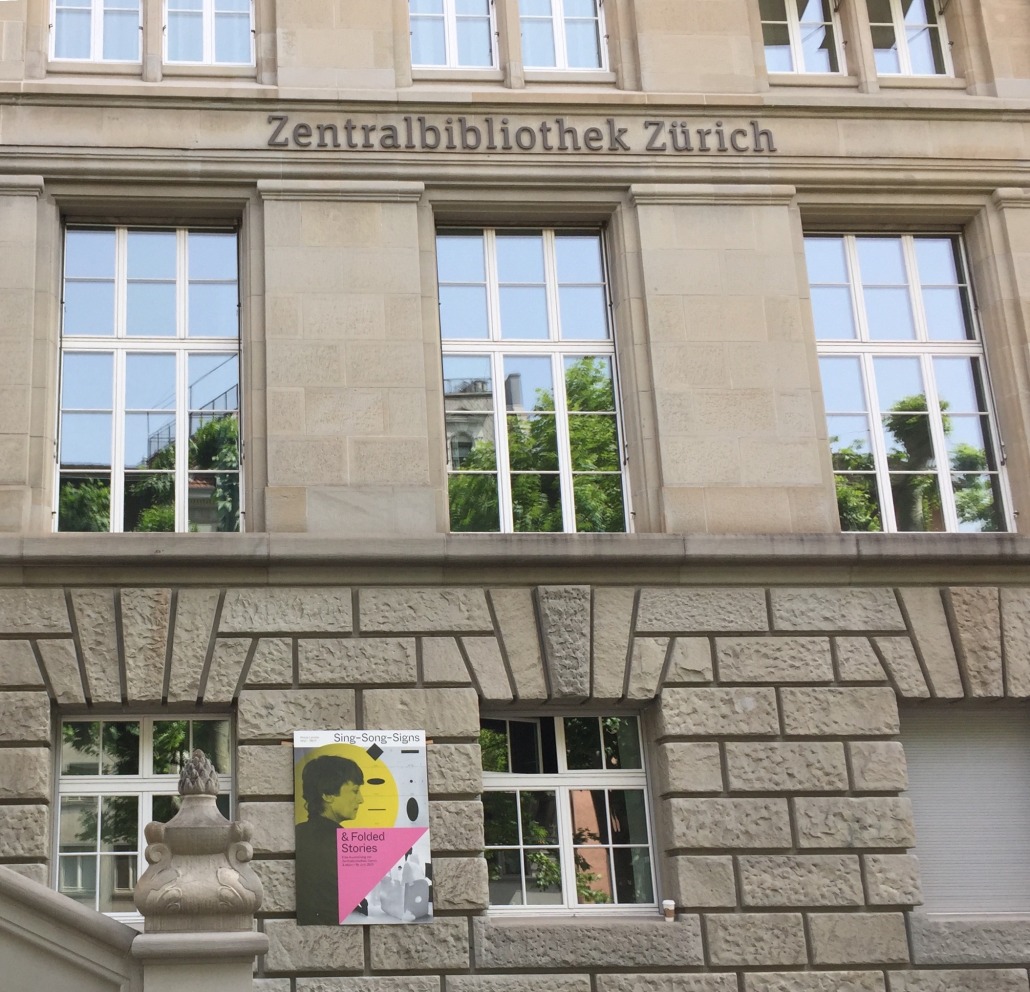

Zentral Bibliothek Zürich – Lieu où sont déposées les archives de Willy Hess

Un jour, après un concert à Uster, Bernard Päuler s’est présenté à lui. Il était le propriétaire de la maison d’édition Amadeus à Winterthur. Il lui a passé commande d’une sonate en solo pour alto. Depuis ce jour, Bernard Päuler a publié beaucoup d’œuvres de Willy Hess, ainsi que sa biographie de Beethoven et des œuvres inédites de ce dernier complétées par Willy Hess. Il lui a aussi demandé d’écrire la basse continue (la partie de la main droite pour l’instrument d’accompagnement) de certaines œuvres baroques, dont “Die kleine Kammermusik” de Telemann. De toutes les œuvres contemporaines éditées par l’éditeur Amadeus, les siennes étaient celles qui se vendaient le mieux. Le public appréciait ses œuvres, mais pas les critiques, qui préféraient les compositeurs d’avant-garde.

Voici ce qu’il pensait des carnets d’esquisses beethovéniens :

« Je voudrais également corriger une idée fausse, ou plutôt une déformation de la réalité, dont se rendent coupables les théoriciens modernes à propos des carnets de croquis de Beethoven. Les esquisses compositionnelles de Beethoven, en particulier, montrent que le maître cherchait et essayait avec le sentiment et non avec le calcul, rejetait et rejetait encore avec le sentiment jusqu’à ce qu’il trouve sa véritable idée intérieure. »[8]

En 1931, le début de son « Index des œuvres de Beethoven manquantes dans l’édition complète » (“Verzeichnis der in der Gesamtausgabe fehlenden Werke Beethovens”) a été publié dans le 5e volume de la Revue annuelle suisse de musicologie (“Schweizerischen Jahrbuches für Musikwissenschaft”). Cet index a pris la forme d’un livre édité en 1957 chez Breitkopf & Härtel.

Le 12 février 1935 a eu lieu la première exécution d’un aria de Marcelline (opéra Fidelio), qui n’avait encore jamais été imprimé. Le 10 février 1937, Margrit Vaterlaus et Erwin Tüller ont chanté la première exécution du duo “Ne’ giorni tuoi felici”. Willy Hess a mis en partition le concerto pour piano de Beethoven de 1784 et le pianiste Edwin Fischer l’a joué.

Willy Hess a publié son livre « L’opéra Fidelio de Beethoven et ses trois versions » chez l’éditeur Atlantis. Il a ensuite trouvé de nouveaux manuscrits de Beethoven à Vienne. Laissons-lui la parole pour décrire une partie de son travail au service de Beethoven :

« En 1955, la guilde du livre Gutenberg m’a chargé d’écrire une biographie de Beethoven, parue en 1956 et épuisée en quelques années. En 1959, j’ai donné cinq conférences sur les œuvres scéniques de Beethoven à la haute école des adultes de Zürich, qui ont été publiées sous forme de livre en 1962. La même année 1959, j’ai pu présenter le premier volume de mes suppléments à l’édition complète de Beethoven.[9]

Cette série de publications a sa préhistoire ! Breitkopf & Härtel avait initialement l’intention de réviser et de réimprimer leur propre édition complète. J’ai élaboré des directives à ce sujet et plusieurs réunions ont eu lieu à Wiesbaden. Mais alors l’annonce d’une nouvelle édition complète lancée par la Beethoven-Haus de Bonn a fait irruption dans nos préparatifs comme une bombe. Cela rendait nos plans illusoires, et au lieu de réviser et d’ajouter à l’ancienne édition, la société m’a chargé de publier des volumes supplémentaires censés rassembler tout ce qui manquait à l’ancienne édition. Il a été publié de 1959 à 1971 :

1er volume : Chants italiens à plusieurs voix sans accompagnement (1959).

2e volume : Chants avec orchestre (1960).

3e volume : Pour instrument soliste avec orchestre 1 (1960).

4e volume : Œuvres orchestrales (1961).

5e volume : Lieder et chants avec accompagnement de piano. Canons et plaisanteries musicales (1962).

6e volume : Musique de chambre pour cordes (1963).

7e volume : Musique de chambre pour vents, pour vents et cordes. Œuvres pour une horloge musicale (petites orgues mécaniques associés à une horloge qui jouent automatiquement toutes les heures ou demi-heures[10]) (1963).

8e volume : Arrangements originaux pour piano de ses propres œuvres (1964).

9e volume : Œuvres pour piano, œuvres de musique de chambre avec piano (1965).

10e volume : Pour instrument soliste avec orchestre 2 (1969).

11e et 12e volume : Œuvres dramatiques 1, 2 (Opéra Fidelio dans la version originale avec toutes les variantes) (1967).

13e volume : Œuvres dramatiques 3 (Fidelio 1806, plus petites œuvres) (1970).

14e volume : Arrangements de chants populaires, suppléments et rectifications (1971). »[11]

Durant ces années de recherches et de publications, Willy Hess arrêta peu à peu d’enseigner et composa peu, car il n’avait pas beaucoup de temps. En effet, il était principalement à ce moment-là musicien dans l’Orchestre de la Ville de Winterthur.

Pendant cette période, il a travaillé aux Archives de Bonn, où le Prof. Joseph Schmidt-Görg, son fils le Dr Hans Schmidt et la Dr Dagmar von Busch-Weise l’ont aidé. Parmi ses relations, citons aussi son ami le Prof. Giovanni Biamonti (Rome), un autre important spécialiste de Beethoven.

Le volume des chants populaires que Beethoven a arrangé lui a demandé un énorme travail. Par chance, Willy Hess a reçu de l’aide de Copenhague, Stockholm, Moscou (Prof. Nathaniel Fischmann), Varsovie (Dr Zofia Lissa), Budapest (Dr Benjamin Rajecky) et Londres (Dr J. A. Parkinson).

Après avoir publié le dernier volume des œuvres inédites de Beethoven, Willy Hess a continué à consacrer du temps à l’œuvre du Maître : il a notamment prêté beaucoup d’attention au respect absolu de la volonté de Beethoven. Il l’a aussi défendu énergiquement « contre tout dénigrement puéril du Génie par une certaine sorte d’avant-gardistes. »[12] Un de ses articles, qui a paru en 1970 dans la Revue musicale suisse à ce sujet lui a valu des lettres enthousiastes. Dans ses “Beethoven-Studien” (études sur Beethoven), Willy Hess a donné en 32 articles un aperçu de son travail au service de Beethoven.

Willy Hess a écrit plusieurs ouvrages sur la musique. “Die Dynamik der musikalischen Formbildung” (La dynamique de la forme musicale) en deux volumes (Vienne 1960, 1964) est le résultat d’une synthèse du praticien créateur et du théoricien avisé qu’il était. Il a aussi publié de nombreux articles, entre autres dans les Annales suisses de musicologie.

À propos de la forme musicale, il était d’accord avec « la phrase merveilleuse d’Hindemith : « La musique est parente avec la mathématique, mais elle n’est pas une mathématique. » »[13] Selon Willy Hess, « Ce que chaque vrai maître ressentait et savait (…) : Le processus de création artistique est un mélange mystérieux de forces mesurables et non mesurables, de réflexion et d’intuition. »[14]

Willy Hess a défendu par ses écrits le droit de composer de la musique tonale, même au 20e siècle, contre l’Avant-garde qui voulait imposer son style à tous. À ce sujet, il a écrit entre autres “Parteilose Kunst, parteilose Wissenschaft. Eine Auseinandersetzung mit dem Zeitgeist in der Musik” (Art sans partis, science sans partis. Une explication avec l’esprit du temps dans la musique) éditions Hans Schneider, Tutzing, 1967, et “Vom Doppelantlitz des Bösen in der Kunst, dargestellt am Beispiel der Musik” (le double visage du mal dans l’art, illustré par l’exemple de la musique) éditions F. J. Lehmanns, Munich, 1963.

Ses archives se trouvent à la Zentralbibliothek (bibliothèque centrale) de Zürich.

Willy Hess a toujours composé des œuvres tonales. Ses compositions comprennent environ 150 Lieder avec piano, plusieurs cycles de chants avec orchestre, deux opéras, une symphonie, des concertos pour soliste, un double concerto pour violon, alto et orchestre ainsi que de nombreuses œuvres de musique de chambre. Il a écrit des sonates, entre autres pour basson et petit orchestre, alto et piano, alto et basson, alto solo, flûte et violoncelle ainsi que flûte et piano.

L’année de son 70e anniversaire, à 69 ans, il a écrit son autobiographie “Aus meinem Leben” (De ma vie). Dans la conclusion de celle-ci, il a écrit qu’il regrette de ne pas avoir pu entendre beaucoup de ses œuvres, mais qu’il est reconnaissant et content d’avoir vécu beaucoup de belles choses positives et qu’il est heureux d’avoir été choisi par le destin pour accomplir son travail.

En conclusion, voici un conseil de Willy Hess: «Mes chers amis, si jamais le découragement ou le pessimisme vous envahit, cherchez alors des tâches, qui requièrent tout votre dévouement. »[15]


Photo de Willy Hess
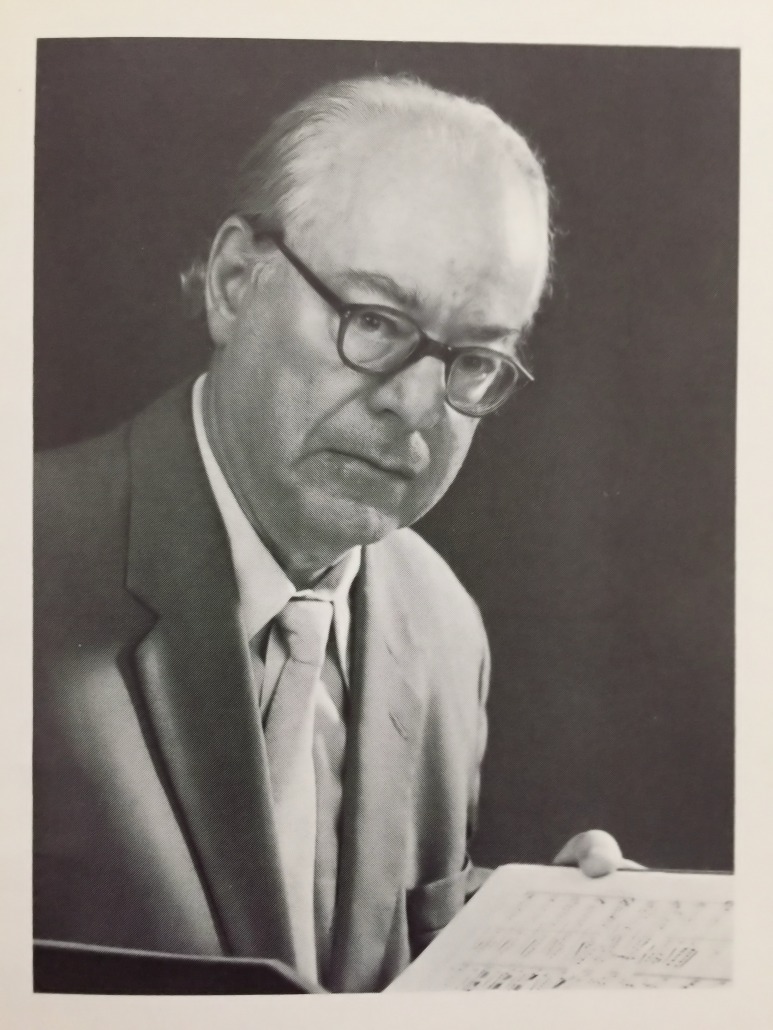

Photo de Willy Hess dans sa biographie de Beethoven « Aus meinem Leben ».


Photo de Willy Hess dans sa biographie de Beethoven
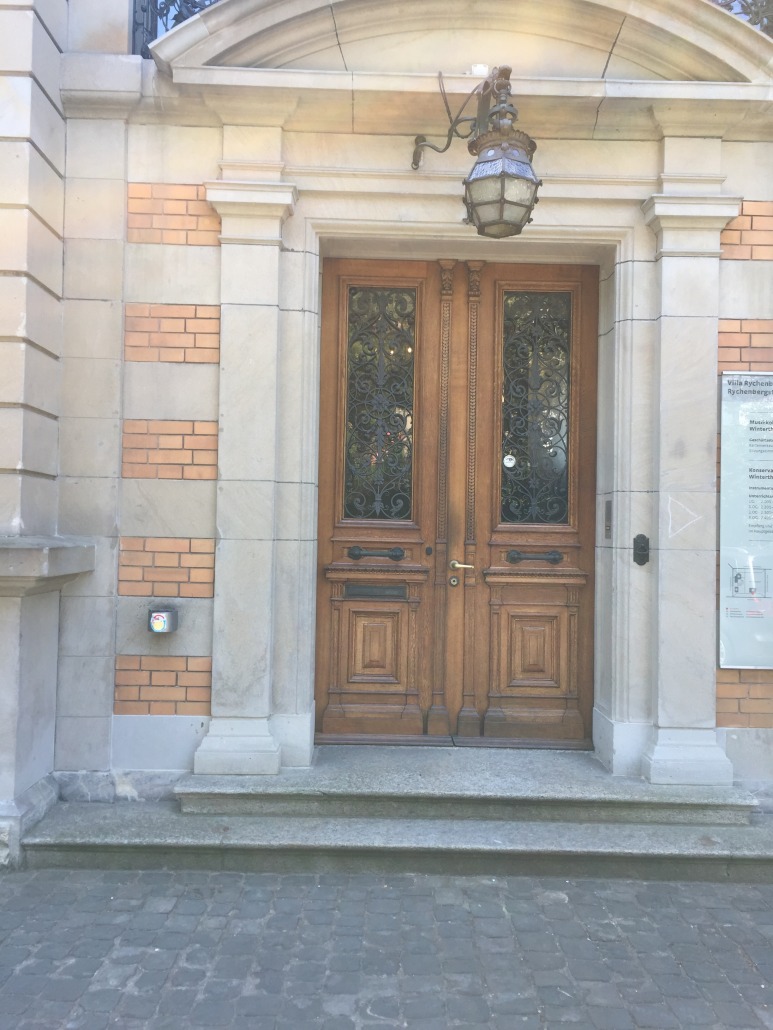

Villa Rychenberg siège du Musikkollegium Winterthur Nord


Villa Rychenberg siège du Musikkollegium Winterthur Ouest


Villa Rychenberg siège du Musikkollegium Winterthur Sud 1


Villa Rychenberg siège du Musikkollegium Winterthur Sud 2

Quelques publications de Willy Hess sur la musique et sur l’art (en allemand)


  • Verzeichnis der nicht in der Gesamtausgabe veröffentlichten Werke Ludwig van Beethovens. Zusammengestellt für die Ergänzung der Beethoven-Gesamtausgabe, Wiesbaden, Breitkopf & Härtel, 1957.
  • Parteilose Kunst – Parteilose Wissenschaft. Eine Auseinandersetzung mit dem Zeitgeist in der Musik, Tutzing, Schneider, 1967.
  • Beethoven-Studien, Bonn, Beethoven-Haus, 1972 (Schriften zur Beethoven-Forschung, Reihe IV, Band 7).
  • Studien zu seinem Werk, Winterthur, Amadeus-Verlag, 1981
  • Das Fidelio-Buch, Winterthur, Amadeus-Verlag, 1986.
  • Hinter den Kulissen. Momentbilder und Anekdoten aus dem Leben eines Orchestermusikers, Winterthur, Ed. Swiss Music, 1992
  • Vom Doppelantlitz des Bösen in der Kunst, J. F. Lehmann, München, 1963

Sources


Willy Hess, Aus meinem Leben, éditions Werner Classen, Zürich 1976

Willy Hess : Beethoven, éditions Amadeus, Winterthur 1976

Zur Erinnerung an Willy Hess 12. Oktober 1906 bis 9. Mai 1997

Willy Hess (Komponist) – Wikipedia

Œuvres pour orgue de Beethoven — Wikipédia (wikipedia.org)

Cet article a été écrit par Miriam Allemand pour lvbeethoven.org.

[1] Chris Walton “Laudatio auf Willy Hess” in “Zur Erinnerung an Willy Hess 12. Oktober 1906 bis 9. Mai 1997” (“Discours à la louange de Willy Hess” dans “En souvenir de Willy Hess 12 octobre 1906 au 9 mai 1997”) p. 18.

[2] Willy Hess, Aus meinem Leben (De ma vie) éditions Werner Classen, Zürich 1976, p. 20.

[3] Willy Hess, Aus meinem Leben, p. 57.

[4] Willy Hess, Aus meinem Leben, p. 78.

[5] Willy Hess, Aus meinem Leben, p. 140.

[6] Willy Hess, Aus meinem Leben, p. 116.

[7] Willy Hess, Aus meinem Lelben, p. 122.

[8] Willy Hess, Aus meinem Leben, p. 117.

[9] Willy Hess, Aus meinem Leben, p. 128.

[10] https://fr.wikipedia.org/wiki/Œuvres_pour_orgue_de_Beethoven#Œuvres_pour_orgue_mécanique

[11] Willy Hess, Aus meinem Leben, p. 128 et 129.

[12] Willy Hess, Aus meinem Leben, p. 130-131.

[13] Willy Hess, Aus meinem Leben, p. 133.

[14] Willy Hess, Aus meinem Leben, p. 133.

[15] Willy Hess “Mein Abschiedsgruss” in “Zur Erinnerung an Willy Hess 12. Oktober 1906 bis 9. Mai 1997” (“Mes salutations d’adieu” dans “En souvenir de Willy Hess 12 octobre 1906 au 9 mai 1997”) p. 13.

Alcune risorse su Willy Hess: autografi, composizioni, prime edizioni

Di proprietà del Centro Ricerche Musicali www.lvbeethoven.org (estratti)

XVI) Beethoven’s Studies on the Writings of Carl Philipp Emanuel Bach

Ludwig van Beethoven – Transcriptions and Studies on the Writings of Carl Philipp Emanuel Bach

List of Beethoven’s transcriptions and studies of the writings of Carl Philipp Emanuel Bach.

Carl Philipp Emanuel Bach (1714–1788) was one of the most original and influential composers of the 18th century, a bridge between the Baroque world of his father Johann Sebastian Bach and the emerging Classical style of Haydn and Mozart.

Early Life and Education: Born on 8 March 1714 in Weimar, C. P. E. Bach was the fifth child and second surviving son of Johann Sebastian Bach and Maria Barbara Bach. From childhood he was immersed in music, studying composition and keyboard directly under his father’s guidance. In his own autobiography he later wrote: “For composition and keyboard-playing, I have never had any teacher other than my father.” Despite this, he pursued formal studies in law at the University of Leipzig and later at Frankfurt an der Oder, though music was always his true vocation.

Career in Berlin: In 1740, Bach entered the service of Frederick the Great of Prussia in Berlin as a harpsichordist. For nearly three decades he worked at the Prussian court, accompanying the king—an avid flutist—in daily chamber music sessions. Though the position provided stability, it was not always artistically satisfying, as Frederick preferred the elegant French and Italian styles over Bach’s more daring experiments. Nevertheless, during these years C. P. E. Bach composed a vast body of keyboard works, symphonies, concertos, and chamber music that established his reputation across Europe.

Hamburg Years: In 1768, following the death of his godfather Georg Philipp Telemann, Bach was appointed Director of Music in Hamburg, responsible for the city’s five principal churches. This position gave him greater freedom and prestige. In Hamburg he composed large-scale sacred works, including oratorios and passions, as well as some of his most adventurous instrumental music. He remained in this post until his death on 14 December 1788.

Style and Innovations: C. P. E. Bach is best remembered as the leading representative of the Empfindsamer Stil (“sensitive style”), a musical language characterized by sudden contrasts, expressive melodies, and emotional intensity. His music often breaks away from the strict counterpoint of his father, favoring instead bold harmonic shifts, irregular phrases, and dramatic pauses. This style anticipated the emotional directness of Romanticism. He was also one of the first major composers to embrace the fortepiano, writing works that exploited its dynamic range and expressive possibilities. His keyboard sonatas and fantasias became models for later composers, admired by Haydn, Mozart, and Beethoven.

Writings: In addition to his compositions, C. P. E. Bach was a significant theorist. His treatise Versuch über die wahre Art das Clavier zu spielen (Essay on the True Art of Playing Keyboard Instruments, 1753–62) was one of the most influential pedagogical works of the 18th century. It provided detailed guidance on fingering, ornamentation, improvisation, and expression, shaping the training of countless musicians.

Legacy: By the time of his death, C. P. E. Bach was celebrated across Europe as one of the greatest living composers. His works circulated widely, and his reputation as “the Berlin Bach” or “the Hamburg Bach” distinguished him from his father. Though his fame later waned in comparison to J. S. Bach, modern scholarship has restored his place as a pivotal figure in the transition from Baroque to Classical music.

Articles – Treatise of Harmony and Composition Part One – Chapter V

Treaty of Harmony and Composition – Part one

CHAPTER V –

Table of the fundamental consonant chord.

Table of the second species of fundamental chords, that is, of the essential seventh‑chords with their three inversions.

The Discords shown in this table are called real or necessary Discords, because they always maintain their position, and do not momentarily usurp the place of another interval, nor can they be regarded as suspensions. They may occur both in the rhythmical and unrhythmical parts of a bar; it is not always necessary to prepare them, and they are in general resolved over the bass‑note which immediately follows them.

There are many other Discords besides those given in the above table; Discords in which certain tones are substituted for discordant or harmonious intervals, and which have the effect of delaying or suspending the next chord. These chords are termed suspensions, and may, for the most part, be omitted without involving a faulty progression. They should properly be called accidental Discords, to distinguish them from the real ones. They should always be prepared, on account of their harshness, and only occur in the rhythmical or accentuated part of a bar. In the free style of composition, however, they are sometimes used without preparation.

All chords which are originated by suspensions may be subdivided:

1st, into chords in which there is only one interval of suspension; 2dly, into chords in which two such intervals occur; 3rdly, into chords in which three or four such intervals occur, without including the bass; 4thly, into chords in which the suspending interval lies in the bass; these, however, are termed also anticipations, because the harmony which forms the root of the subsequent bass‑note is played beforehand, or anticipated.

Page taken from: Louis van Beethoven’s Studies in Thorough-Bass, Counterpoint and the Art of Scientific Composition, Collected from the autograph posthumous manuscripts of the great composer, and first published, together with biographical notices, by Ignatius von Seyfried. Translated and edited by Henry Hugh Pierson (Edgar Mannsfeldt). With Beethoven’s portrait, and other illustrative plates. Schuberth and Co. Leipzig, Hamburgh and New‑York. 1853.

Articles – Treatise of Harmony and Composition Part One – Chapter IV

Treaty of Harmony and Composition – First part

CHAPTER IV –

A series of harmonic combinations (chiefly consisting of suspensions) formed over one long‑sustained bass note is called an organ‑point, or point d’orgue. The harmony is often complete in itself without the sustained bass; this is shown in the following examples. The organ‑point is essentially a characteristic of sacred music, and can very seldom be used effectively in secular compositions.

It is not customary to indicate by figures the harmony belonging to an organ‑point; T. S. (tasto solo) is generally written under the bass note, and the organist may then sustain it both with the manuals and the pedals.

The following examples, in which the figures are set down, are intended to give a clear insight into the harmony, which, if analyzed, will be found to consist for the most part of not very abstruse combinations.”

And in its version for string quartet.

Page taken from: Louis van Beethoven’s Studies in Thorough-Bass, Counterpoint and the Art of Scientific Composition, Collected from the autograph posthumous manuscripts of the great composer, and first published, together with biographical notices, by Ignatius von Seyfried. Translated and edited by Henry Hugh Pierson (Edgar Mannsfeldt). With Beethoven’s portrait, and other illustrative plates. Schuberth and Co. Leipzig, Hamburgh and New‑York. 1853.

Articles – Treatise of Harmony and Composition Part One – Chapter III

Treaty of Harmony and Composition – First part

CHAPTER III –

Fundamental chords are those which give origin to others, and are of only two kinds: the perfect or pure triad, and the chord of the seventh. All others, which are derived from these, are called chords of transposition or secondary chords.

If we write a bass which involves nothing but triads and chords of the seventh, that bass is in fact the real fundamental or ground-bass.

A discord is usually resolved by a diatonic interval downwards; but there are some discordant intervals, especially those termed extreme, which are resolved by a similar interval upwards, viz. by ascending; e.g.:

the Resolution, which ought properly to be made in the upper part, be carried over to the bass or to another part, it is called a permutation of Resolution.

when the Bass takes up one of the intervals belonging to the harmony, before the Resolution occurs; in consequence of which both chords are based upon one and the same fundamental chord; e.g.

If, on the contrary, a whole chord, or only a single interval, be struck in the accompaniment before the bass-note changes, it is called an anticipated Resolution; e.g.

This proceeding can only then properly be termed an Anticipation when it occurs after a Discord; for the second Example shews that the false (or diminished) Fifth, which forms the preceding Discord, is in reality resolved beforehand; but this is not always the case; e.g.

The following Example shews that precisely similar Anticipations may be made in the bass.

Where we have passing notes, those which are ingredients of the chord are to be observed; those are called harmonic secondary-notes; e.g.

In a similar manner the strict Resolution may be avoided; e.g.

And likewise over a sustained bass; e.g.

also by changing the Discord into a Concord, and vice versa; e.g.

The pure triad is a chord which may be played without the guidance of figures, but if figures corresponding to its intervals are placed, singly or together, above or below the bass-note, they have a particular meaning. Sometimes they indicate Discords which are to be resolved into other harmonies without change of bass; e.g.

sometimes, when Discords follow, the triad is symbolized beforehand, for the sake of perspicuity; e.g.

sometimes it is well to distinguish one note of the accompaniment which appears to be a passing note; e.g.

Accidental major Thirds are generally to be found moving upwards; in four-part harmony they may, however, descend; e.g.

The common signature for the chord of the Sixth is simply the figure 6; occasionally we meet with symbols for the other integral parts of it; there are various reasons for this.
All unmelodic sequences may be avoided by doubling single intervals.

This artifice becomes particularly necessary when a Fifth follows directly after a Sixth; the Example shews what intervals may be doubled in this way, and some varieties in the position of the 5th and 6th.

In the elegant style the sixth is also accompanied by the octave.

When the Sixth is played together with the diminished Octave, no other interval is admitted into the chord; e.g.

The Discord formed by the diminished Sixth is of rare occurrence; e.g.

When in an unfigured bass the upper part changes, by means of a short note, the Third or the Sixth, the chord is to be sustained as it was, even when the movement is slow. At times the progression requires that the chord of the Sixth be written in five parts.

When in the accompaniment (written over a figured bass) the position of the Third or Sixth is altered by means of a short note, the foregoing harmony is to remain as it was, whether the time of the movement be slow or quick.

Now and then a sequence occurs, in connection with a chord of the Sixth, when it becomes necessary to adopt five-part harmony; e.g.

This interval, by means of the alteration which converts the natural note into an augmented fifth, is ordinarily introduced as an elegance of the melody in modulations of slow movement.

The chord of the fourth and sixth is represented very clearly by the figures. The diminished fourth must be prepared; the perfect fourth is not always so.

This perfect fourth, although slightly dissonant, must be resolved regularly, except when it is employed as a passing note.

The consonant fourth may be accompanied by the major or minor sixth, and its resolution is made immediately upon the perfect chord.

This is not always necessary, whether the bass moves or does not move, since the series of figures often gives rise to other chords by which the resolution of the fourth is sometimes suspended, though never annulled.

When, in the chord of the Sixth, the Third is prolonged over the Fourth, this delicate harmony must be accompanied in three parts. If, nevertheless, one wishes to accompany it in four parts, the Sixth is doubled in place of the bass at the octave. The three kinds of fourth and the two consonant ones may be employed in this manner; the former must be prepared and resolved by expanding: it is therefore necessary to indicate them with a sign for the less experienced accompanist. With the diminished fourth the sixth is minor.

With the augmented fourth, the sixth is major.

Colla quarta giusta, essa può essere maggiore o minore.

When upon a stationary bass note the harmony of the fourth and sixth is struck, and conversely, it is advisable to accompany in only three parts.

One may nevertheless introduce the fourth part, by doubling the sixth at the octave.

The chord of the fourth and sixth is here only a passing one; the simple progression resembles rather the following.

When the augmented fourth is used as a passing note, the bass need not always descend: it may at times remain as a pedal.

In the following example, the augmented fourth goes by anticipation instead of resolving upon the sixth an eighth later.

It is better, when one wishes to alter the natural progression of the parts, to support the resolution of the false fifth on the bass by means of a leap, rather than to make this fifth resolve upon the octave of the bass with the upper voice; in consequence of which the figures are adjusted.

The perfect fourth with the sixth is sometimes followed by the fifth with the seventh over a sustained bass: it is then accompanied in three parts.

When the bass is ascending, the chords of the sixth and octave and of the fourth and sixth, succeeding by contrary motion, must likewise be accompanied in three parts.

If, on account of an appoggiatura forming a passing fourth, one should think it necessary to figure the chord of the fourth and sixth as in the following example, it would be ill done, since this note is purely ornamental, and the harmony may be reduced as follows:

The chord of the third, fourth, and sixth is indicated by the figures 3/4, and the 6 is not added unless it is accompanied by a sign of alteration — #6, ♮6, ♭6, or 𝄪6 — or when the resolution of the dissonance takes place on the interval of a sixth.

Or also when the sixth, proceeding by conjunct degrees over the bass which remains immobile, rises toward another interval.

The minor, major, and augmented sixths; the perfect and augmented fourths; and the minor and major thirds are the intervals that may enter into the formation of this chord.

Case in which the major sixth is accompanied by the augmented fourth and by the major third.

Case in which the minor sixth is accompanied by the perfect fourth and by the minor third.

Case in which the major sixth is accompanied by the augmented fourth and by the minor third.

Case in which this interval is accompanied by the perfect fourth and by the major third.

Case in which the augmented sixth is accompanied by the augmented fourth and by the major third.

Often the octave is added to the chord of the third, fourth, and sixth, not to complete the harmony, but for the resolution of a preceding dissonance or for the preparation of a following one.

In a case such as the following, only the sixth chord is employed, since the chord of the third and fourth would be too harsh for the melody. The complete accompaniment of this chord is nevertheless necessary for the following successions.

The chord of the fifth and sixth is composed of the third, the fifth, and the sixth: it is indicated by 5/6, and sometimes, with a false fifth, by the single figure 5♭. This chord may be accompanied by three kinds of sixths — the augmented, the major, and the minor; by two kinds of fifths — the false and the perfect; and by two kinds of thirds — the major and the minor.

In the following examples one sees a change of harmony and an anticipation of the modulation.

Sometimes, by reason of the resolution or the preparation of a dissonance, the octave is employed as a fifth part.

When the bass note remains immobile (pedal), if the chord of the fifth and sixth resolves into the chord of the fourth or sixth, the octave is taken as the fourth part instead of the third, the harmony being in reality nothing other than a chord of the fourth and sixth, in which the fourth is delayed by the perfect fifth, which is likewise prepared.

If, however, the bass note being sustained, the fifth is followed by intervals other than the fourth, or if the bass note is not a pedal, the ordinary accompaniment of the harmony of the fifth and sixth is retained: in the preceding examples, and particularly in the prolonged cadences, Telemann’s slur is placed above the 5.

Over an immobile bass note of the same kind, the harmony of the fifth may be followed by the third and fourth and by some other chord, whether the bass note moves afterwards or remains in its place.

The augmented sixth is always accompanied in this chord by the perfect fifth and by the major third.

The following examples show that the sixth may be struck without preparation together with the false fifth.

This unprepared false fifth and this resolution of the dissonance are nevertheless admissible in the following examples.

The preservation of a good position (of the hand), the natural progression of the melody, and the necessity of avoiding bad successions, are sufficient reasons for not preparing the false fifth, which moreover may be taken freely at once. Sometimes the false fifth is accompanied by the doubled third instead of the sixth, although the latter is not contrary to the regularity of the modulation; this takes place in order to prevent the sixth, taken at once at the resolution of preceding dissonances, from producing an unpleasant effect, to preserve the purity of the melody, and to avoid errors in the pure and correct style.

The chord of the second is composed of the second, the fourth, and the sixth. The sixth may be major or minor; the fourth, augmented or perfect; the second, major, minor, or augmented. The dissonant interval is always prepared; or, when it appears as a passing note in the bass, it is always resolved by descending.

When the major second is accompanied by the perfect fourth and the major sixth, the fourth may ascend, descend, remain as a pedal, or make a descending leap.

This interval is likewise free when it is accompanied by the major or minor second and by the minor sixth.

When the augmented fourth is accompanied by the major second and the major sixth, it may remain stationary or ascend. The same occurs when it is accompanied by the augmented second and the major sixth: in this case, it may also descend accidentally, but it must immediately meet the fifth.

Sometimes the augmented fourth makes a descending leap.

To make less noticeable what is faulty in the leap of the augmented fourth, the second is doubled.

The augmented fourth with the major sixth is employed without preparation; the minor second with the minor sixth; with the augmented second, the augmented fourth, and with this the major sixth; and the major second with a double accidental sign — 4, or 4♯.

In the following example the fourth must likewise be employed with an accidental sign.

The chord of the second and fifth is composed, as its name indicates, of the second and the fifth. One of these two intervals is doubled for the fourth part. Its indication is 5/2. The second is major, the fifth perfect, and the dissonance is placed, as in all tied second-harmonies, in the bass.

In irregular successions where there are passing notes, the augmented fifth is sometimes employed.

The chord of the second, fourth, and fifth contains the intervals indicated by its name. The first is major, and the other two must be perfect.

The chord of the second and third is composed of the minor second, the major third, and the perfect fifth; it is indicated by a 2 accompanied by the lowering sign, or by a 3.

This chord sometimes appears in irregular successions as an anticipated third-and-fourth chord, accompanied by the major second or by the minor third.

The seventh chord appears under various forms. 1st, with the third and the fifth; 2nd, with the third and the octave; 3rd, with the third doubled. It is designated by a 7, or by a 5. It may be formed of the diminished, minor, and major sevenths, the augmented, perfect, and false fifths, the major and minor thirds, and the perfect octave. The seventh is a dissonance that is employed with or without preparation, and that descends in order to resolve. Passing sevenths may also result from a sustained note, as the following examples show.

If the seventh is not struck at the same time as the bass note, it must nevertheless resolve by descending.

In the following examples there are doublings of the bass.

Seventh chord with major third.

Suspended sevenths must be treated with great care.

All the passing notes that are found in these harmonies must not be figured.

Good resolutions of sevenths.

The chord of the sixth and seventh is formed of the seventh, the sixth, and the third, or of the seventh, the sixth, and the fourth. In the first case it is marked 7/6/5; in the second, the fourth must be placed above the bass note, and resolved to the third at the same time that the sixth resolves to the fifth — 7/6/4 → 5/3.

The second sometimes replaces the fourth.

The chord of the fourth and seventh is represented by 7/4 and contains, besides the two intervals named, the fifth and the octave. It may be composed of the major, minor, and diminished sevenths, the perfect octave, the augmented, perfect, and false fifths, and the diminished, perfect, and augmented fourths. The latter may resolve at the same time as the seventh.

The fourth may resolve before the seventh, and vice versa.

The major seventh chord is composed of the major seventh, the perfect fourth, and the major second; it is designated by 7/4/2. It is employed as a passing harmony as well as a melodic note, and if the fifth is added, the chord may be accompanied in five parts.

“The chord of the ninth is composed of the third, the fifth, and the ninth; it is indicated by 9/8 when the ninth is resolved on the octave of the bass: but if it is resolved on another interval, the single figure 9 is sufficient. This chord contains the major and minor ninths, the augmented, perfect, and false fifths, and the major and minor thirds. The ninth is a dissonance that must always be prepared, and that descends by step at the resolution.

The ninth may also have no resolution, or this resolution may be delayed.

Owing to faulty successions, the ninth can never be prepared on the octave of the bass.

The chord of the sixth and ninth contains the third, the sixth, and the ninth; it is designated by 9/6, with the necessary accidentals, since the three intervals may be either major or minor.

The chord of the fourth and ninth is composed of the fourth, the fifth, and the ninth; it is designated by 9/4. If the resolution of these two dissonances takes place on the same bass note, 8/3 must be the following figures.

In this chord the ninth may be either major or minor, the fifth augmented, perfect, or false; the fourth must always be perfect.

If the fifth is replaced by the sixth, which may be either major or minor, it is necessary to indicate it with the figures 9/6/4.

The chord of the seventh and ninth contains also the third, in addition to those two intervals. It is designated by 9/7 with the necessary accidentals. When these dissonances are resolved on the same bass note, they must descend to the octave or to the sixth.

The three intervals that compose this chord may be either major or minor.

If the third is replaced by the fourth, it is necessary to indicate it with the figures.

The chord of the fourth and fifth is composed of the octave, the fifth, and the fourth. When the fourth is resolved immediately, the chord is designated by the numbers 4/3 or 5/4/3; in the opposite case, the number 4 is sufficient. The intervals that appear in this chord are the perfect and false fifths, the perfect octave, and the perfect fourth. The latter has its resolution.

In the elegant style this chord is sometimes employed without preparation, by preceding it with a consonant chord. The perfect fourth, when unprepared, is used together with the fifth. For example (No. 1), the perfect fourth may be attacked by a leap.

In Example No. 2, the augmented fourth can be attacked only by step.

One may also, as in Example No. 3, and by means of a breath-rest in the right hand, suppress the augmented fourth as being understood.

In No. 4, with the preceding note, all the forms of the sixth chord may be employed, and one may leap immediately to the chord of the fourth and perfect fifth.

One must nevertheless avoid in this case the faulty succession of two perfect fifths.

Page taken from: Louis van Beethoven’s Studies in Thorough-Bass, Counterpoint and the Art of Scientific Composition, Collected from the autograph posthumous manuscripts of the great composer, and first published, together with biographical notices, by Ignatius von Seyfried. Translated and edited by Henry Hugh Pierson (Edgar Mannsfeldt). With Beethoven’s portrait, and other illustrative plates. Schuberth and Co. Leipzig, Hamburgh and New‑York. 1853.

Articles – Treatise on Harmony and Composition Part One – Chapter II

Treaty of Harmony and Composition – Part One

CHAPTER II –

All discords must be legitimately prepared and resolved; i.e. they must previously have been concords, and be capable of becoming so again. They may be resolved either from above or below; e.g.:

Discords of every kind may be played freely and without preparation over permanent (sustained) basses; inasmuch as they cannot be prepared on account of there being no change of bass, which very circumstance renders their preparation unnecessary; e.g.:

The insertion of a sign of transposition, which lowers a prepared discord by a tone or semitone, does not invalidate its preparation; e.g.:

In like manner we often find one discord resolved into another; e.g.:

Sometimes it is not resolved; the progression of the fundamental bass supplying the place of its resolution; e.g.:

But even where the resolution of a discord is delayed for some time by the introduction of other discords, it is still indispensable to resolve it, sooner or later, into a concord. This kind of writing is called a retarded resolution.

Occasionally the right hand does not await the entrance of the bass-note over which a discord is to be resolved, but anticipates it; for instance:

And sometimes this is done by the left hand; e.g.:

Questi due generi di successione chiamansi anticipazione della risoluzione. L’ anticipazione delle parti superiori indicasi per mezzo di una lineetta obliqua, come quella che si pratica per le note cambiate.

Both cases are termed anticipation, or a forestalling of the resolution. A. Anticipation in the treble-part, when the oblique stroke / is to be used, as in the case of the passing notes before mentioned.

B. Anticipation in the bass-part, to indicate which the horizontal stroke — may be used, as in the case of the regular sequences.

When the note by means of which a discord is to be resolved (by the right hand) is taken up by the bass, we are to regard it as another form of resolution; the discord is then in fact resolved by the bass; e.g.:

Short notes (as quavers) seldom have an individual accompaniment. When they are struck without accompanying intervals they are called passing notes. Single notes of this kind are not figured; where there is a group of them, a horizontal stroke is drawn over them, extending as far as the right hand is required to pause. This occurs in all sorts of measures and tempi, and in very varied shapes. Sometimes half the number of notes consists of passing notes; e.g.:

Sometimes less than the half, and this is more common; e.g.:

If the piece of music be in quick time, and the notes are short, we often find the greater part of them passing notes; e.g.:

In certain occasions, which will be recurred to in the following pages, we meet with what are called passing intervals. These are of three descriptions:

First, when the bass-note is permanent; e.g.:

Secondly. When the intervals forming the accompaniment remain unchanged, while the bass moves on; e.g.:

Thirdly, when the movement is extended to both parts; e.g.:

When the accompaniment falls only upon those notes which, in respect of their rhythmical value, are the longest, the passage is called regular (transitus regularis); when the passing notes are of equal value, the first, third, fifth and seventh are the longest (on account of the accent); the fourth, fifth, sixth and eighth are shorter: e.g.:

In case of the accompaniment, which properly belongs to the shorter bass-note, being anticipated, and thus falling upon the longer note, the passage is termed irregular (transitus irregularis), and is said to contain passing notes of permutation: e.g.:

Besides the usual and far preferable mode of distinguishing this sort of notes, viz. an oblique stroke /, we find them often indicated by a circle or half circle, (°) and sometimes by the sign ×; e.g.:

The discords which arise from the transit in both parts, above and below, cannot always be resolved at once, even though they may have been legitimately prepared; e.g.:

This is also the case with those chords which, by means of an enharmonic change in the modulation, appear as real concords; e.g.:

The accompaniment is called united, when all the intervals belonging to the single bass-notes are played by the right hand; e.g.:

If, however, two or more notes are played by the left hand also, the accompaniment is called divided; e.g.:

Page taken from: Louis van Beethoven’s Studies in Thorough-Bass, Counterpoint and the Art of Scientific Composition, Collected from the autograph posthumous manuscripts of the great composer, and first published, together with biographical notices, by Ignatius von Seyfried. Translated and edited by Henry Hugh Pierson (Edgar Mannsfeldt). With Beethoven’s portrait, and other illustrative plates. Schuberth and Co. Leipzig, Hamburgh and New‑York. 1853.

Treatise on Harmony and Composition – Part One, Chapter I

Treatise on Harmony and Composition – Part One

Chapter I

All the symbols which indicate the harmonic accompaniment are called signatures; c. g.

The Tenths, Elevenths, and Thirteenths are, with regard to their position, nothing more than the Octaves of the Third, Fourth, and Sixth. They are represented by the figures 10, 11, and 13 when they follow each other in succession; but, with this exception, they are indicated simply by the figures 3, 4, and 6, for the sake of brevity and simplification.

When the signs of transposition become necessary for the progression of intervals that are not included in the original key, these signs must be written as in the following examples.

The intervals that belong to the original key are called natural intervals — flat or sharp, major or minor. They are called accidental when signs of transposition are required to indicate them.

A stroke through the figure, or a sharp placed beside it, either on the right or on the left, raises the interval by a semitone; e.g.:

A flat, placed either before or after the figure, lowers the interval by a semitone; e.g.:

The sign of Resolution (or natural) reinstates the interval in its former position; e.g.:

Two strokes through the figure, or two sharps, or a double sharp X, or a stroke through the figure together with a simple sharp annexed, raise the interval a whole tone; e.g.:

In order to lower an interval by a whole tone (in the flat keys or scales), a large double flat (𝄫), or two small flats (♭♭), must be placed before it; e.g.:

The sign of restoration to the status quo, after this kind of transposition, is the natural sign (♮) placed before the figure; e.g.:

In some of the works of the old composers, and occasionally in more modern ones, we find flats prefixed to the piece, and afterwards resolved (annulled) either by a sharp or a natural, or by a stroke through the figure; and a similar custom is found in sharp keys; e.g.:

The imperfect Fifth, as well as the minor and diminished Seventh, is commonly indicated by a ♭.

This sign is usually placed, by more modern composers, after the figure, c.g. 2♭, 4♭; 6♭ and in like manner the resolution of the same, e.g. 4♮, 5♮, etc. A stroke may also be drawn through the figure to produce the same effect; e.g. 5̸, 4̸, 3̸.

The Third may be indicated by a simple flat, sharp, or natural placed above the note.

Another received method of indicating transposition (and one which makes it easier to distinguish at a glance) is to place the sign — flat or sharp — immediately before the figure; e.g. ♭3, ♯4, ♯5, ♭6, ♭7; ♯4, ♯2, ♭5, ♯6, ♯7. But it is better, in order to avoid the possibility of mistakes, to draw a line through the figure; e.g. 2̸, 4̸, 6̸; 2̸, 4̸, 5̸; 4̸, 5̸, 7̸.

This kind of stroke occurs but seldom in the case of the Octave or the Ninth, it being then customary to prefix the sharp or flat in nature, or after the note; e.g. ♯8, ♯9, ♭8, ♭9; or 8♯, 9♯; 8♭, 9♭. And similarly in the case of the Unison; e.g. ♯1, ♭1, ♮1, or 1♯, 1♭, 1♮.

Double sharps, flats, or naturals (resolutions of transposition) are only to be found thus indicated: 4𝄪, or 𝄪6, 6𝄪; 8𝄫, or ♭♭5, 7♭♭; ♭♭6; ♯♯3; 8♭♭; etc.

Where the sign of transposition stands alone, over the fundamental note, it refers, as aforesaid, always to the Third.

The figures are always to be placed above the bass part, because nearer to them or beneath them it is customary to write forte and piano, mf, fz, pp, dolce, etc. But sometimes, when for example one part is written above another — one for the Violoncello, the other for the Double Bass or Organ — or in Fugues, where the entrance of the subject is indicated in the bass part, the simple notes must be played, and no chords struck before the figures occur.

When the right hand has an obbligato passage to execute, it is expressed in small notes, e.g.:

These chords or single intervals, the figured harmony to which does not stand directly over the note, but a little on one side of it, are not to be struck at the same moment as the bass note, but after it, in proportion to half or one third of the value of that note; e. g,

Every indicated harmony is to be retained as long as the bass-note stands unchanged; for instance, the common chord is here to be retained to the middle of the next bar, until a new figure appears; see the example:

The same rule holds good where the bass notes are raised or lowered by an octave, or where passing notes, belonging to or agreeing with the harmony, occur in the bass-part; e.g.

When two figures, adjacent, are placed over a note which can be divided into two equal parts, each of the harmonies thus indicated is to be retained for half the duration of that note or interval; e.g.

Where three figures, adjacent, are placed over a note, the first of the harmonies thus indicated is of half the duration of that note; the other two chords make up together the value of the remaining half of that note’s duration.

Four figures, adjacent, indicate that each of the required harmonies are to have one fourth of the value (in duration) of the fundamental note; e.g.

Five figures are to be interpreted thus:

When two figures, adjacent, are placed over a bass note divisible into 3 parts (a minim with a dot) the harmony which stands first indicated is to have two thirds of the value of that note (one minim), the other harmony having but one third of the same.

When the piece of music is in triple time, 3/2, each figured harmony has half the value of the bass-note.

When three figures stand over a note in triple time, each of the harmonies has a third of the value of that note.

When there are four figures, the two first harmonies have severally the value of one entire third of the value of the bass note, thus leaving but one third to the other two figures; e.g.

Five figures are to be subdivided as follows:

Dots placed after the figures may be used in this way:

But a horizontal stroke serves the same purpose; e.g.

When figures are placed over a dot, the harmony thus indicated is to be placed before the note which follows after the dot, and the duration of the intervals is to be reckoned by the note preceding it.

The same rule is to be observed in case of rests, i.e. should they be longer than quaver rests; e.g.

All figured harmonies, on the other hand, which are placed over a short (quaver or semiquaver) rest, are to be played as they stand, i.e. over the rest, and the note immediately following determines the origin of the chord; e.g.

Those harmonies, however, which are written over a long rest, are indeed to be played over that rest, but they are formed with reference to the preceding note; e.g.

A horizontal stroke intimates that the accompaniment, as consisting of the preceding harmony or single interval, is to remain as it was.

Nevertheless, the chord or interval may now and then, especially where the movement is slow, be struck again. — Over all passing notes in the bass (denominated irregular melodic sequences) which, although occurring in the accentuated or rhythmical parts of a bar, do not harmonize with the chord, is placed a stroke thus /; over such passing notes as agree with those forming the chord (and which are called regular sequences) is sometimes drawn a horizontal line, but not always; e.g.

After two, three, or four figures placed over each other we generally meet with as many horizontal strokes; that is, in cases where it is not necessary to change the chord; e.g.

Where the rules for the distribution of the figures are to be infringed, and the duration of the notes in the accompaniment is to be varied, the composer is to insert a horizontal stroke between two figures, as a guide to his intentions.

The oblique stroke / placed over a passing note intimates that the next figured harmony is to be played at the same moment as the interval over which that stroke is drawn; e.g.

A half-circle ^ drawn over a figure (this sign is called, after its inventor, Telemann’s arch) is used by many composers to indicate:

Secondly, certain imperfect chords, in which any one interval is wanting; e.g.

Thirdly, different kinds of Suspensions; e.g.

Fourthly, harmonic sequences, upon a ground-bass; e.g.

Where the words unison or unis., all’ unisono, all’ ottava are written, the passage in the bass-part is to be repeated in the octave immediately above, by the player’s right hand; when the accompaniment is again to be enriched by chords they must be indicated by the proper figures; e.g.

Tasto solo, or the abbreviation T.S., means that the bass note is to be sustained without the addition of harmony until the reappearance of figures; e.g.

It would be advantageous to adopt the sign 0 to indicate a pause in the accompaniment, this being more appropriate than T.S. and more quickly written; e.g.

Page taken from: Louis van Beethoven’s Studies in Thorough-Bass, Counterpoint and the Art of Scientific Composition, Collected from the autograph posthumous manuscripts of the great composer, and first published, together with biographical notices, by Ignatius von Seyfried. Translated and edited by Henry Hugh Pierson (Edgar Mannsfeldt). With Beethoven’s portrait, and other illustrative plates. Schuberth and Co. Leipzig, Hamburgh and New‑York. 1853.

Articles – Treatise of Harmony and Composition Part Two – Chapter 15

Treaty of Harmony and Composition – Part Two

CHAPTER XV – Fourth species of four‑part, strict, simple counterpoint.

In this style discords may be used, which must be resolved according to rule; but the resolution of which need not be immediate, because one dissonant interval may be retarded, or held back, by another. The real as well as the minor seventh may be struck freely upon the fourth major tone, and the diminished seventh upon the fourth and seventh major tone. The chromatic, or semitone, method of progression is also permissible.

The fall of the diminished seventh, at N.B., viz.: from F to G♯, is easy to sing and good, because the latter note, as leading‑tone to the dominant, is correctly resolved by ascending to A above.

In the conclusions the same regularity as in the strict style is not required.

The leap of the diminished fifth at N.B., F–B, is good, because it is melodic, and the resolution proceeds regularly to C.

In this example, as in all the following ones, the counterpoint and the plain chant may be placed in any of the three parts, and these may exchange their positions with one another.

Omnia ad majorem Dei gloriam!

Patience, diligence, perseverance, and a steady determination carry one to the goal.

End of the treatise on simple counterpoint.

Page taken from: Louis van Beethoven’s Studies in Thorough-Bass, Counterpoint and the Art of Scientific Composition, Collected from the autograph posthumous manuscripts of the great composer, and first published, together with biographical notices, by Ignatius von Seyfried. Translated and edited by Henry Hugh Pierson (Edgar Mannsfeldt). With Beethoven’s portrait, and other illustrative plates. Schuberth and Co. Leipzig, Hamburgh and New‑York. 1853.

Articles – Treatise of Harmony and Composition Part Two – Chapter 13

Treaty of Harmony and Composition – Part Two

CHAPTER XIII – Fourth species of four‑part, strict, simple counterpoint.

The rule that the harmony connected with the bound notes shall always consist of three intervals cannot always be so accurately observed. It is sometimes necessary to divide a bar into two halves, as will be seen.

The bound notes in four‑part writing require the same concords which are used when the binds are removed, thus leaving the intervals of accompaniment the same, whether the contrapuntal note be bound or not; e.g.:

Nevertheless this rule is often fallacious; it cannot be observed when the bound seventh is connected with the fifth, because the resolution of the ligatura would produce a forbidden discord. The filling‑up part must accordingly be divided into two halves (the semibreve into two minims), as for instance:

The interpolated note in the middle part is not taken into consideration, as it is merely a substitute for an imperfect concord; for which reason this progression is to be regarded in the same light as the progression from a perfect concord to an imperfect, in motu recto.

In this example (at N.B.) occur two pure fifths: because this interval is indispensably necessary to the perfect chord and to the complete harmony of the same.

Nel primo nota bene la seconda è raddoppiata e la sesta cui richiedeva l’armonia, manca. Nel secondo nota bene la quarta è raddoppiata, benché secondo la regola la seconda avesse dovuto esserlo di preferenza. Tutto qui si riferisce all’armonia completa, siccome essa si compone della terza, dalla quarta e dell’ottava e qui la quinta è stata raddoppiata in luogo dell’ottava, egli è evidente che quest’accordo non a tutti gli intervalli, esercizi di questo genere sono di grande utilità per l’allievo; essi insegnano le finezze della composizione; i mostri dei limiti, gli spiegano i casi diversi nei quali lo scontrarsi della severità è non solo permesso, ma imperiosamente richiesto.

Page taken from: Louis van Beethoven’s Studies in Thorough-Bass, Counterpoint and the Art of Scientific Composition, Collected from the autograph posthumous manuscripts of the great composer, and first published, together with biographical notices, by Ignatius von Seyfried. Translated and edited by Henry Hugh Pierson (Edgar Mannsfeldt). With Beethoven’s portrait, and other illustrative plates. Schuberth and Co. Leipzig, Hamburgh and New‑York. 1853.

Articles – Treatise of Harmony and Composition Part Two – Chapter 11

Treaty of Harmony and Composition – Part Two

CHAPTER XI – Second species of four‑part, strict, simple counterpoint;

in which all the rules applied to the foregoing species (three‑part counterpoint) remain in full force.

In this species it is also permissible to write a semibreve instead of two minims in the last bar but one, in order to enlarge the cadence with the close of the chorale.

Some of the best masters were also fond of making the close (in minor modes) without the third, either major or minor; the dreary, colourless fifth produces an undecided and gloomy effect, similar to that of the plagal cadence: leaving something to be desired; and desire is sometimes better than fruition.

In the last bar of the above example the fifth, E, is wanting, because it could not be inserted without disturbing the natural progression of the alto part, which is from G♯ to D, and not to the E below.

Page taken from: Louis van Beethoven’s Studies in Thorough-Bass, Counterpoint and the Art of Scientific Composition, Collected from the autograph posthumous manuscripts of the great composer, and first published, together with biographical notices, by Ignatius von Seyfried. Translated and edited by Henry Hugh Pierson (Edgar Mannsfeldt). With Beethoven’s portrait, and other illustrative plates. Schuberth and Co. Leipzig, Hamburgh and New‑York. 1853.