
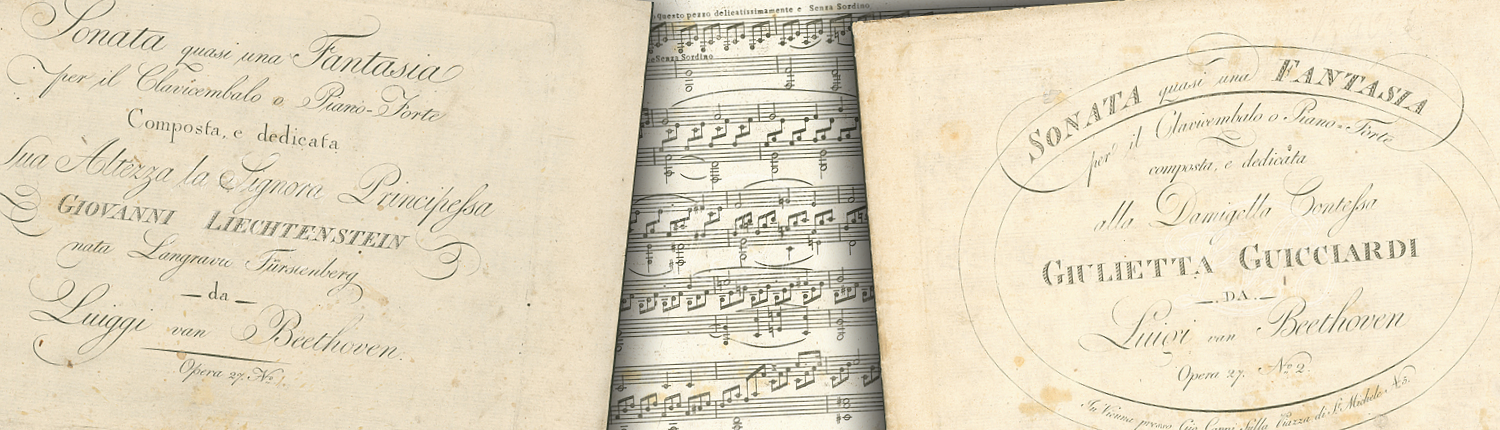
Opus 27, 2 Sonatas almost a fantasy in E flat major and C sharp minor for piano
OPUS 27 SONATE (2) quasi una fantasia in E flat major and C sharp minor for piano, Op. 27, 1800-1801, published in Vienna, Cappi, March 1802. GA. nos. 136, 137 (series 16/13-14) – B. 27 – KH. 27 – L. II, pp. 56 – N. 27 – T. 89
The character of fantasy is, overall—at least outwardly—more apparent in the first Sonata, due to the formal variety of the opening movement and also certain features of the final one, whereas in the second, the improvisatory nature of the prelude (which takes the place of the first movement) is followed by a Scherzo and a Finale of more orthodox forms. But beyond this, there remains between the two works the essential difference that separates dream and play from passion.
[By Biamonti Giovanni – Catalogo cronologico e tematico delle opere di Beethoven comprese quelle inedite e gli abbozzi non utilizzati, Torino, ILTE 1968]
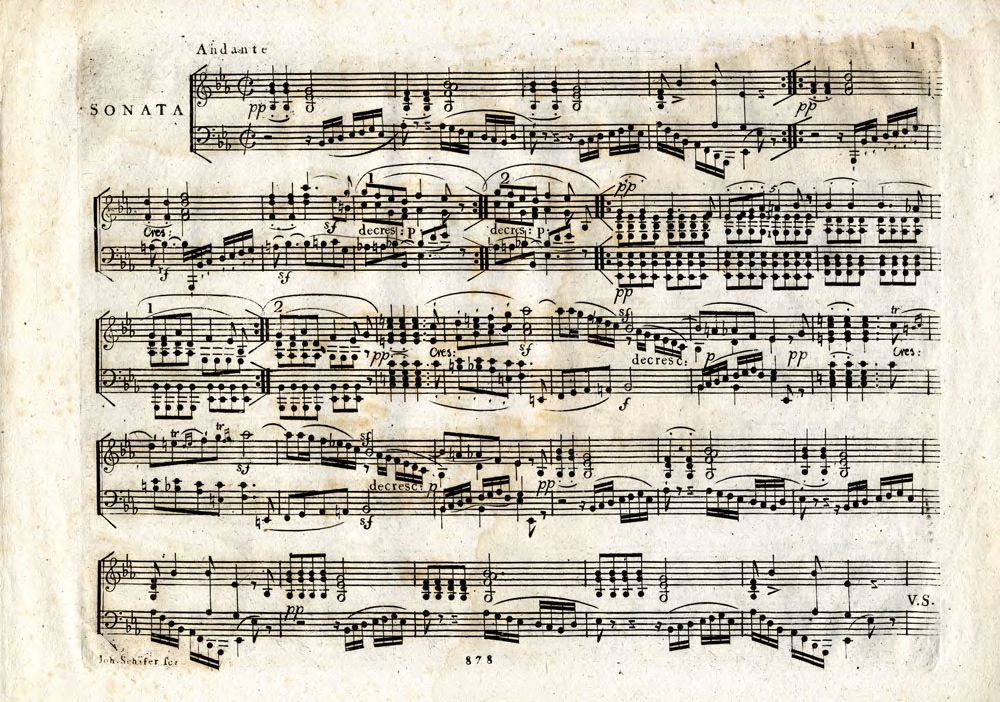
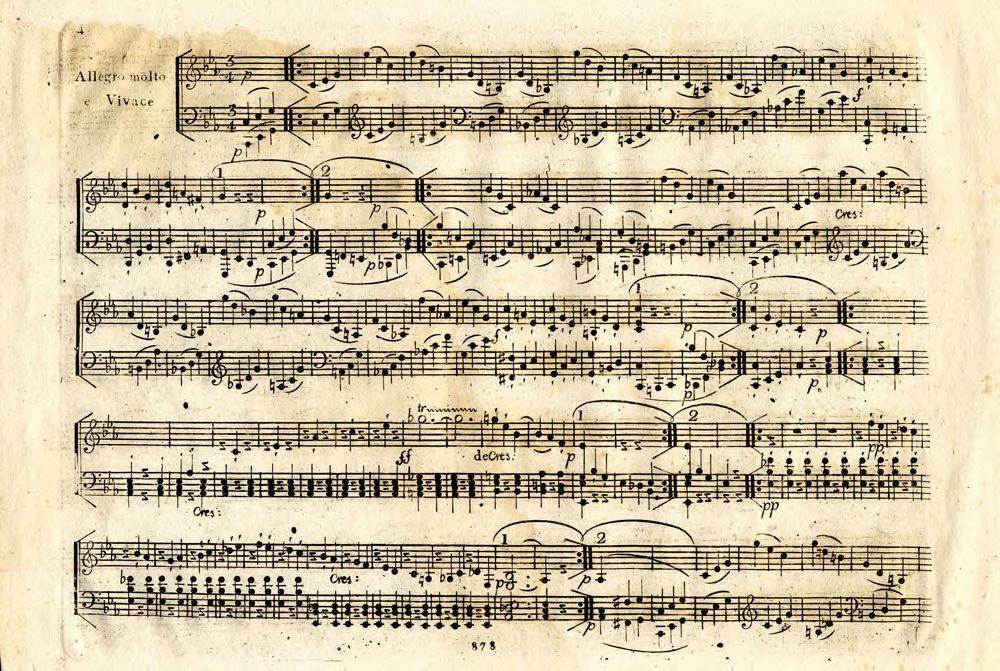
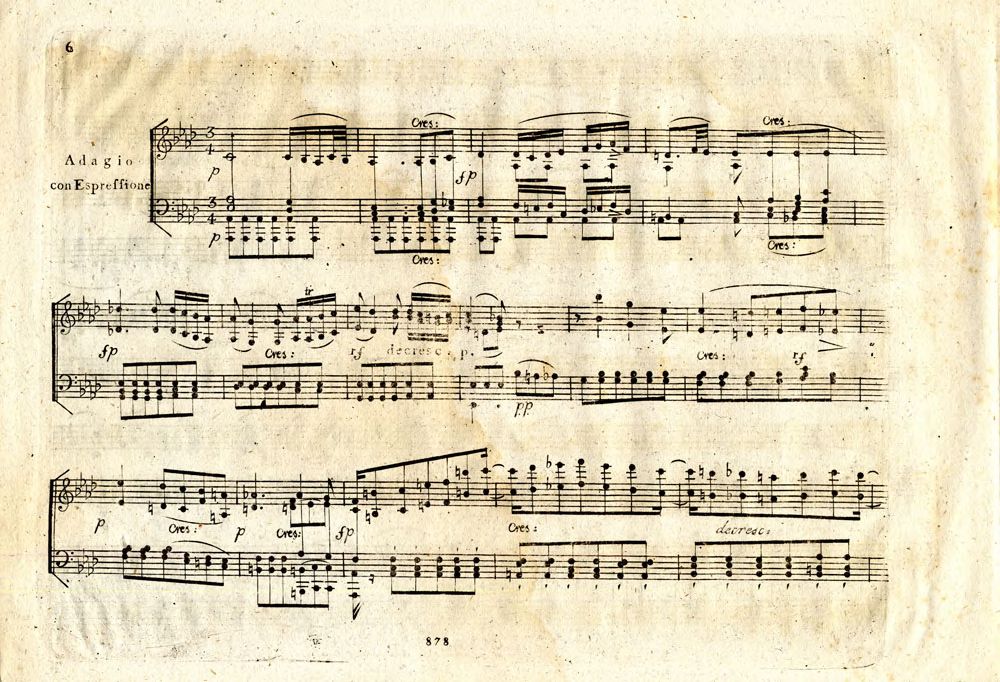
Opus 27 number 1 Sonata quasi una fantasia in E flat major for piano
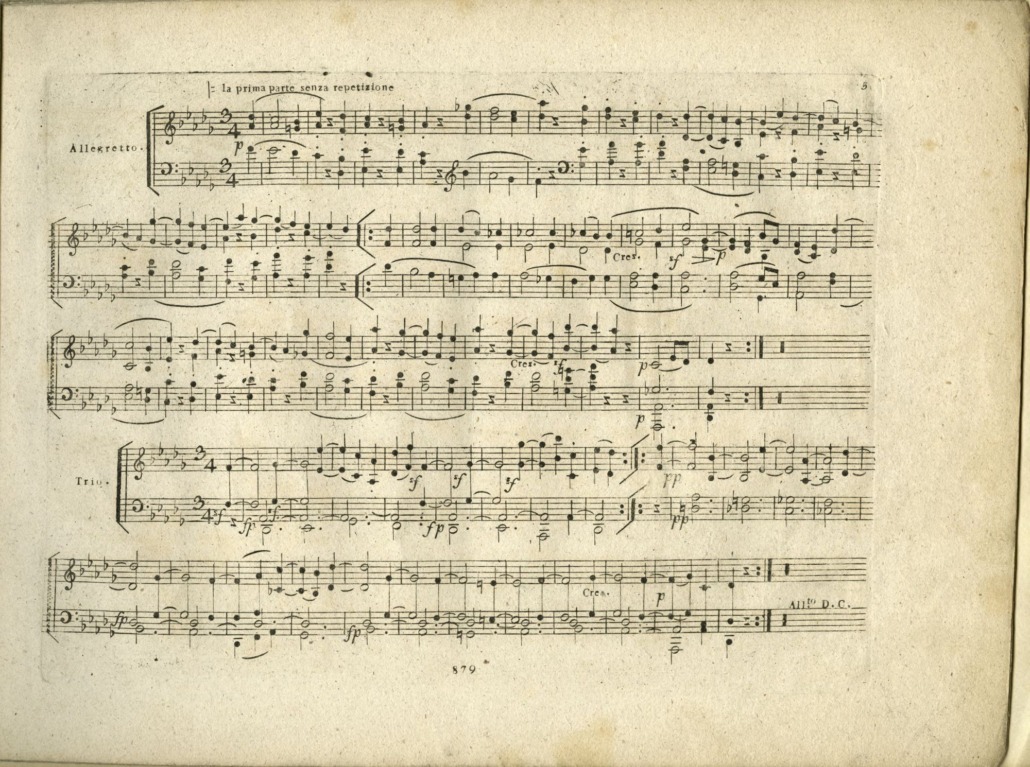
I) Allegretto – II) Allegro molto vivace – III) Adagio con espressione- Allegro vivace
First Sonata, dedicated to Princess Liechtenstein. The original manuscript is lost, but sketches for both the first and second halves are found in the Landsberg notebook.
The opening Andante does not rest on elements that could be described as thematically substantial in the sonata tradition. Instead, it presents a sequence of short phrases, following one another according to a logic of rhythmically symmetrical juxtapositions. Midway through, this is abruptly interrupted by a stormy Allegro of entirely different character, which then gives way to a brief reprise and a conclusion made up of flat chordal reiterations. Similar alternations of this kind are found in works by earlier composers—for example, in the second movement of Clementi’s Sonata in E-flat major for piano and violin, Op. 5 No. 3. A comparable technique had already been used by Beethoven himself in the slow movement of the second quartet from Op. 18.
The Andante flows directly into the Allegro molto e vivace, with no pause. Its opening section, in the minor key, features tight contrary-motion figures in which one can discern the outline of a rudimentary, melancholic song. This is followed by a major-mode Trio, where the initial rhythmic boldness gradually settles into a state of calm—without, however, losing its underlying pulse. The return of the first section is rendered more intense by the introduction of syncopation, reminiscent of the equivalent movement in the Sonata Op. 10 No. 2, to which other similarities also point.
The Adagio, likewise following without interruption, presents a theme whose opening bars are identical—or nearly so—to those of Beethoven’s Third Piano Concerto, Op. 37. Yet it spans only twenty-four bars, without development, serving essentially as an introductory episode to the concluding Allegro vivace.
This final movement unfolds with energy and cheerfulness. Near the end, the Adagio briefly reappears, before a Presto coda built on a theme derived from the main motif brings the sonata to a close. As a point of interest, the rhythmic impulse of the principal theme closely resembles that of the final movement of Locatelli’s Concerto in F major for four violins and orchestra (Ricordi edition).
As for the underlying poetic idea of the work, Schering draws a parallel with Act III, Scene II of Shakespeare’s The Merchant of Venice: the dialogue between Portia and Bassanio as he prepares to choose between the three caskets—gold, silver, and lead. If he selects the one containing Portia’s portrait, he wins her hand. Bassanio’s tension, followed by the joy of a fortunate choice: Adagio with expression – Bassanio’s composition as he kisses Portia; Allegro vivace – Portia and Bassanio abandon themselves to joy.
[By Biamonti Giovanni – Catalogo cronologico e tematico delle opere di Beethoven comprese quelle inedite e gli abbozzi non utilizzati, Torino, ILTE 1968]
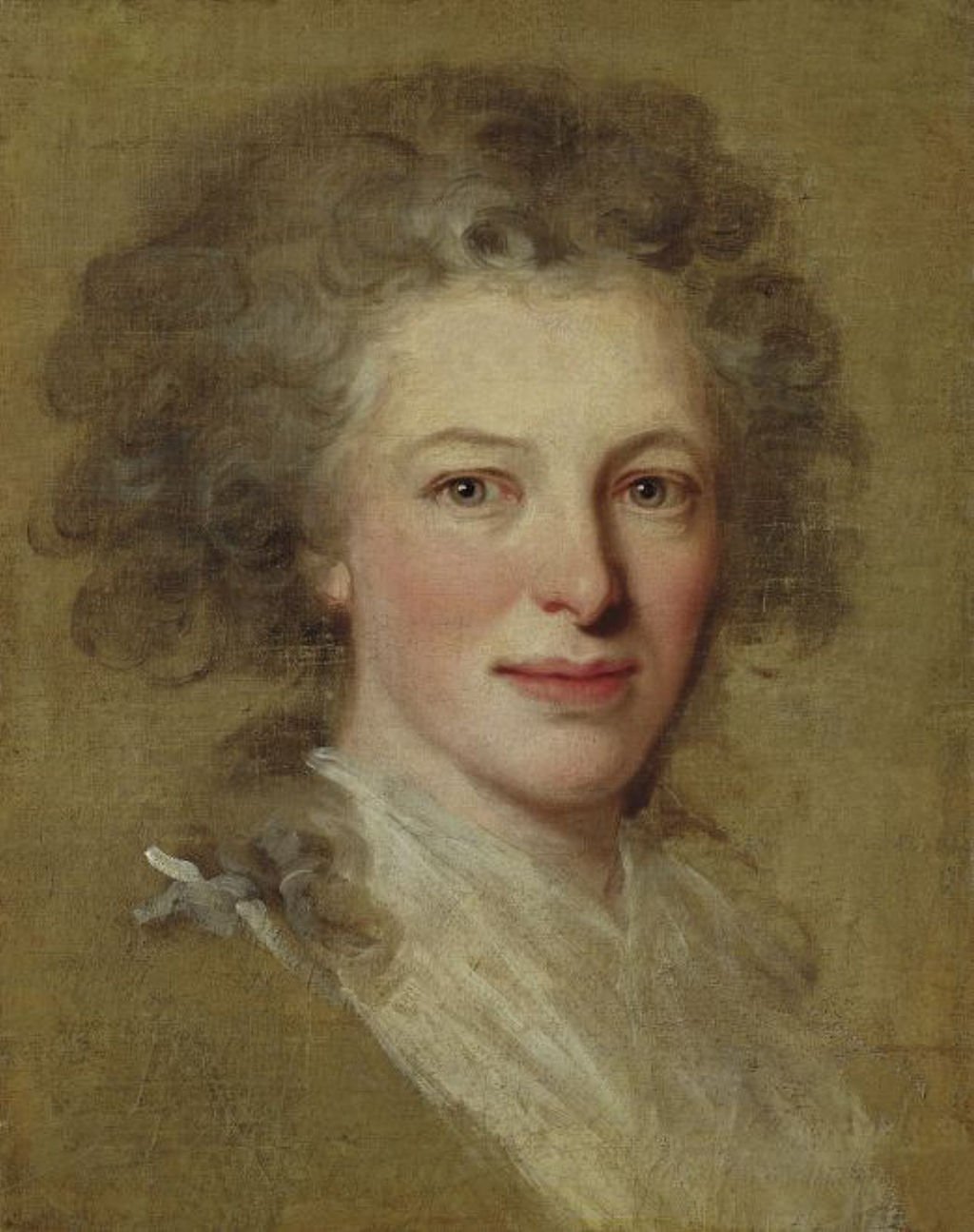
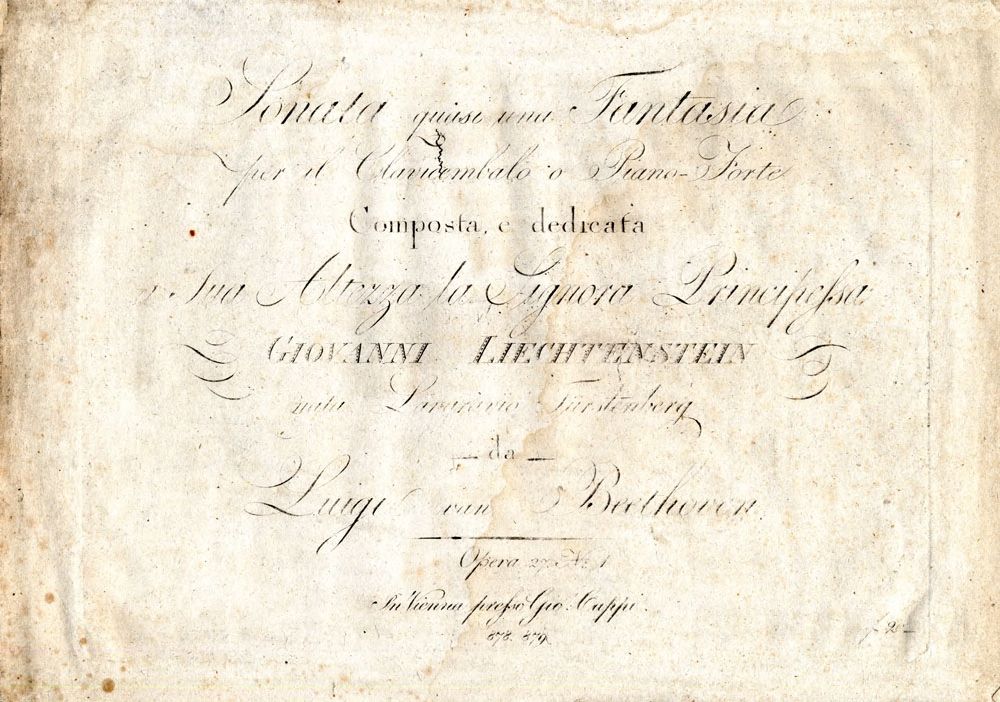
Official title: Opus 27 Nr. 1 Sonate (Es-dur) Sonata quasi una Fantasia für Klavier Widmung: Josephine Sophie Fürstin von Liechtenstein NGA VII/3 AGA 136 = Serie 16/13
Origin and Publication: Composed in 1801. The earliest sketches appear among those for the ballet music Op. 43, which Beethoven wrote in the early months of that year and which was first performed on 28 March. The original edition of Op. 27 No. 1 was published in March 1802 by Giovanni Cappi in Vienna. For details on Cappi’s editions of Opp. 25–27, see the entry on Op. 25.
Several copies of an early version of the original Cappi edition of Op. 27 No. 1 have survived. These lack printed titles, publisher’s name, and plate number. It is possible that Cappi acquired these plates in this unfinished state from Artaria, who may have left the publisher’s name blank due to ongoing negotiations for acquisition. The version of the title added shortly thereafter appears to have been intended for Op. 27 No. 2 as well, as space was left blank for the numbers “1” and “2” to be added by hand, and the publisher’s catalogue numbers were printed for both sonatas.
Beethoven’s decision to dedicate Op. 27 No. 2 to Julie Guicciardi required a different title (see TDR II, p. 307). Peter Riethus believed that the untitled edition was in fact the original one (possibly prepared by Artaria), while the edition bearing Cappi’s imprint was a “titled” version. However, we follow KH in classifying the latter as the original edition. The fact that both sonatas under the heading “quasi una Fantasia” shared the same title before their respective dedications were finalised has led to confusion—so much so that in some editions, beginning with Zulehner’s 1802 edition, the numbers 1 and 2 were reversed. Later, the “Moonlight Sonata” was likely placed first intentionally, due to its rapidly growing popularity (cf. editions by Pleyel, Breitkopf & Härtel, Schott, Haslinger, as well as later editions of Op. 27 No. 2 by Cramer and Spehr).
Dedication: Princess Josephine Sophie von Liechtenstein, born 20 June 1775 in Vienna, died 23 February 1848 in the same city. She was the daughter of Landgrave Joachim Egon von Fürstenberg-Weytra (1749–1828) and Countess Sophie Therese von Oettingen-Wallerstein (1751–1835). On 12 April 1792, she married Prince Johann (I) Joseph von Liechtenstein (1760–1836), who became reigning prince on 24 March 1805, a Field Marshal in the imperial army, an art collector, and the designer of the Liechtenstein Gallery. The prince not only owned a notable painting collection but also maintained a large library, and both music and the arts were cultivated in his household.
It is not known how Beethoven came into contact with the Liechtenstein family. He may have met the princess through Prince Karl von Lichnowsky, as Theodor von Frimmel speculates (without citing sources), and Frimmel also assumes she became Beethoven’s pupil (Handbuch, Vol. 1, p. 35ff). Five members of the Liechtenstein family subscribed to Op. 1, including Princess Josephine Sophie. Beethoven appears to have remained in contact with her for several years, as shortly before French troops entered Vienna on 13 November 1805, he wrote a letter of recommendation on behalf of his student Ferdinand Ries, addressed to the princess (BGA 240). Ries, however, did not make use of it—“which provoked Beethoven’s utmost fury” (Wegeler/Ries, p. 135).
First performance: Unknown.

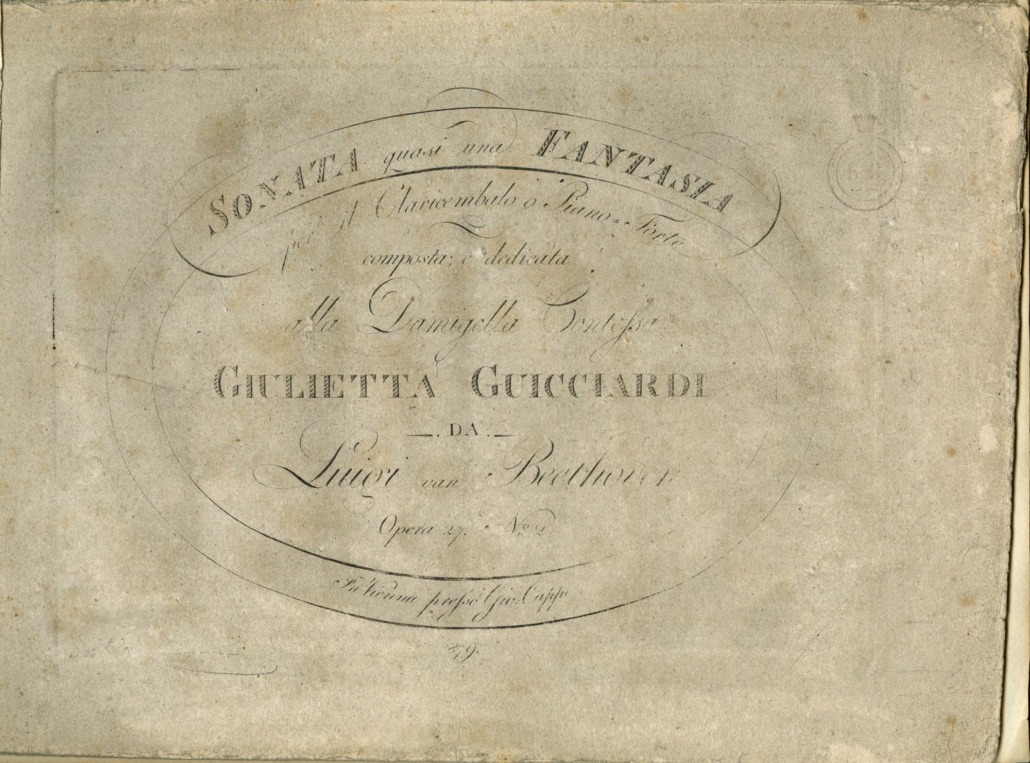
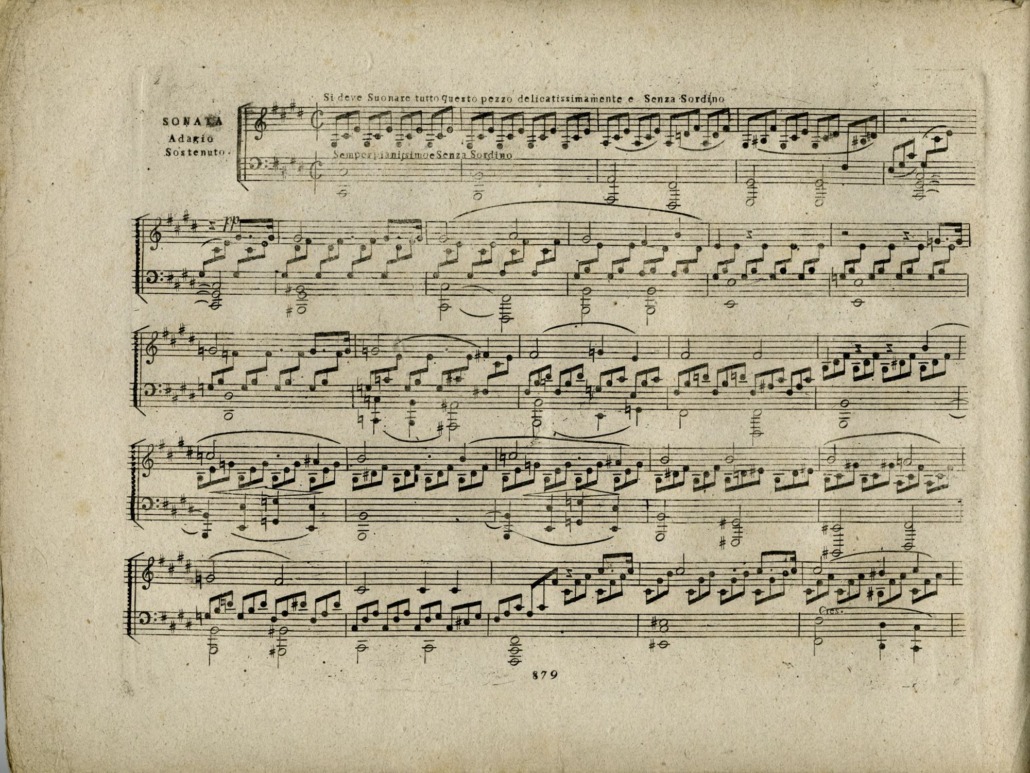
Opus 27 number 2 Sonata quasi una fantasia in C sharp minor for piano
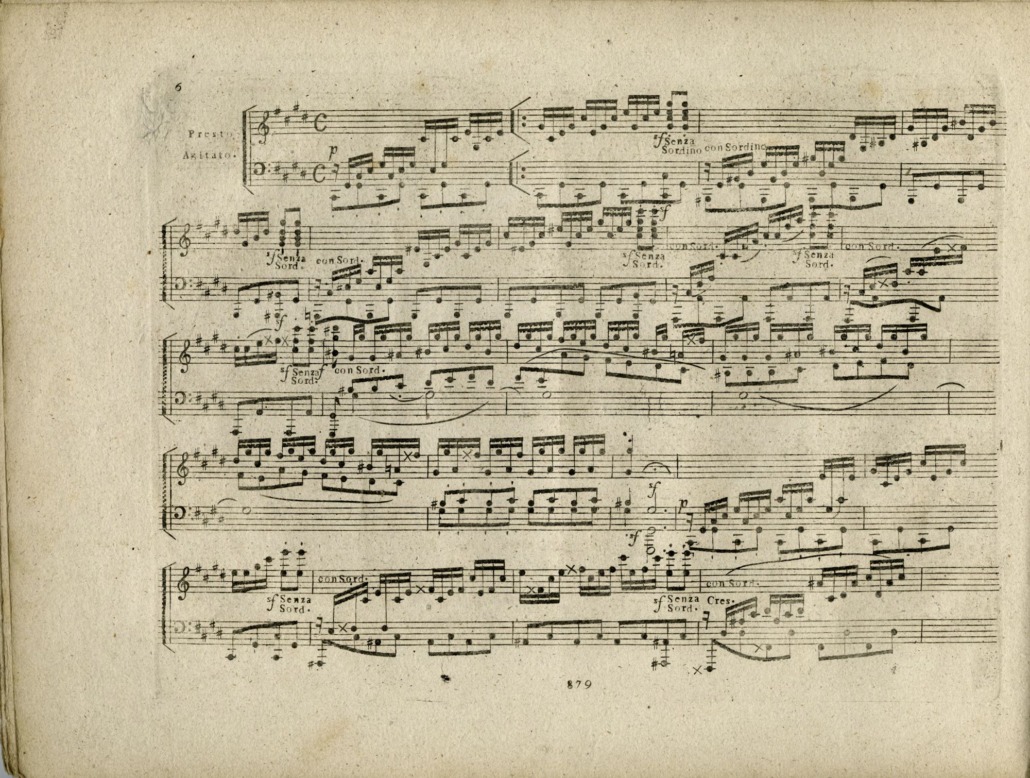
I) Adagio sostenuto II) – Allegretto – III) Presto agitato
Second Sonata, dedicated to Giulietta Guicciardi.
The original manuscript is preserved at the Beethoven-Haus; it is missing the first leaf (containing the first thirteen bars of the opening movement) and the last (with the final three bars of the third movement). The sketches currently known consist of three fragments of the final movement: one kept at the Beethoven-Haus, Bodmer Collection; the other two, according to KH, are held by the Fitzwilliam Museum in Cambridge and by Wilhelm Kux in Vienna respectively. All three were reproduced in facsimile by H. Schenker in Musikalische Seltenheiten (Vienna, Universal Edition, 1921); the first fragment also appeared in M.U.S., plate XV.
The dedication to Guicciardi has already been discussed.
But is there a connection between the music and Beethoven’s emotional state at the time—specifically, his unhappy love? It is certainly possible to think so, particularly given the sombre grief expressed in the Adagio sostenuto, even while admitting that some other circumstantial cause might also have inspired it. One such possibility is the poem Die Betterin by Johann Gottfried Seume, which speaks of the sorrow and hope of a young girl pleading with the Lord for her dying father’s recovery. Another is the hypothesis by Fischer that Beethoven may have improvised this “funereal” piece while keeping vigil beside a friend’s body.
Whatever its origin, the movement endures in “splendid isolation” for its emotional depth—surpassing even works by later composers that bear some degree of kinship: a few Nocturnes by Field or Chopin, Schubert’s Rondo-Sonata in A major or the song An den Mond, Brahms’s Mainacht, or the Prelude to Act II, Scene IV of Norma.
With its schematic juxtaposition of brief phrases and interplay of slurred and detached articulations, the Allegretto exemplifies a specific type of Beethovenian Scherzo. De Lenz reports certain remarks by Liszt on its performance—Liszt’s name being closely associated with this Sonata in both his and Berlioz’s recollections. However, the famous metaphor of “a flower between two abysses,” which Liszt used to characterise this movement, may seem slightly exaggerated. True, it offers a necessarily brief diversion from the main emotional trajectory—but one need not go as far as Rolland in claiming that it is precisely this “grace that plays and smiles” which provokes the final movement’s intensification of sorrow.
The musical figure that functions morphologically as the first theme in the Presto agitato seems, in terms of expressive intent as well as dynamic function, more like a turbulent surge—or, to borrow Riezler’s phrasing, a probing gesture or search—that introduces the melody which then becomes the second theme. From this emerges a new generative force, giving rise to a sense of unrelenting forward motion and anxiety.
D’Indy notes a thematic resemblance with the corresponding passage in the Württemberg Sonata in A-flat major by C. P. E. Bach. But one could also cite two Mozartian examples: the first movement of the Piano Sonata in A minor, K. 310 (though it follows a quite different and equally beautiful development), and a passage from the Allegro con spirito of the Sonata for Piano and Violin in E minor, K. 60 (Anhang, 209h). There is also a developmental episode from Beethoven’s own early Piano Sonata in E-flat major, in which Riemann detects a figuration characteristic of the Mannheim “sigh” motive.
La denominazione ancor oggi tanto diffusa di “Sonata Al chiaro di luna” (Mondscheinsonate) deriva dallo scrittore e poeta berlinese Ludwig Rellstab che, a quanto riferisce il De Lenz e molti altri hanno ripetuto, «compare cette oeuvre à une barque visitant par un clair de lune les sites sauvages du Lac des Quatre Cantons». Chi volesse poi sapere a quante strane e strambe fantasie poetico – letterarie la Sonata abbia dato occasione nel corso dal secolo passato, non ha che da leggere il Prod’homme.
Si sono tirati in ballo, di volta in volta, il medio evo, il colore gotico, Dante, il Conte Ugolino, Francesca da Rimini. Alla musica del primo tempo sono state adattate le parole del Kyrie, e poi anche quelle della preghiera di San Bernardo nell’ultimo canto del Paradiso, Ai giorni nostri lo Schering si è richiamato al A Re Lear di Shakespeare, riferendo l’Adagio e l’Allegretto alla scena VII dell’atto IV (Il re si sveglia, riprende lentamente i sensi, riconosce Cordelia che lo assistie piangendo) ed il Presto alla scena III dell’atto V (Re Lear, con Cordelia morta fra le sue braccia: Urlate, urlate, ecc.).

Official title: Opus 27 Nr. 2 Sonate (cis-moll) Sonata quasi una Fantasia für Klavier Widmung: Julie Gräfin Guicciardi NGAVII/3 AGA 137 = Serie 16/14 Beiname: Mondscheinsonate.
Composition and Publication: Composed in 1801. Beethoven noted the surviving sketches for the finale in a notebook he used between spring and autumn of that year. The original edition was published by Giovanni Cappi in Vienna in March 1802. A notation from 1793/94 is found in the sketch collection “Kafka” (GB-Lbl, Add. Ms. 29801, folio 139r) and corresponds to bars 15–18 of the first movement. For editions by Cappi of Opp. 25–27, see Op. 25. For the exchange of Op. 27 Nos. 1 and 2 in later editions, see above.
Regarding the Nickname: According to Wilhelm von Lenz, the apocryphal nickname “Moonlight Sonata” was already known and disputed in the early 1830s and originates from Ludwig Rellstab. In Rellstab’s extensive literary work, Friederike Grigat was able to identify the following description of the adagio’s character, which most closely matches that disseminated by Lenz. It appears in the first art novella “Theodor. Eine musikalische Skizze” of 1823 (see Grigat/Mondschein, p. 23 and note 8):
“Der See ruht in dämmerndem Mondenschimmer; dumpf stößt die Welle an das dunkle Ufer; düstere Waldberge steigen auf und schließen die heilige Gegend von der Welt ab; Schwäne ziehen mit flüsterndem Rauschen wie Geister durch die Fluth und eine Äolsharfe tönt Klagen sehnsüchtiger einsamer Liebe geheimnisvoll von jener Ruine herab. Still, gute Nacht!”
Lenz reports in Beethoven et ses trois styles, Saint Petersburg 1852, vol. 1, pp. 225f:
“Rellstab compares this work to a boat, visiting by moonlight the wild sites of the Lake of the Four Cantons in Switzerland. The sobriquet ‘Moonlight Sonata’, which twenty years ago caused outcries among connoisseurs in Germany, has no other origin. This Adagio is rather a world of the dead, the epitaph of Napoleon in music, an Adagio on the death of a hero!”
Lenz reiterates this in Beethoven. Eine Kunststudie (Lenz/Beethoven vol. 3, p. 78), a book in which his interpretation of the sonata is linked to the “Moonlight” as precisely as in Alexandre Oulibicheff’s study Beethoven, ses critiques et ses glossateurs (Paris, 1857).
In his biography of Beethoven, Anton Schindler also uses the title “Die Sonate in Cis-moll Op. 27. No 1. (Mondschein-Sonate)” (Schindler/Beethoven 1840, p. 216), without explaining the reason. The motifs “mourning,” “death,” and “night” cited by Lenz, contrasting with the romanticising “Moonlight,” were emphasised by Carl Czerny and Franz Liszt. Lenz also notes that the nickname “Laubensonate” was common in Vienna:
“Beethoven improvised the Adagio in the leafy walk of a garden, before the beautiful countess [the dedicatee]” (Lenz/Beethoven vol. 3, p. 79).
Dedication: Julie Guicciardi, born 23 November 1782 in Przemysl and died 22 March 1856 in Vienna, daughter of Count Franz Joseph Guicciardi (circa 1752–1830) and Countess Susanna Guicciardi, née Brunsvik (1757–1813). Julie arrived in Vienna with her parents in the summer of 1800, where her father had obtained a position in the court chancellery. Beethoven met her that year at the Brunsvik family, to which she was related on her mother’s side (her mother was an aunt to the Brunsvik siblings Therese, Franz, Josephine, and Charlotte). Beethoven gave piano lessons to Julie, proudly writing that he did not accept payment for them (see BGA 77 and TDR II p. 307), and evidently fell in love with her. She is presumably the “liebe zauberische Mädchen” Beethoven mentioned in a letter to Franz Gerhard Wegeier on 16 November 1801:
“die mich liebt und die ich liebe, es sind seit 2 Jahren wieder einige seelige Augenblicke, und es ist das erstemal, daß ich fühle, daß – heirathen glücklich machen könnte, leider ist sie nicht von meinem Stande” (BGA 70).
In November 1852, Julie told Otto Jahn that Beethoven had given her the Rondo in G major, Op. 51 No. 2, but had taken it back because he needed to dedicate something to Countess Henriette Lichnowsky. In compensation, he dedicated the piano sonata to her (TDR II p. 307s). On 14 November 1803, Julie married Wenzel Robert Graf von Gallenberg (1780–1839), better known as a ballet composer, with whom she soon moved to Naples.
In Italy, Gallenberg became acquainted with the theatrical entrepreneur Domenico Barbaja (c. 1778–1841), who from 1809 was director of the court opera in Naples. In December 1821, Barbaja took over the management of the Kärntnertortheater in Vienna and the Theater an der Wien. Contact with Barbaja prompted Gallenberg to return to Vienna with his wife in 1822, where he became a member of the executive committee of the Kärntnertortheater. In February 1823, Beethoven sent Anton Schindler to borrow a score of Fidelio from the Kärntnertortheater (BGA 1556). It was probably in this context that Beethoven confided in a conversational notebook to Schindler in early February 1823 about his relationship with Julie Guicciardi and her husband (BKh 2 pp. 365–367). His claim that she came to him in tears but he sent her away does not necessarily refer to the period after his return to Vienna, as is often assumed. The incident could also have occurred before his departure for Italy, which would better fit the subject of Beethoven’s account, which actually reflects the past. In his first biography of Beethoven in 1840, Anton Schindler still considered Julie Guicciardi the “Immortal Beloved”, who, however, based on biographical data, could not have been her (Steblin/Guicciardi).
First Performance: Unknown.
The sketches will be featured in an article specially created for the Beethovenian Music Research Center, www.lvbeethoven.org

Our site recommends: Maria Grazia Amoruso
An interpreter who knows how to combine a personal touch with a personality of rare sensitivity
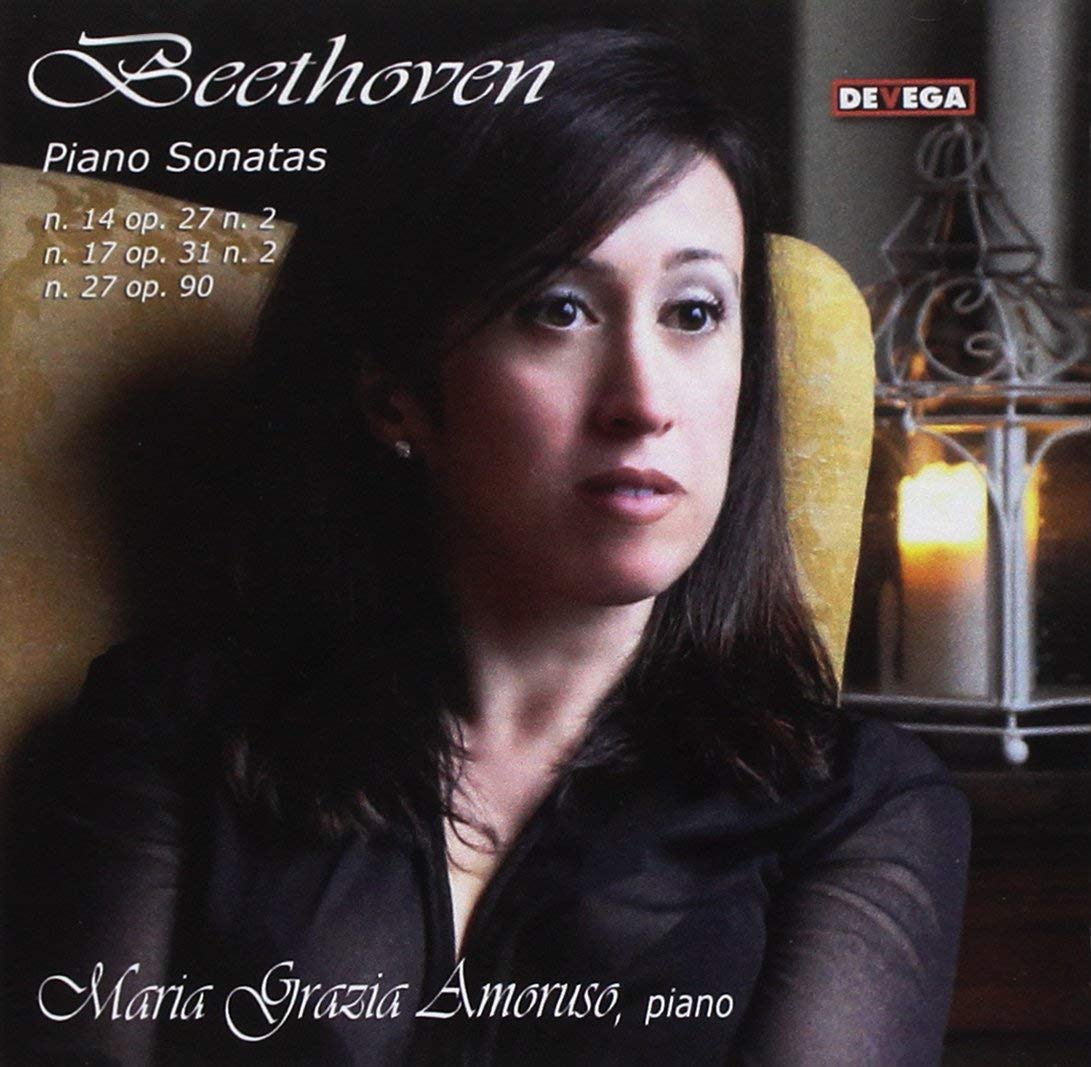
Maria Grazia Amoruso is an organist and pianist whose repertoire ranges from Frescobaldi and Bach to Dallapiccola and Castiglioni. She has distinguished herself in national and international competitions. She began her artistic training at the Niccolò Paganini Conservatory in Genoa, where she graduated in piano with top honours. She subsequently perfected her skills under Lazar Berman, Jan Marisse Huizing, at Tatiana Nikolayeva’s school with Oxana Yablonskaja and Alexander Malter, and at Heinrich Neuhaus’s school with Lev Naumov and Karl Leister. She performs widely both in Italy and abroad, as a soloist and with various chamber ensembles, with a broad repertoire.
Her encounter with Maestro Giorgio Questa, with whom she studied organ, musical analysis, and interpretation intensively (particularly manuscripts of Italian music from the 16th and 17th centuries), was pivotal to her artistic development.
Upon the Maestro’s passing in 2010, Maria Grazia Amoruso restored the portable wooden organ he bequeathed to her, with the aim of perpetuating the artistic tradition. The instrument, entirely made of wood and fully mechanical, was wholly constructed by the Maestro in the 1960s based on a Renaissance model and represents a worldwide “one-of-a-kind.” It can be assembled and dismantled within a few hours and is easily transportable; despite its small size, its sound structure corresponds to that of a typical Italian organ of the 16th century.
At the link http://www.youtube.com/user/mariagraziaamoruso you can listen to some excerpts, together with a presentation by prof. Flavio Dassenno, professor of Organology at the Conservatory of Brescia.
In 2015 this organ, played by Maria Grazia, was the protagonist of the first Festival dedicated to “Giorgio Questa” which took place in Mombarcaro di Cuneo.
Maria Grazia Amoruso gave life, in 2006, to the International Music Festival Isola di Capraia of which she is artistic director.
In February 2015 Maria Grazia Amoruso played Haydn’s concertos for organ and orchestra at the Carlo Felice theater in Genoa. In May 2018 when the Rolli days he held four concerts in Genoa for the young Genoese orchestra gog.
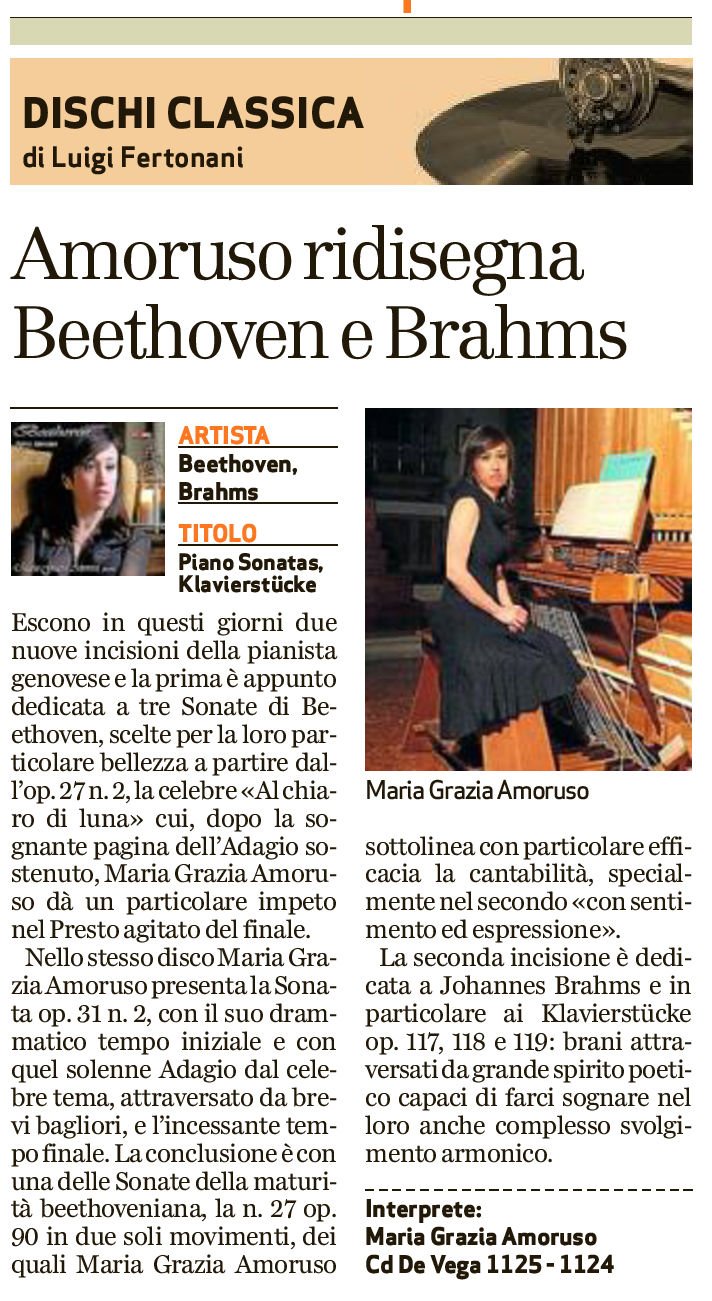
Amoruso has recorded for the Derega record companies. Philharmonia and Zecchini numerous CDs with piano with music by Beethoven, Chopin, Brahms, Schubert, Schumann, Fauré, Debussy and two CDs with the organ built by Giorgio Questa.

