

Anhang 13
“Trauermarsch” in F minor for piano
WoO Anhang 13 – Hess Anhang 26 Biamonti, Appendix II, No. 17.
Published as a work by Beethoven in 1830 by Johann Friedrich Kaiser (Graz) and around 1844 by J. Aibl in Munich.
Anhang 13 – Funeral March in B-flat Minor for Piano
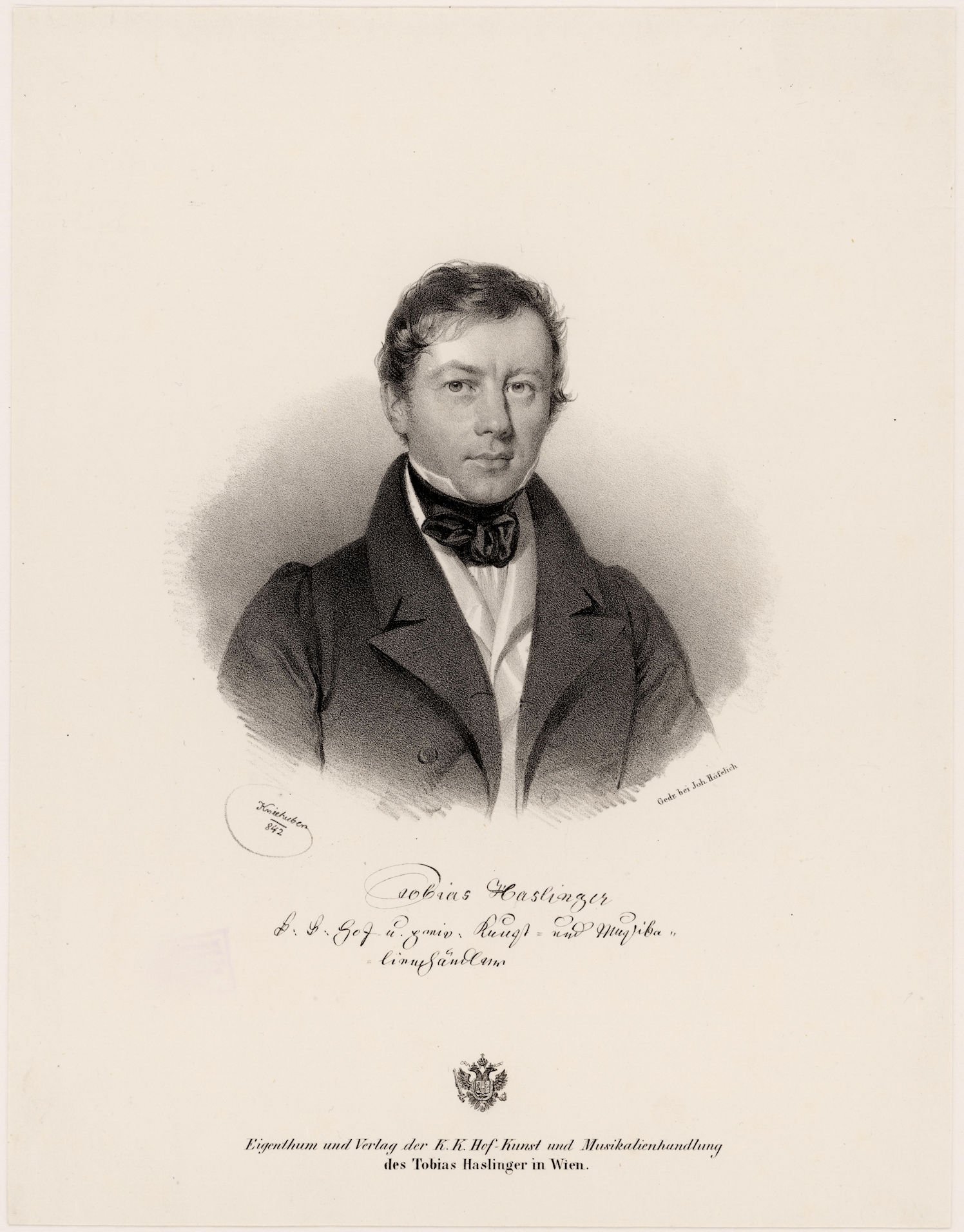
Although published under Ludwig van Beethoven’s name in 1830 by Johann Friedrich Kaiser in Graz and again around 1844 by J. Aibl in Munich, this piece also exists in an incomplete edition in B-flat minor, compiled by Tobias Haslinger in 1845. That rare pianistic edition belongs to the Beethoven Music Research Center (Centro Ricerche Musicali Beethoveniane) and served as the source for pianist Diego Moccia’s recent performance.
The work is now definitively attributed to Johann Heinrich Walch, who also composed the Pariser Einzugsmarsch, cataloged as Anhang 12.
Johann Heinrich Walch: Biographical Overview
Born on 21 November 1775 in Gross-Neuhausen, Walch died on 2 October 1855 in Gotha. He was a prolific composer, conductor, and court musician at the Fürstenhof of Gotha, acclaimed as a reformer of military music within the Saxon Army. His output includes numerous dances and marches, many of which are still performed in Sweden today.
Early Life and Musical Training
- Walch’s mother, Marie, worked as a servant in the castle of Count Johann Georg Heinrich von Werther (1730–1790).
- His father, Henry, was a soldier.
- His musical aptitude was recognized early by the village schoolmaster and curate, who educated him in music.
- Walch’s training led to an appointment as a chamber musician at the Hofkapelle.
- Following Count von Werther’s death, the Gross-Neuhausen court was dissolved.
He later served as an Electoral Saxon soldier in the Grenadier Regiment in Dresden until 1805. Walch also played horn in the ducal orchestra of Saxony-Gotha and Altenburg.
Napoleonic Era and the Rise of Military Music
In August 1806, the Duchy of Saxony-Gotha entered into alliance with Napoleon and the Confederation of the Rhine. Walch was entrusted with organizing a military band modeled on French regimental ensembles, composing new marches for this newly established orchestra.
His most notable march, the “Pariser Einzugsmarsch” (preußische Armeemarschsammlung II,38), premiered in 1814 at the celebratory victory parade of cavalry regiments—Bavarian, Prussian, and Saxon—marching at the trot.
In 1822, Duke August died suddenly; his brother Frederick assumed regency until 1825 and dissolved the Hofkapelle. Walch was granted unpaid leave and embarked on a concert tour across Denmark, Sweden, and Russia, where his compositions were both admired and commercially successful.
Following the death of Duke Friedrich, the Gotha-Altenburg line ended, succeeded by the dynasty of Saxe-Coburg and Gotha. Duke Ernst I reinstated the famed Hofkapelle and restored Walch to his post as chamber musician.
Walch remained active until 1845, when he retired due to age. However, he continued composing and teaching—specializing in piano, violin, and French horn—until his passing in 1855.
His voluminous correspondence with notable contemporaries attests to his historical prominence. Although now largely forgotten in his native Germany, his Reveille and Zapfenstreich remain integral to the daily ceremonial routines of Stockholm’s Royal Palace.
?? British Reception and Misattribution
In England, the march endures under the title “Beethoven’s Funeral March No. 1”, despite misattribution. It was notably performed:
- At the funeral of King Edward VII
- During the National Service of Remembrance in London: the Last Post and Wreath Laying Ceremony
- During BBC broadcasts, often announced as Beethoven’s Funeral March
It was long listed erroneously as WoO Anhang 13, within Beethoven’s catalog of works without opus number.
Later Ceremonial Use
The march featured prominently in:
- The funeral of Queen Elizabeth the Queen Mother
- The processional to St. Paul’s Cathedral for Margaret Thatcher (17 April 2013)
- The BBC segment commemorating the final journey of Prince Philip, Duke of Edinburgh (10 June 1921 – 9 April 2021)
- The funeral of Queen Elizabeth II (19 September 2022)

Clicca qui per aggiungere il proprio testo
Clicca qui per aggiungere il proprio testo
BIBLIOGRAPHY
- Robert Eitner: Biographisch-bibliographisches Quellen-Lexikon der Musiker und Musikgelehrten Christlicher Zeitrechnung bis Mitte des neunzehnten Jahrhunderts. Graz: Akademische Druck- u. Verlaganstalt, 1959.
- Paul Frank, Wilhelm Altmann: Kurzgefasstes Tonkünstler-Lexikon für Musiker und Freunde der Musik. Regensburg: Gustav Bosse, 1936, Seite 730.
- Werner Probst: Johann Heinrich Walch komponierte den bekannten Trauermarsch von Beethoven. In: Mitteilungsblatt des Arbeitskreises Militärmusik der Deutschen Gesellschaft für Heereskunde, 21. Jahrgang, Nr. 2, Juni 1998, Seiten 98–105.
- Joachim Toeche-Mittler: Armeemärsche, 1. Teil – Eine historische Plauderei zwischen Regimentsmusiken und Trompeterkorps rund um die deutsche Marschmusik. 2. Auflage, Neckargmünd, Vowinckel-Verlag, 213 S.
- Joachim Toeche-Mittler: Armeemärsche, 2. Teil – Sammlung und Dokumentation. 2. Auflage, Neckargmünd, Vowinckel-Verlag, 1977, Seite 161.
- Joachim Toeche-Mittler: Armeemärsche, 3. Teil – die Geschichte unserer Marschmusik. 2. Auflage, Neckargmünd, Vowinckel-Verlag, 1977. Seite 73 u. 241.
- Beethovens Trauermarsch [von Johann Heinrich Walch] in: Münchner Lieblingsstücke für das Pianoforte, Band 19. Bayer. Staatsbibliothek München, Signatur 4 Mus.pr. 54112-19 Marsch des königlichen Garde-Schützen-Bataillons,[1810]. Bayer. Staatsbibliothek München, Signatur 4 Mus.pr. 2009.4223
Anhang 13 is part of the “Research Becomes Art” project
A New Life for the Unknown Works of Ludwig van Beethoven: An Artistic Exploration by pianist Diego Moccia.