The Musical Times in the Late 19th Century
Founded in 1844 as The Musical Times and Singing Class Circular, this venerable periodical stands as the longest-running English-language journal of music. By the latter decades of the 19th century, it had evolved into a formidable organ of musical thought, chronicling the artistic pulse of Britain and beyond with erudition and editorial finesse.
Under the stewardship of editors such as Henry Charles Lunn, William Alexander Barrett, and Frederick George Edwards, the journal expanded both in scope and stature. Its pages—eventually numbering up to seventy-two per issue—were adorned not only with incisive criticism and scholarly essays, but also with complete vocal compositions, ranging from madrigals to anthems, often published in collaboration with the Novello firm.
The journal’s editorial ethos was steeped in a reverence for choral traditions, particularly the oratorios of Mendelssohn, Spohr, and Handel, while also embracing the burgeoning works of native composers such as Arthur Sullivan, Edward Elgar, and Frederick Cowen. Foreign luminaries—Berlioz, Gounod, Verdi, Brahms, and Dvořák—were likewise afforded rigorous attention, their performances in London and provincial festivals meticulously reviewed.
M.T. Shedlock: Scholar and Contributor
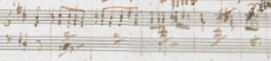
M.T. Shedlock (Mary T. Shedlock), though not as widely chronicled as some of her contemporaries, emerges in the annals of The Musical Times as a discerning voice in Beethoven scholarship. Her article of August 1st, 1892, published in The Musical Times, brought to light a fragmentary sonata movement attributed to Beethoven, preserved in the Kafka Miscellanea at the British Museum.
Shedlock’s work is notable for its philological precision and its reliance on the authority of Nottebohm, the preeminent Beethoven scholar of the age. She cautiously refrains from assigning a definitive date to the fragment, instead situating it within the broader temporal bounds of the Kafka manuscripts. Her scholarship exemplifies the Victorian ideal of rigorous musical historiography, combining archival diligence with interpretive restraint.