Hess 108 – Wellingtons Sieg, oder die Schlacht bei Vittoria. Beethoven wrote it for Mälzel’s Panharmonicon
Sturm Marsch – Allegro assai
Hess 108 – Wellington’s Victory, or the Battle of Vitoria, written for Maelzel’s Panharmonicon, August–October 1813. Hess 108 – Biamonti 557.
The victory won by the English general, the Duke of Wellington, over the French at Vitoria in northern Spain on 21 June 1813 suggested to the mechanical instrument maker Johann Nepomuk Maelzel—already well known for earlier inventions of this kind—the idea of having Beethoven, then a close friend of his, compose a celebratory work to be performed on the Panharmonicon, a large mechanical organ of Maelzel’s own construction.
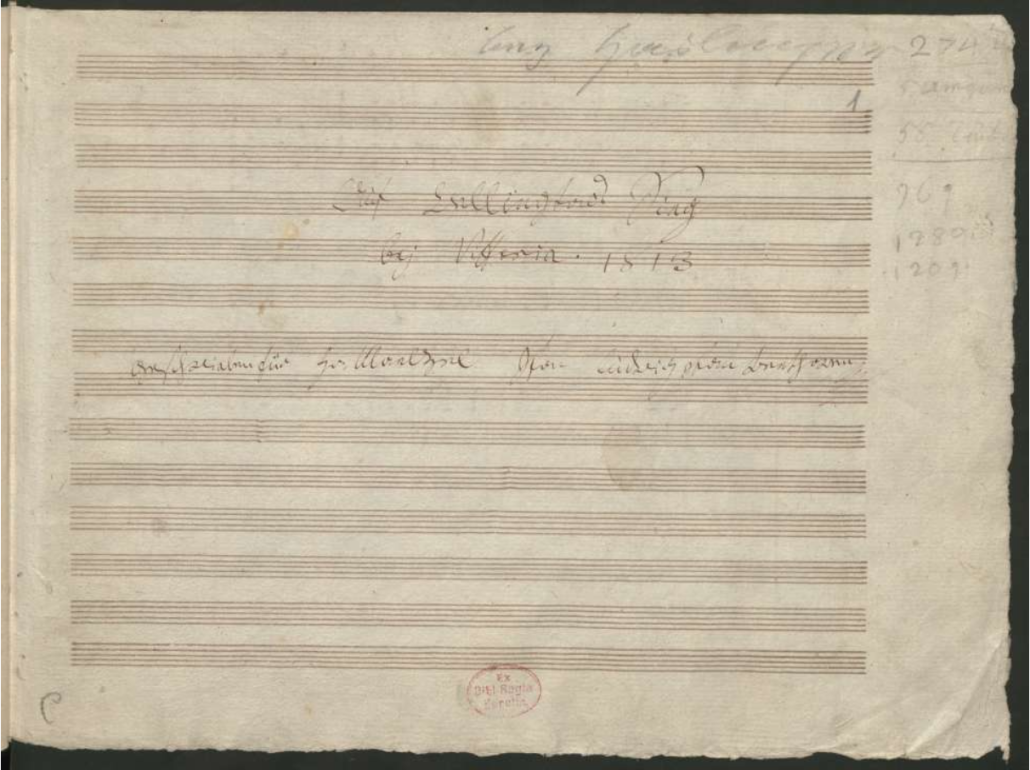
The manuscript of the second part of this version was discovered by Willy Hess in a copy revised by the composer himself. It is preserved in the Deutsche Staatsbibliothek in Berlin and bears the following title: “Auf Wellington Sieg / bei Vittoria 1813 geschrieben für Hr. Maelzel von Ludwig van Beethoven” (“On Wellington’s Victory / at Vitoria 1813 / written for Mr Maelzel by L. van Beethoven”).
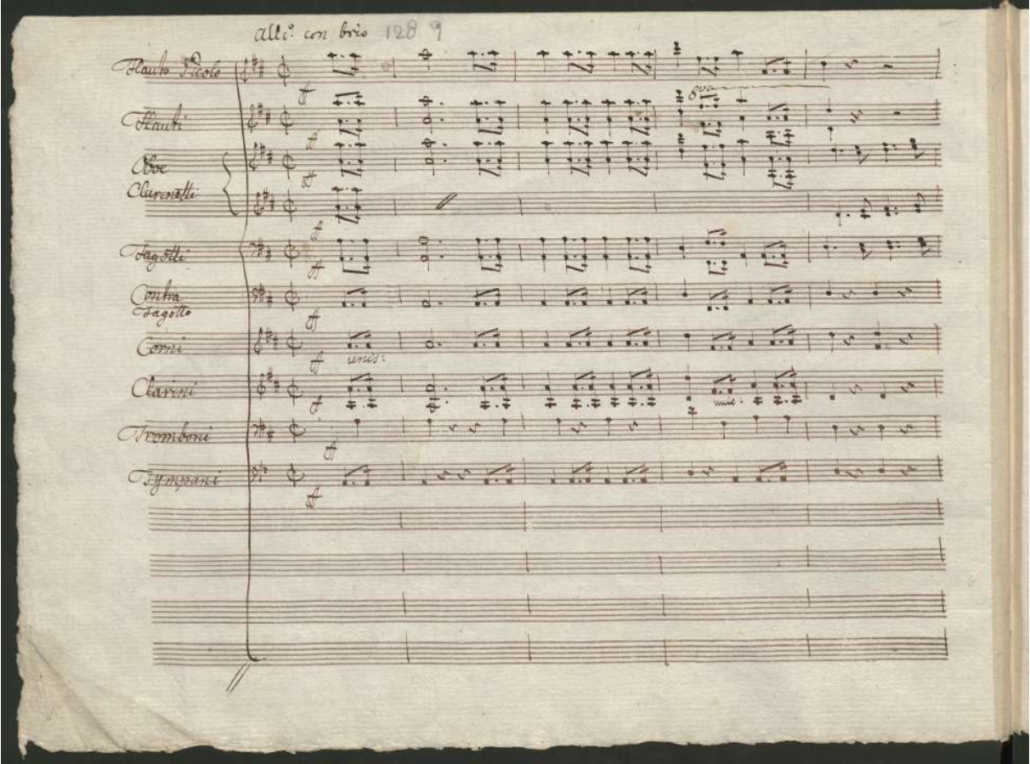
The following instruments are listed: piccolo, flutes, oboes, clarinets, bassoons, contrabassoon, horns, trumpets (clarini), trombones, timpani, triangle, cymbals, drum, bass drum, and organ bass. Their number in each category, and each with its own part as shown in the score, demonstrates that Beethoven had in mind not merely a wind orchestra but precisely the aforementioned mechanical instrument. The orchestral score, corresponding to Opus 91, was written later.
[By Biamonti Giovanni – Catalogo cronologico e tematico delle opere di Beethoven comprese quelle inedite e gli abbozzi non utilizzati, Torino, ILTE 1968]
Wellingtons Sieg oder die Schlacht bei Vittoria; original version for Maelzel’s Panharmonicon.
It is known that The Battle of Vitoria was originally written for Maelzel’s Panharmonicon and only later transcribed for full orchestra. The original score of the second part is preserved in Berlin, in a revised copy (autograph Artaria 181), bearing Beethoven’s own heading: “Auf Wellingtons Sieg bei Vittoria 1813, geschrieben für Hr. Maeltzel [sic] von Ludwig van Beethoven.”
The instruments in this score, written for the Panharmonicon, are: piccolo, flutes, oboes, clarinets, bassoons, contrabassoons, “clarini” (trumpets) [that is, trumpets in D or E-flat], trombones, timpani, triangle, cymbals, drum, bass drum, and organ pedal bass.
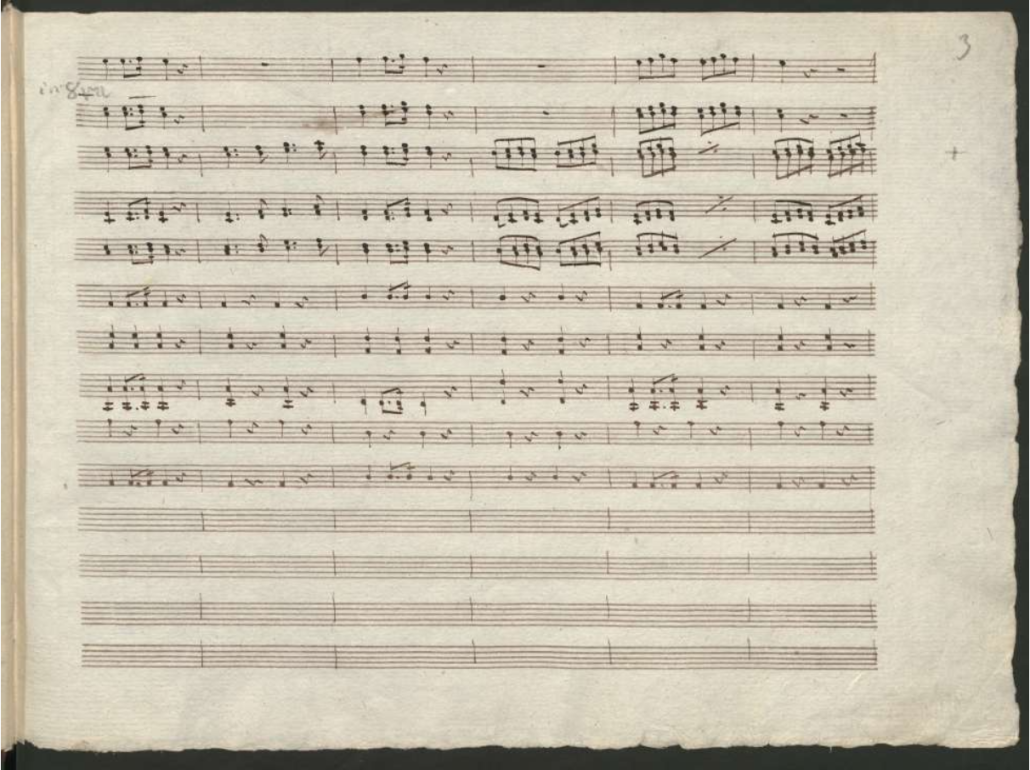
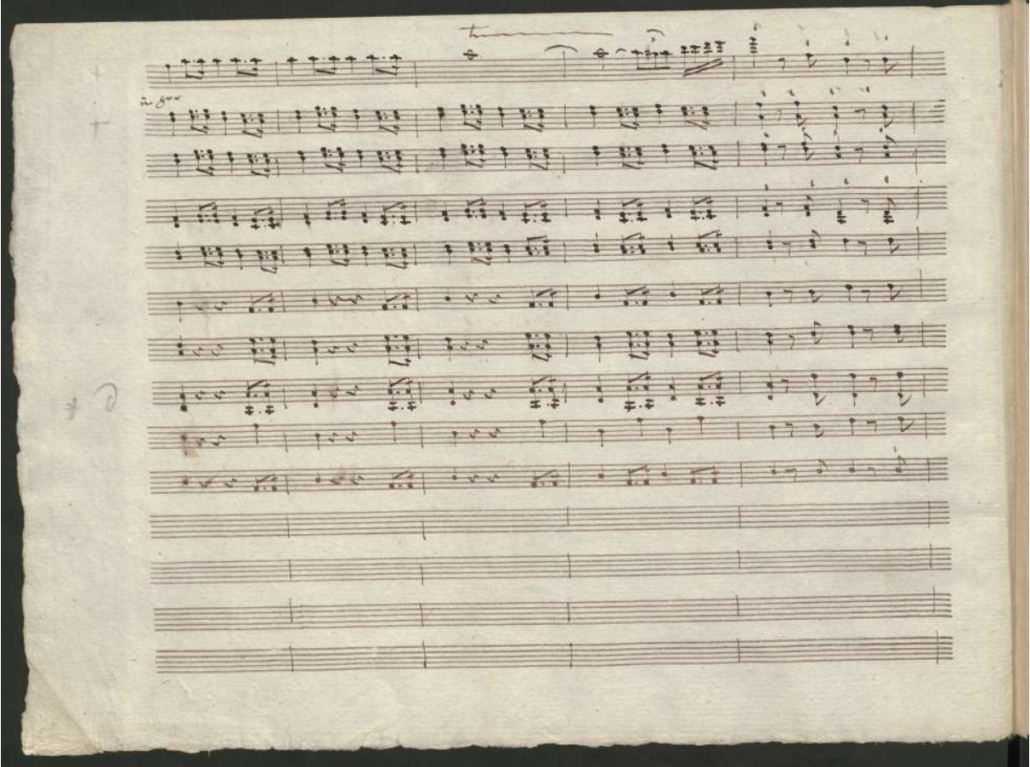
The piece begins with an Allegro con brio from the Siegessymphonie, GA, p. 49, bar 4. Bars 23 to 28 of this first version were published in the catalogue Hess 3, pp. 326–327 (or pp. 28–29 in the separate edition of the same); the rest has remained unpublished. [The entire second part was published by Hess in SBG, vol. IV, 1961, p. 71.]
(Hess – Green)