Opus 62, Overture in C minor to the tragedy “Coriolanus” by H. J. von Collin
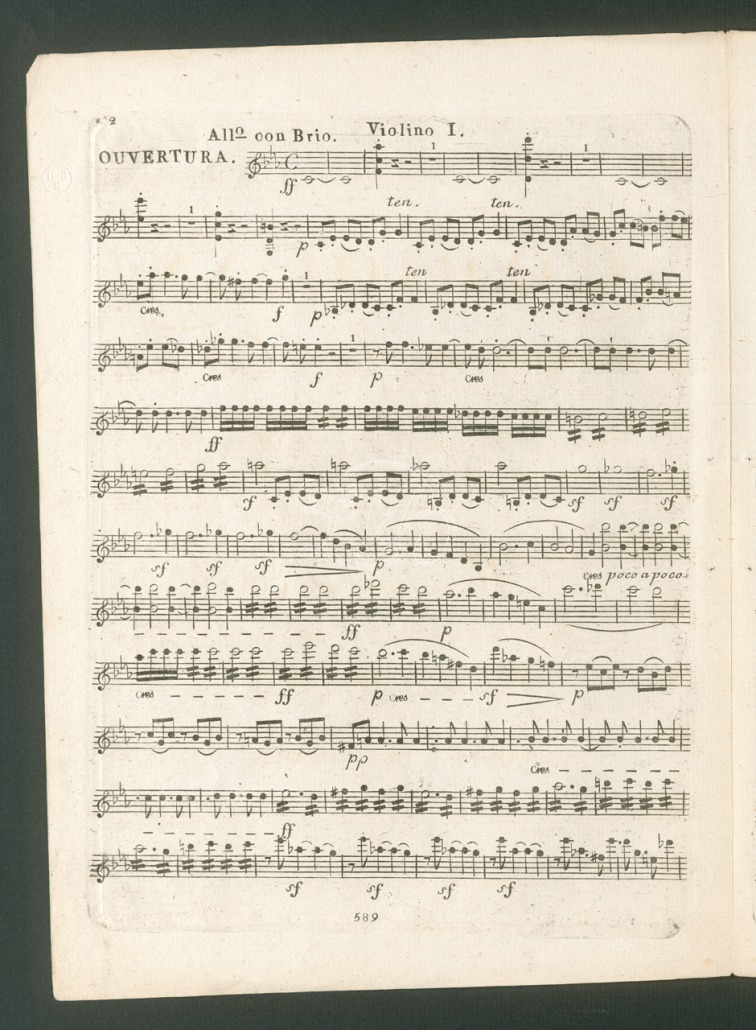
Allegro con brio
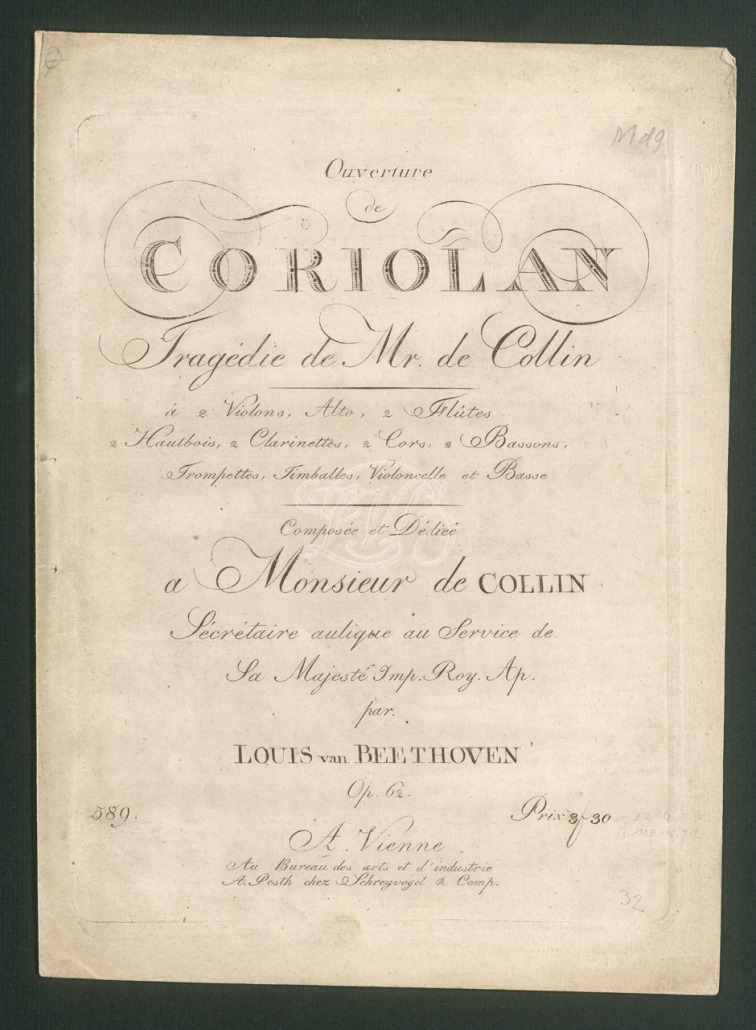
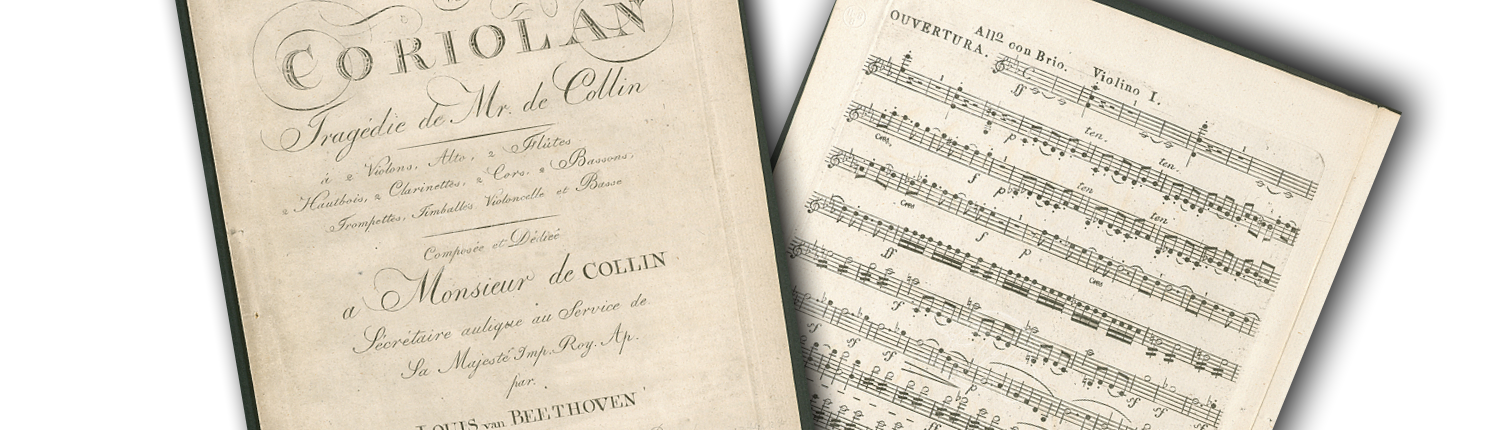
Opus 62 – Overture in C minor to the tragedy Coriolanus by H. J. von Collin, Op. 62, dedicated to him, January–March 1807, published in orchestral parts in Vienna, Bureau d’arts et d’industrie, January 1808; in score in Bonn, Simrock, 1846 GA. no. 18 (series 3/1) – B. 62 – KH. 62 – L. III, p. 62 – N. 62 – T. 133
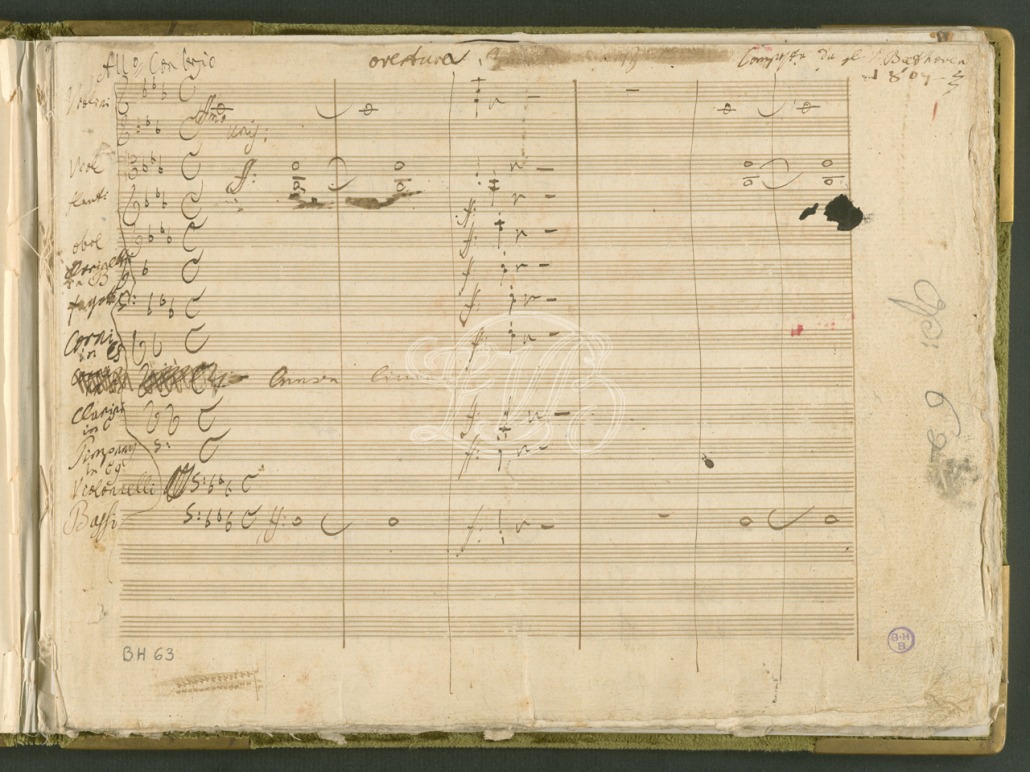
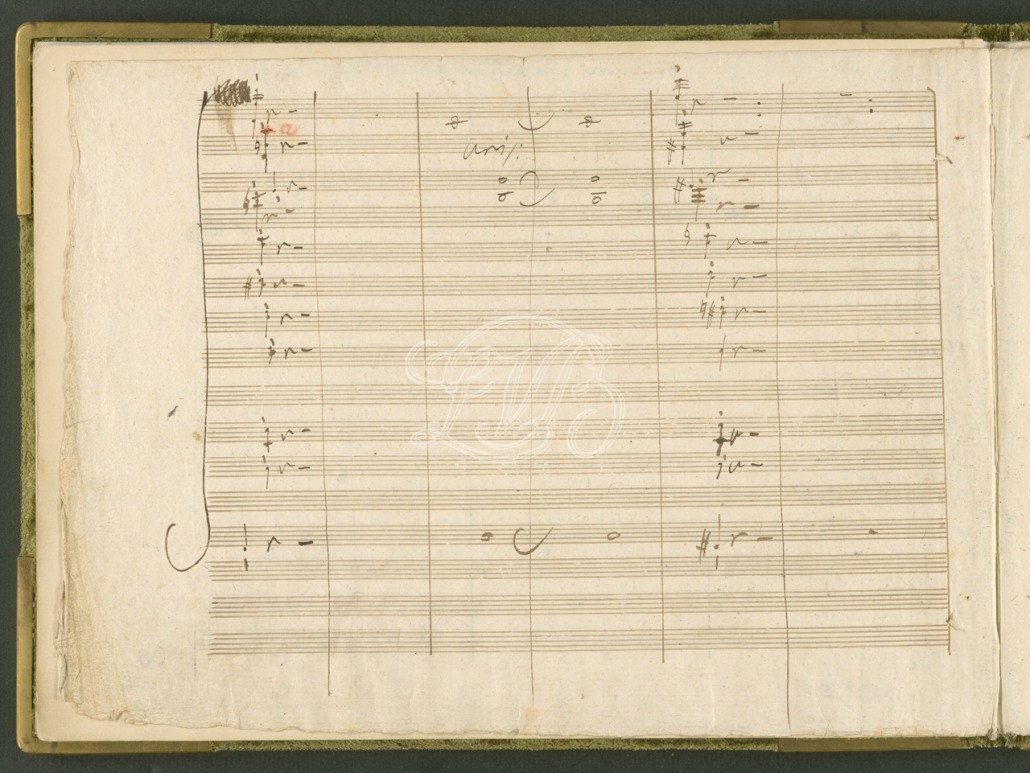
Score: 2 flutes, 1 oboe, 2 clarinets, 2 bassoons, 2 horns, 2 trumpets, timpani, strings. The original manuscript is preserved in the Beethoven House. No drafts are known.
Collin’s Coriolan was first performed on 24 November 1802, featuring musical interludes selected by Abbot Stadler from Mozart’s Idomeneo. The tragedy gained popularity in the following years. Beethoven’s Coriolan Overture, apparently composed within a relatively short period, received its première at one of two subscription concerts held in March 1807 at Prince Lobkowitz’s residence. On that occasion, it was presented alongside two other major new works: the Fourth Symphony and the Piano Concerto No. 4, Op. 58. All three were later performed again in a public concert in December of the same year.
However, it is highly probable that the overture had already been performed earlier that year, specifically on 24 April, in conjunction with a staging of Collin’s tragedy.
Unlike Shakespeare’s Coriolanus, Collin’s version begins after the protagonist has been banished from Rome and has allied himself with the Volsci. It centres on the psychological and moral turmoil he experiences—torn between his sworn oath to the enemy and a profound, innate loyalty to his homeland. This inner conflict reaches its climax during a dialogue with his mother and wife, culminating in his decision to take his own life. Suicide becomes the only possible resolution: it allows him to avoid the disgrace of breaking his oath and the shame of betraying his country.
Beethoven’s music is grounded in this poignant “conflict of principles.” The overture reflects this duality through its formal and expressive structure.
The opening thematic group is sharply articulated: marked by abrupt, imperious gestures, restless energy, and truncated phrases. In contrast, following the principles of sonata form, the second theme introduces a melodically clear and tender line, suffused with heartfelt emotion and expressive warmth. This theme embodies the voice of affection and familial love.
During the development, the gentle accompaniment figure from the second theme becomes agitated and unsettled, mirroring the protagonist’s inner turmoil—the rising influence of his emotional conscience, which he nevertheless resists.
In the (abbreviated) recapitulation, the conflict intensifies. A particularly striking moment occurs when the tender melody reappears in C major, lending it a new, luminous clarity. In the coda, the two “principles” are placed in stark opposition once more: the tender melody now appears in C minor, while the defiant thematic material is compressed into a short, desperate peroration. The work concludes with the collapse of the proud, aggressive theme, which dissolves into powerless fragments—utterly vanquished.
Original title: Opus 62 Ouvertüre zum Trauerspiel „Coriolan“ (c-moll) von Heinrich Joseph Edler von Collin Widmung: Heinrich Joseph Edler von Collin NGA II/1 AGA 18 = Serie 3/1
Composition and Publication. According to the autograph date, the Coriolan Overture was composed in 1807, in the months leading up to its first performance in March of that year, held at the residence of Prince Lobkowitz. The original edition in parts was published in 1807/08 by the Kunst- und Industrie-Comptoir in Vienna and by Schreyvogel in Pest.
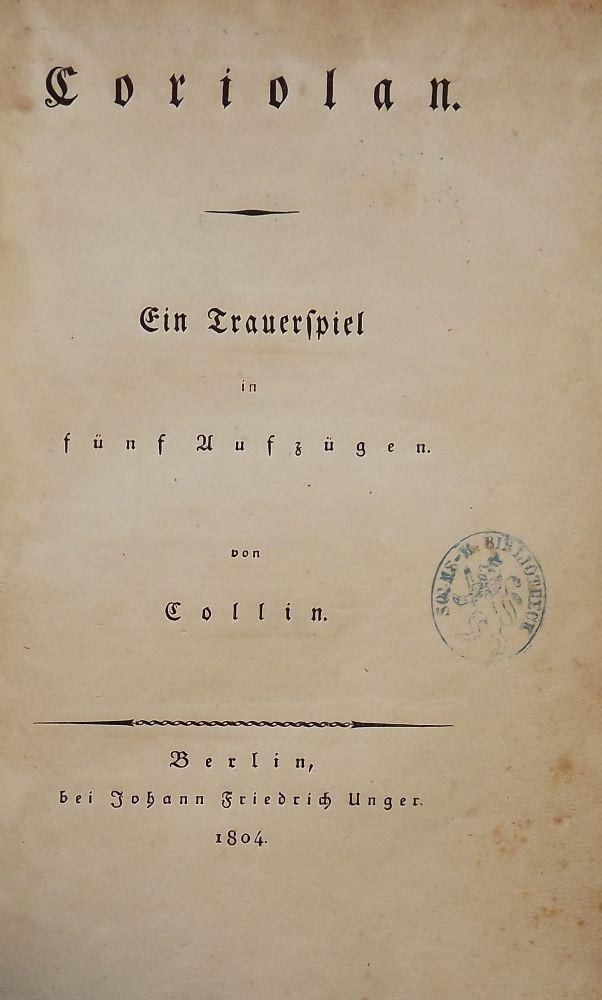
For further insights into Beethoven’s efforts to publish Opp. 58 to 62 across the Austrian, German, English, and French markets, see the entry on the Concerto Op. 58. Among this group, Opp. 59 and 62 were the least affected by delays and postponements. Their release was announced by the Wiener Kunst- und Industrie-Comptoir in the Wiener Zeitung on 9 January 1808 (piano reduction announced in the issue of 16 January 1808). Simrock, who reprinted only these two works from the entire group, promptly issued his own announcement in the Allgemeines Anzeiger on 13 April 1808. By contrast, Clementi in London, although entitled to publish Op. 62, did not exercise his rights—most likely because the shipment containing the engraved materials never reached England (see Cooper/Clementi). A short notice, probably written in late August or early September 1807 and printed in the Journal des Luxus und der Moden, January 1808, p. 29, reported that the work was already “im Stiche” in Vienna. Collin’s play was first staged in Vienna on 23 November 1802 and remained in the repertoire until 5 March 1805. It was printed under the title:
„Coriolan. Ein Trauerspiel in fünf Aufzügen von Collin. Berlin, bei Johann Friedrich Unger. / 1804.“
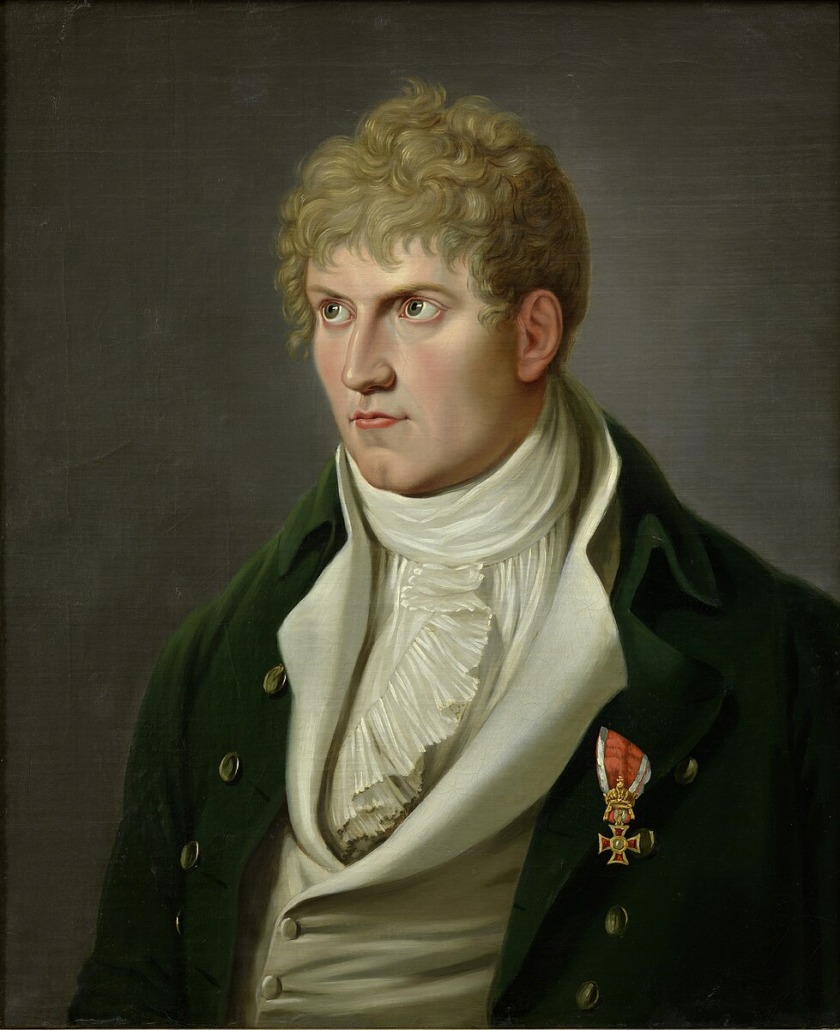
Dedication: Heinrich Joseph Edler von Collin, born 26 December 1771 in Vienna and deceased there on 28 July 1811, was the son of the Viennese physician of the same name (1731–1781). An Austrian dramatist, poet, and publicist, he served as court secretary at the Hofkammer from 1797 and became Hofrat in 1809. The first close collaboration between Collin and Beethoven dates to 1806, when they jointly planned an oratorio. In 1807/08, Beethoven also discussed a new opera project with Collin, who was to provide the libretto. Around this time, Beethoven also began sketching Ostreich über Alles, a patriotic song drawn from the Lieder Oesterreichischer Wehrmann (1809), which were especially admired during the Napoleonic Wars (see Unv 22, Unfinished Works).
Early Performances: the première of the Coriolan Overture took place in March 1807 (after 27 February 1807; see Weinzierl/Konzerträume, p. 243, note 11) at one of two private concerts held at the Vienna palace of Prince Lobkowitz, dedicated exclusively to Beethoven’s works. A performance of Collin’s tragedy with Beethoven’s music was given in Vienna on 24 April 1807 (TDR III, p. 20). The overture was also performed in two Liebhaber Concerten on 13 December 1807 and 2 February 1808 (see Biba/Liebhaber Concerten, p. 85), and again at a charity concert on 13 April 1808 at the Burgtheater (AmZ 10, 1807/08, 18 May 1808, col. 540f). On 12 March 1810, Joseph Ignaz Gurk’s Panharmonicon performed an arrangement for organ cylinder (Orgelwalze) in the kleine Redoutensaal of the Vienna Hofburg (see Steblin/Chotek, pp. 92–96)
Score: D-BNba, BH 63. Engraving copy of the original edition. Dating: “1807”, probably between January and March. Title: sheet 1 recto “overtura [corrected from: ouverture; crossed out: Zum Trauerspiel Coriolan] Composed by L. v. Beethoven / 1807”. 30 leaves; 57 pages of music text sheet 1 recto – 27 versus. Paper: landscape format, 23.5 x 32 cm, double-spaced. Provenance: Kunst- und Industrie-Comptoir, Vienna, until 1822. Then the publisher’s successors Sigmund Anton Steiner, Vienna, until 1826. Tobias Haslinger, Vienna until 1842. Carl Haslinger, Vienna again 1864 (?). – T. Paterno, Vienna, as late as 1868. – Johann Nepomuk Kafka, Vienna, probably until 1874. – Adalbert Ritter von Zanna. — Edmund Schebek, Prague. etc.