

Opus 118 Canto elegiaco Sanft wie du lebtest, hast du vollendet, elegiac song for four voices with string quartet accompaniment
I) Langsam und Sanft
Opus 118 – Elegiac Song Sanft wie du lebtest, hast du vollendet (Gently as you lived, you have passed away) for four voices with string quartet accompaniment, Opus 118, July 1814, dedicated to Baron Pasqualati in memory of his wife’s death. Published in Vienna by Haslinger, July 1826. GA no. 214 (series 2215) – B. 118 – KH 118 – L. IV, p. 131. No. 118 – T. 183
Official title: Opus 118 Elegischer Gesang (E-dur) für Chor und Streichorchester Widmung: Johann Baptist Freiherr von Pasqualati zu Osterberg NGA X/2 AGA 214 = Serie 22/5
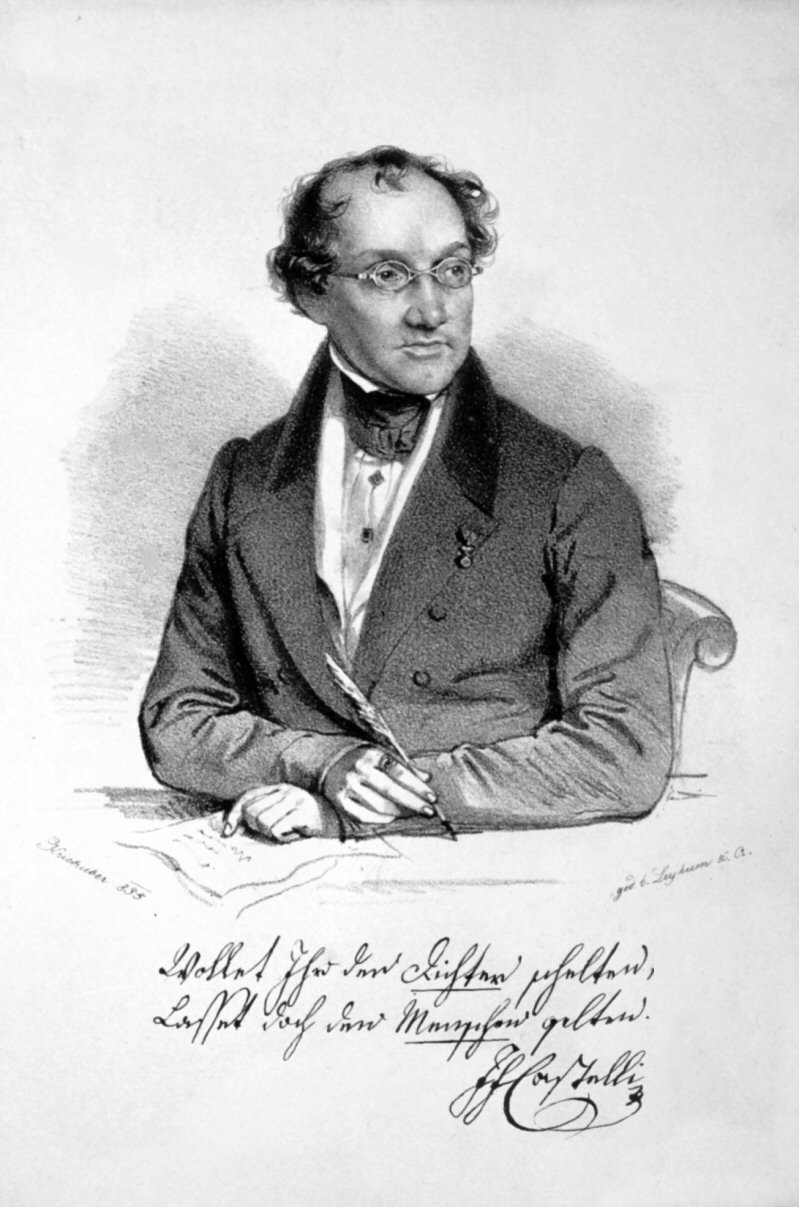
The original manuscript is unknown. Some sketches were reported by Nottebohm. The work, deeply felt, tender, and introspective, was composed on the occasion of the third anniversary of the death of Baron Pasqualati’s wife, the twenty-four-year-old Eleonore von Fritsch. The author of the text is unknown; it may have been the poet Ignaz Franz Castelli.
Sanft wie du lebtest hast du vollendet,
zu heilig, su heilig für den Schmerz!
Kein Auge wein’ ob des himmlischen,
himmlischen Geistes Heimkehr.
Sanft sanft wie du lebtest hast du,
ja, hast du vollendet.
Origin and publication: Conceived between August and September 1814 and probably written out in full score shortly thereafter. The original edition, in full score and parts, was published by Haslinger in Vienna in August 1827.
Beethoven’s autograph on the engraving model and the dedication for publication suggest that the composition was intended on the occasion of the death of the dedicatee’s wife, Eleonore von Pasqualati, on 5 August 1814. (The work may not yet have been completed on the day of the funeral—see Raab/NGA X/2, pp. XI, 226).
On 5 June 1822 Beethoven offered Op. 118 to the publisher Carl Friedrich Peters in Leipzig as an “Elegy for 4 voices with accompaniment of 2 violins, viola, violoncello” (BGA 1468), but Peters declined. By 1825, the engraving model was in the possession of Steiner & Comp., as indicated in Beethoven’s letter of 12 June (BGA 1992): “das terzett [Op. 116] die Elegie [Op. 118], die Kantate [Op. 136], die oper [Op. 72] heraus damit, sonst mach ich wenig Umstände damit, da eure rechte schon verschollen sind, nur meine Großmuth gibt euch größeres Honorar dafür als ihr mir.” Exactly when the engraving model passed to Steiner between 1822 and 1825 is undocumented (the publisher had received manuscripts for all the other cited works as early as 1815). From February to early April 1826, Beethoven corrected the proofs; on 9 April he was able to report to Tobias Haslinger, who in the meantime had fully taken over Steiner’s publishing business, that “both the overture [from Op. 117] and the elegiac song required no further corrections, and the titles are also correct” (BGA 2145).
Tobias Haslinger advertised the score and parts as “newly published” in the Wiener Zeitung on 13 August 1827 (repeated on 21 and 24 August). It is unlikely that the work had already been published in July 1826, as claimed by Gustav Nottebohm (Nottebohm/1868, p. 114; cited in KH and erroneously indicated by Armin Raab as the date of the Wiener Zeitung announcement, Raab/NGA X/2, p. 227). Although Haslinger took over Steiner’s firm on 2 May 1826, it is debatable whether he immediately began his own production. Initially, he apparently relied on works prepared by Steiner (up to plate 4747 inclusive), simply adding his own logo and changing the plate numbers. In addition to the score and parts, the original edition also includes a piano reduction for two hands, which was engraved only after Haslinger acquired the publishing house. This reduction is not by Beethoven and was therefore not corrected by the composer (Raab/NGA X/2, p. 227).
Text: Author unknown (Theodor von Frimmel suggested Ignaz Franz von Castelli, Frimmel/Studien 2, p. 28, note 3). This text may have served as the epigraph on Pasqualati’s wife’s tombstone.
Dedication: Johann Baptist Freiherr von Pasqualati zu Osterberg, born 2 March 1777 in Vienna, died 30 April 1830 in Vienna, son of the physician Johann Benedikt von Pasqualati zu Osterberg (1733–1799) of Trieste, ennobled in 1777 and elevated to the rank of Baron in 1798. As a wealthy wholesaler, Pasqualati served as a court agent until 1808 and also owned a city palace on the Mölkerbastei (No. 1239, later No. 1166, today No. 8), where Beethoven lived from 1804–1808 and again from 1810–1814. Subsequent owners of the house included Pasqualati’s brother-in-law Peter von Leber and his wife Josepha, as well as the University of Prague professor Joseph Mayer. Pasqualati was an avid art collector and passionate about music (he was also one of the representatives of the Gesellschaft der Musikfreunde). He remained a friend of Beethoven until his death, as numerous letters attest, and supported him in legal disputes and business matters. In the final weeks of Beethoven’s life, Pasqualati sent him food and wine on several occasions (BGA 2273–2275, 2279, 2280). In addition to the dedication of Op. 118, he received other dedications (the score of Wellington’s Sieg Op. 91, the parts of Leonore Overture III, the incidental music of Egmont Op. 84, as well as the piano reduction of Fidelio Op. 72). Pasqualati also received the New Year’s gift Canon WoO 165. His second wife, Freiin Eleonore Pasqualati née von Fritsch (1787–1811), probably died of “childbed fever” following the birth of their son Johannes (1811–1876) (Clive/Dictionary; BJb 1, 1954, pp. 122s).
First performance unknown.
Sketches:
(1) A-Wgm, A 40 (“Dessauer”), pp. 133–136, 142–144. Date: second half of August or early September 1814 (Raab/NGA X/2, p. 226).
(2) US-STum, MLM 42 (SV 372), and US-Cn, Case MS V 29.088, two halves of a sheet. Facsimile: US-STum/Stanford online.
(3) Private collection Constantin P. Carambelas-Sgourdas, Athens, formerly a US private collection (Raab/NGA X/2, p. 226), fragment of a sheet. Presumably identical to a fragment sold at Sotheby’s London (8 December 2009, lot 10). Facsimile: auction catalogue, p. 10.
(4) Private property, one sheet, sketches on verso. Sold by Bonham’s London (8 November 2005, lot 533). Facsimile: auction catalogue, p. 59.

L’ Opus 118 is prt of the “Research Becomes Art” project
A New Life for the Unknown Works of Ludwig van Beethoven: An Artistic Exploration, performed by the Hadimova Quartet.
Soloists:
Soprano: Valeria Attianese
Contralto: Annamaria Napolitano
Tenor: Armando Valentino
Baritone: Sergio Valentino
Conductor: Maestro Vincenzo Caruso
Thanks are due to Beniamino Cuomo for his kind interest.
