WoO 25 – Rondino in E flat major for 2 Oboes, 2 Clarinets, 2 Bassoons and 2 Horns
Andante
WoO 25 – Rondino in E flat major for 2 oboes, 2 clarinets, 2 bassoons and 2 horns – 1792 (no later than October), published in Vienna, Diabelli, summer 1830 (score). GA. no. 60 (series 8/2) – B. 146 – KH. (WoO) 25 – L. IV, page 362 – Nottebohm page 140 – Petters 31 – Schunemann pages 218/40 – Thayer 27.
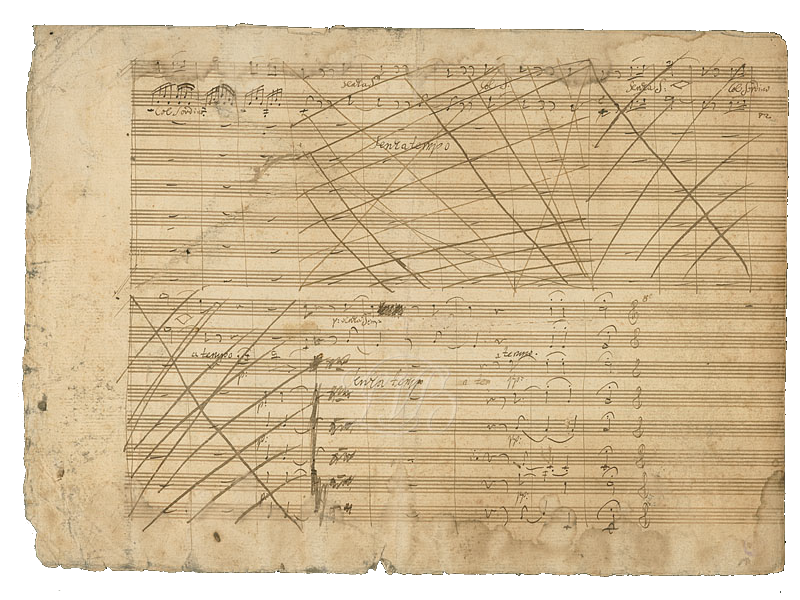
The original manuscript is housed in the Beethovenhaus. According to Thayer-Riemann, this composition was created for eight wind instruments used as “table music” for the elector. The theme bears similarity to that of the Scherzo in Piano Sonata opus 31 number 3, although it appears in a different context and compositional style.



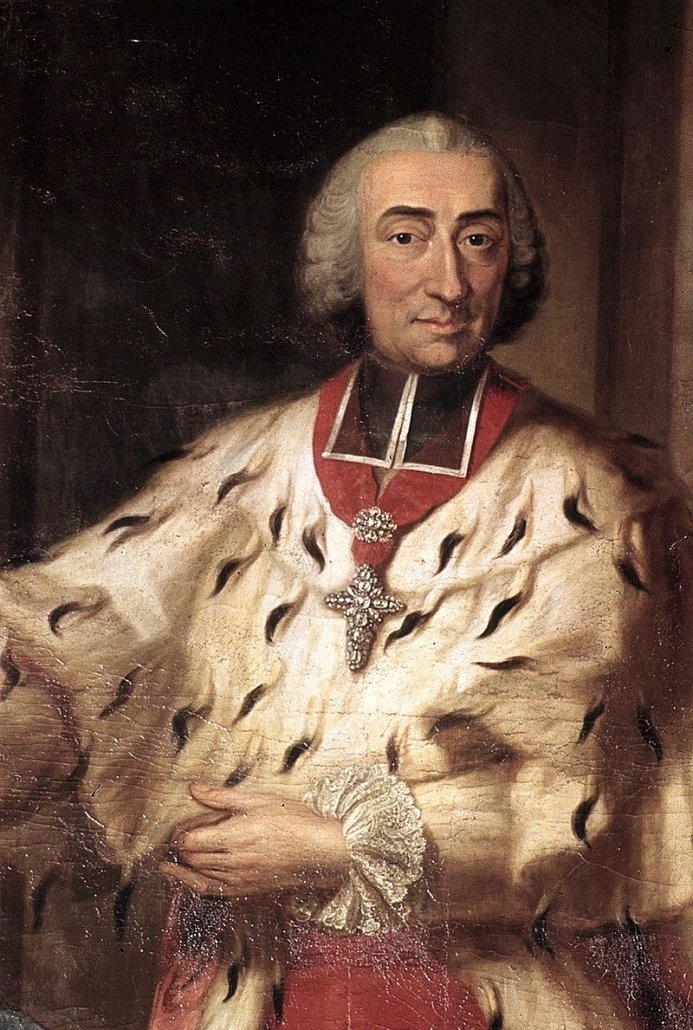
Elector Maximilian Franz, the younger brother of Austrian Emperor Joseph II and Beethoven’s employer in Bonn, introduced a tradition of table music from Vienna to his court. For such occasions, eight wind soloists from the court orchestra performed together, creating ensembles referred to as “harmony,” and played light music. In 1791, during a performance in Bad Mergentheim, journalist and music connoisseur Carl Friedrich Junker attended a concert by this group. He noted that the daily performances featured 2 oboes, 2 clarinets, 2 bassoons, and 2 horns, and observed that these musicians demonstrated notable skill and cohesion in their ensemble playing.
At approximately the same period, Beethoven composed a piece for the wind octet in E flat major, op. 103, which was an instrument favoured by the elector. During this time, Beethoven also became familiar with the six-minute Rondo WoO 25 in the same key as its finale. It is believed that he finished this work in 1793 while revising several of his Bonn compositions under Haydn’s supervision during his initial year in Vienna. Following Beethoven’s death, this piece was discovered among his belongings and was published in 1830 by Viennese music publisher Anton Diabelli as Rondino.
Rondo WoO 25 features specific instrumentation and is organized with a balanced tonal and formal structure. The main modeled section (A) appears three times in modified forms, alternating with contrasting intermediate sections identified as couplets (B, C, D). The structure is as follows: A B A’ C A” D A”’. The number of bars per section are: 16, 32, 16, 20, 16, 15, and 16 + 2. The keys for each section are: E-flat major, C minor, E-flat major, E-flat minor, E-flat major, E-flat major, and E-flat major. The main melody across sections is introduced by either horns or clarinets, as indicated: Horns, Clarinets, Clarinets, Horns, Horns, Horns, Horns.
The piece is divided into various sections (AB-AC-ADA) like a Rondo of small proportions. It is important to underline the prominence that Beethoven gives to the horns, which expose the initial theme and close the composition with a pleasant and evocative coda. The main theme is essentially marching and its rigid symmetry suggests a phrase of popular derivation. In addition to the horns, the clarinet, which is entrusted with an entire episode, also takes on a leading role, acting almost as a guiding instrument of the entire composition. The remaining members of the ensemble—comprising two oboes, two clarinets, two bassoons, and two horns—enhance the principal theme with successive variations, which gradually impart an increasingly gallant character, reflecting the playful nature that underpins the composition. The structure is built upon the recurring main theme (A), each time presented with different instrumentation and interspersed with two concertante episodes in the minor key (B and C). During the exposition, the main theme (A) progressively incorporates each instrument of the octet, beginning with the comi, followed by the oboes, and eventually engaging the full ensemble. Episode B highlights the lyrical lines of clarinet I, followed by oboe I and a subsequent clarinet entry. With the next appearance of the main theme (A), newly introduced staccato figures in oboe I and bassoon I complement the clarinet melody. Episode C introduces a darker timbre, led by the horns and supported by bassoon I, while the reprise of theme A features incisive passages in the oboes and distinctive motifs from clarinet I accompanying the melody in horn I. The initial section of the coda, crossed by arpeggios, seems to bring the piece to completion, but Beethoven introduces at this point an authentic master’s touch: in the final section the horns hint at reminiscences of the theme, timeless and in a play of echoes obtained thanks to the application of the mute alternating with the natural sound, until the music dies out with a sound fade effect, as if in the distance.
The instrumentation reveals the real character of the piece. The oboes, which as higher instruments in the wind octet usually take the melodic lead, here take a step back from the clarinets and especially in favor of the horns. The dominance of the horns is also visible in the autograph score. Contrary to convention, the horn parts are not placed in the third place, but in the first two staves.
The importance given to horns by Beethoven aims at the associations of space, outdoor movement, forest and hunting. The last chorus in particular, in which the horns play the theme with “temporary” echo repetition, while the remaining instruments respond briefly with the theme head in “piano” and double the note values, reinforcing the idea of “being far away”. – As if Beethoven remembered the affection of his constituent, who is said to have preferred to be influenced by delicate brass music in a room further away after enjoying the delights of the table.
(By Francesco Saponaro and Cesare Fertonani)
For the first time, the piece is presented as read on the manuscript, including the corrections and the canonical version by the G.A. Reconstruction and study by Graziano Denini.