
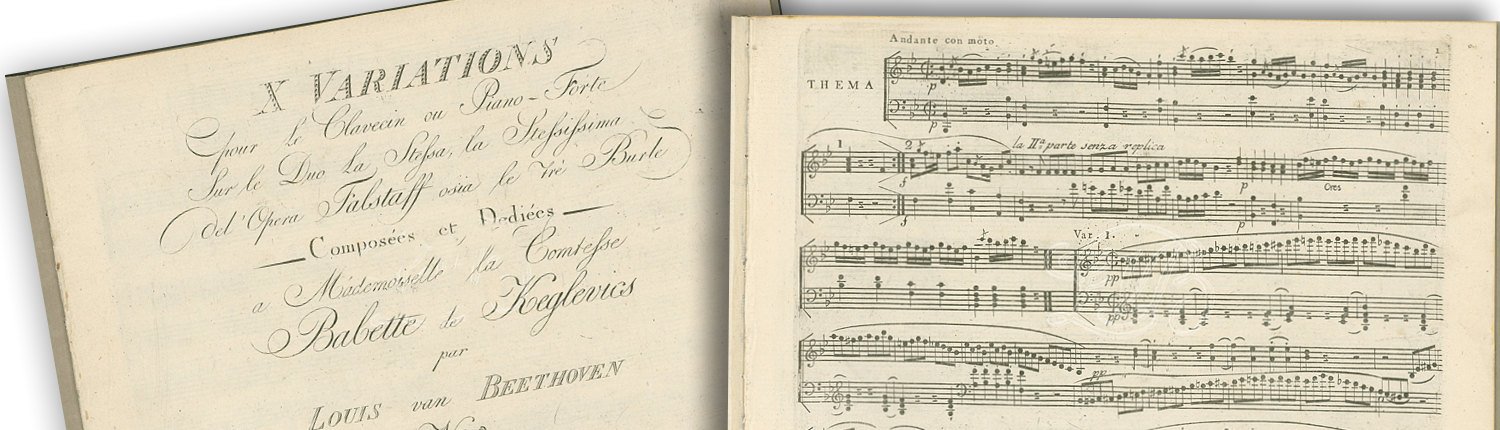
WoO 73 – Ten Variations in B-flat Major for Piano on the Duet “La stessa, la stessissima” from Falstaff ossia Le tre burle by Antonio Salieri
Theme – Andante con moto
WoO 73 – Ten Variations in B-flat Major for Piano on the Duet “La stessa, la stessissima” from Falstaff ossia Le tre burle by Antonio Salieri. Theme – Andante con moto Composed in January 1799, dedicated to Countess Babette von Keglevics, and published in Vienna by Artaria at the end of February 1799.
Catalog References: GA No. 172 (Series 17/11) Biamonti 185 Kinsky-Halm (WoO) 73 L. IV, p. 318/8 N. p. 157 P. 106 T. 65
Manuscript Status: The original manuscript is unknown. Sketches are preserved in: D-B, Mus. SM. autogr. Beethoven Grasnick 1, folios 30r–36v. Dating: January/February 1799. Facsimile: Staatsbibliothek zu Berlin (SBB). Transcription: Szabo/Grasnick 1.
Composition and Publication: Likely composed between early January and February 1799. The opera Falstaff ossia Le tre burle by Salieri premiered in Vienna on January 3, 1799. Beethoven’s variations were composed rapidly, as the original edition was published by Artaria by the end of February 1799.
Source of the Theme: The theme is the duet “La stessa, la stessissima” (Act I, Scene 6) from Salieri’s Falstaff ossia Le tre burle, a dramma giocoso per musica with libretto by Carlo Prospero Defranceschi. The opera was inspired by Shakespeare’s The Merry Wives of Windsor. Premiered at the Kärntnertortheater in Vienna on January 3, 1799, and received 26 performances until May 9, 1802 (Hadamovsky/Hoftheater Part 1, p. 41).
Musical Characteristics: The first variation is built on a chromatic passage. The fifth variation introduces a minor-mode melody. The eighth is cantabile, if not deeply expressive. The ninth reveals a humorous spirit that anticipates Beethoven’s later satirical style, notably in the 22nd variation of the Diabelli Variations parodying Mozart’s “Notte e giorno faticar”. The final variation (in Austrian style) evokes popular folkloric forms frequently found in Beethoven’s oeuvre.
Dedication: Dedicated to Anna Luise Barbara Countess von Keglevics, also the dedicatee of Beethoven’s Op. 7 Sonata.
Other Variations on the Theme: Known piano variations on this theme were also composed by: Josephine Aurnhammer (see Fiorella and Antonietta’s article “Chiedetelo alle compositrici”). Joseph Wölfl (Wh I)



Official Title: WoO 73 Zehn Variationen (B-dur) über das Duettino „La stessa, la stessissima“ aus der Oper „Falstaff ossia Le tre burle“ von Antonio Salieri für Klavier.
Original Edition: Published: February 1799, Vienna, Artaria et Comp., VN/PN 807. Title: X VARIATIONS pour Le Clavecin ou Piano-Forte / Sur le Duo La Stessa, la Stessissima / de l’Opera Falstaf osia le tre burle / Composées et Dediées / à Mademoiselle la Comtesse / Babette de Keglevics / par LOUIS van BEETHOVEN / N°6 / à Vienne chez Artaria et Comp.
About the Opera Falstaff ossia Le tre burle: A two-act dramma giocoso by Antonio Salieri, libretto by Carlo Prospero Defranceschi. Adapted from Shakespeare’s The Merry Wives of Windsor, with a reduced cast for streamlined narrative. The opera enjoyed success for its rhythmic pacing, tasteful comic devices, and well-crafted ensemble writing. It was later overshadowed by the rise of Romantic drama and Rossini’s new conception of musical comedy. Comparisons with Verdi’s Falstaff are unfounded, as the two works reflect entirely different theatrical and musical worlds. In recent years, the opera has been revived successfully by companies such as Bampton Opera. Modern editions of the full score and vocal-piano reduction have been published by OTOS of Lucca, edited by composer and musicologist Filiberto Pierami.
Act I
N. 1 – Introduction Viva il comune amico (Falstaff, Mr. Slender, Ms. Slender, Ms. Ford, Choir)
N. 2 – Bardolf’s Cavatina Or ci siamo, padron mio!…
N. 3 – Duet between Falstaff and Bardolf Con molta degnazione
N. 4 – Mr. Ford’s cavatina Vicino a rivedere
N. 5 – Ms. Slender’s Aria Vendetta, sì, vendetta!
N. 6 – Duet between Ms. Slender and Ms. Ford La stessa, la stessissima
N. 7 – Quartet Oh quanto vogliam ridere (Ms. Ford, Ms. Slender, Mr. Ford, Mr. Slender)
N. 8 – Mr. Slender’s Aria Venga pure il cavaliere
N. 9 – Ms. Ford’s Aria O! die Manner kenn’ ich schön!
N. 10 – Falstaff’s Aria Nell’impero di Cupido
N. 11 – Mr. Ford’s Aria Or gli affannosi palpiti
N. 12 – Finale I Bricconcella! alfin t’ho colta (Falstaff, Ms. Ford, Betty, Ms. Slender, Mr. Ford, Mr. Slender, Choir)
Act II
N. 13 – Terzetto between Betty, Ms. Slender and Ms. Ford Nell’acqua il buzzone
N. 14 – Terzetto between Betty, Falstaff and Bardolf Ah! Signore! se sapesse
N. 15 – Duet between Mr. Ford and Falstaff Che sento? E quando ei venne
N. 16 – Falstaff’s Aria Io sotto titolo
N. 17 – Mr. Ford’s Arietta Furie, che m’agitate
N. 18 – Terzetto between Ms. Ford, Falstaff and Ms. Slender Su, mio core, a gioir ti prepara!
N. 19 – Terzetto between Ms. Ford, Mr. Ford and Mr. Slender Che vedo? Oh, me infelice! (Ms. Ford, Mr. Ford, Mr. Slender, Choir)
N. 20 – Duettino between Ms. Ford and Ms. Slender Benedetto quel bastone
N. 21 – Falstaff’s Arietta Sorte pettegola!
N. 22 – Mr. Ford’s Aria In seno alla calma
N. 23 – Mr. Slender’s Aria coll’eco Reca in amor la gelosia
N. 24 – Finale II Siete già qui? (Mr. Slender, Mr. Ford, Ms. Ford, Ms. Slender, Falstaff, Betty, Choir)


